Most sealcoating advice was written for colder climates. Here's what it actually means for asphalt in Polk County, FL — and why the stakes are higher here.
Share:
Summary:
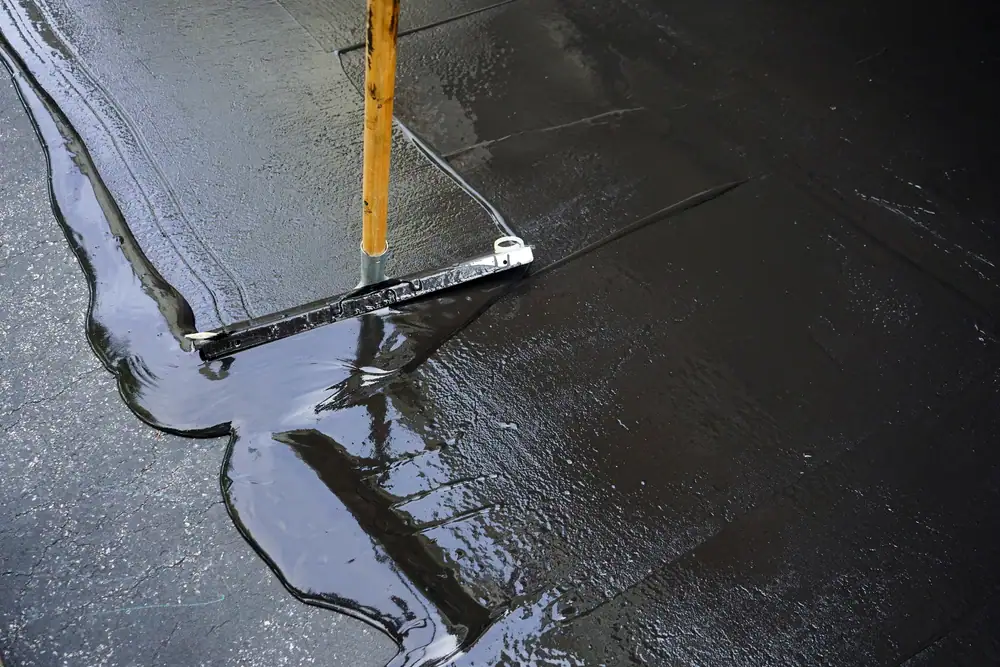
Most people assume sealcoating is cosmetic. The pavement goes in gray and rough, comes out dark and smooth, and looks great for a season or two. That’s the part you can see. What you can’t see is the part that actually matters — the protective layer blocking UV oxidation, sealing out moisture, and slowing the binder breakdown that turns solid asphalt into a crumbling, cracked surface that costs real money to fix.
In Polk County, that process happens faster than almost anywhere else in the country. Here’s why — and what you can actually do about it before the damage gets ahead of you.
Asphalt is made of two things: aggregate (crushed stone and sand) and a petroleum-based binder called asphalt cement that holds everything together. The binder is what gives pavement its flexibility and strength. It’s also what breaks down over time when exposed to sunlight, water, and the chemicals that drip from vehicles.
Asphalt sealing is the process of applying a protective coating — typically a commercial-grade asphalt emulsion sealer — over the surface of existing pavement. That coating does several things at once: it blocks UV rays from penetrating the surface, it creates a waterproof barrier that prevents moisture from working its way into cracks and down into the sub-base, and it resists fuel and oil spills that would otherwise dissolve the binder directly.
Think of it less like paint and more like sunscreen for your pavement — something that has to be reapplied on a schedule to keep working.
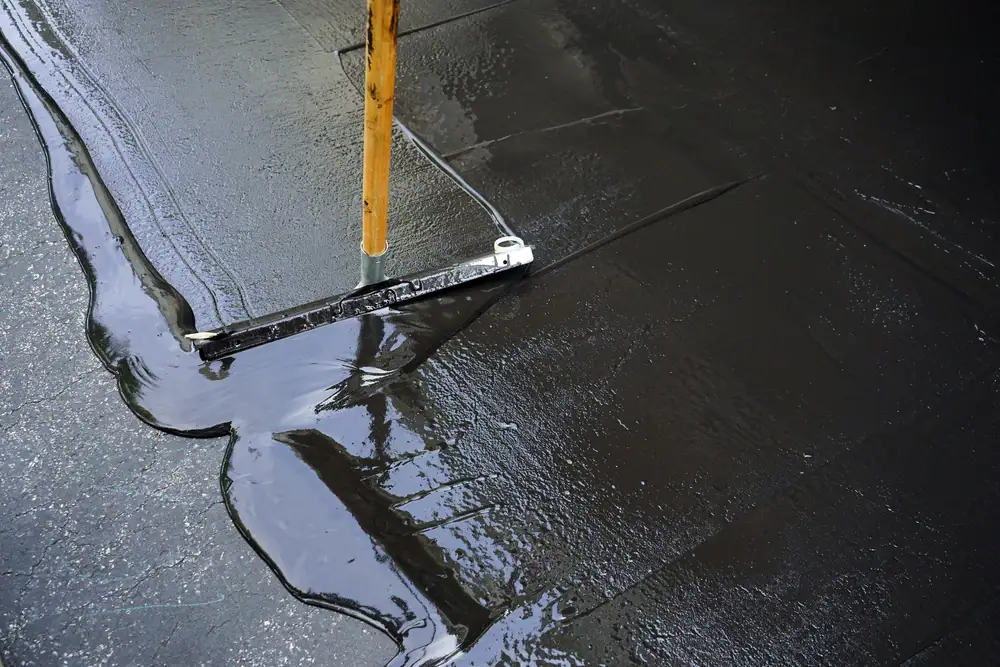
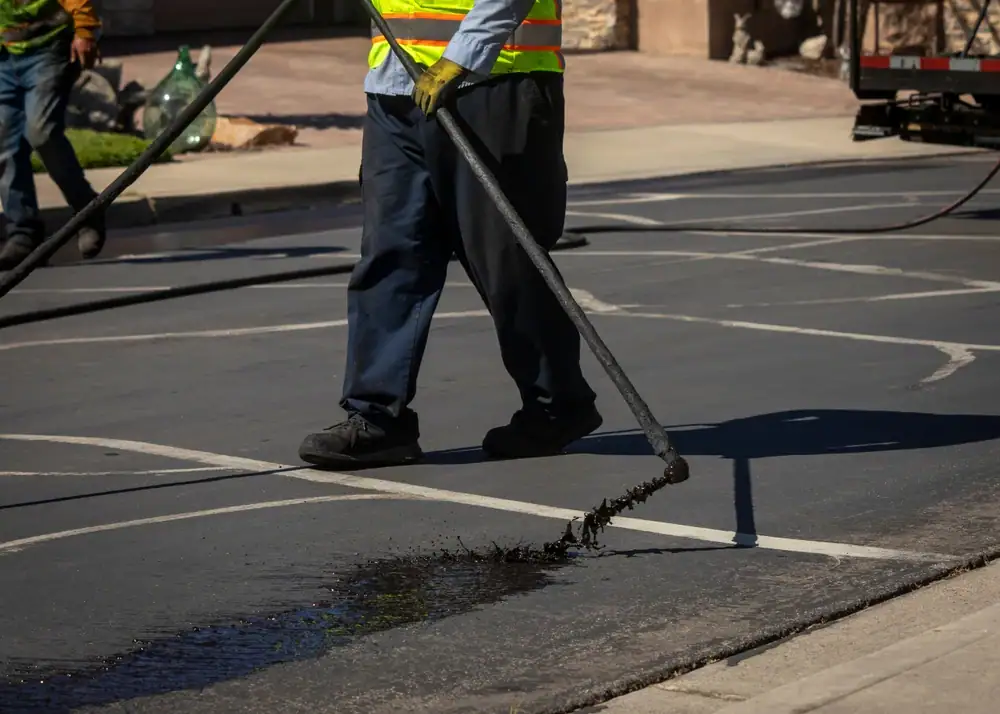
A lot of property owners picture sealcoating as a crew showing up, spraying something dark on the pavement, and leaving. The application itself doesn’t take long, but the preparation is where the quality of the job is actually determined — and where a lot of lower-end operators cut corners.
Before any sealer touches the surface, the pavement has to be thoroughly cleaned. That means removing debris, dirt, and oil stains, because sealcoat won’t bond properly to a contaminated surface. Any existing cracks need to be filled and repaired first.
This is a point worth emphasizing: sealcoating does not repair cracks. It is a surface treatment. If you apply sealcoat over unrepaired cracks, you’re trapping moisture underneath and accelerating the damage you were trying to prevent. Crack repair has to come first, every time.
Once the surface is clean and any cracks are addressed, the sealer is applied — typically in two coats for commercial parking lots, which is the professional standard for surfaces that see regular vehicle traffic. One coat is generally considered sufficient for residential driveways with light use, but for a parking lot handling daily traffic, a single coat won’t hold up the same way.
After application, the pavement needs to stay dry and traffic-free for at least 24 hours. Temperature matters too — conditions need to be warm enough for the sealer to cure properly. In Polk County, that’s rarely a limitation, which is one reason sealcoating is a year-round service here rather than a seasonal one.
The material used matters more than most people realize. Commercial-grade sealers contain sand and additives that improve durability and traction. They’re formulated differently from the products you’ll find at a hardware store, which are often diluted and lack the UV-resistant compounds that make the difference between a sealcoat that lasts two to three years and one that starts peeling before the first wet season is over.
National guides typically recommend resealing every three to five years. That range was built around climates with cold winters, where pavement gets a break from UV exposure for several months each year. Polk County doesn’t work that way.
In Polk County, asphalt is exposed to intense solar radiation every single day of the year. The UV index here regularly reaches levels that accelerate binder oxidation far faster than in northern or Midwestern markets. Add in the wet season — roughly June through September — when the county receives the bulk of its 50 to 55 inches of annual rainfall in concentrated, heavy bursts, and you have a surface that’s being hit with heat, UV, and moisture cycling continuously, without any seasonal rest period.
The professionally appropriate resealing interval for Polk County is every two to three years, not three to five. That’s not an upsell — it’s what the climate actually demands. Waiting four or five years between applications in this environment means spending part of that window with degraded or absent protection, which is exactly when the binder starts breaking down and surface cracking begins.
There’s also a timing consideration on the other end: new asphalt should cure for six to twelve months before its first sealcoating application. Sealing too early traps volatile compounds in the pavement that need to off-gas during the curing process, and it can actually soften the surface rather than protect it.
Over-sealing is a real problem. Applying sealcoat every year, or stacking coats without waiting for proper wear, builds up layers that become too thick and brittle. That leads to the spiderweb cracking and peeling you’ve probably seen on some older parking lots — and it’s caused by too much sealer, not too little. The goal is consistent, properly timed applications, not maximum frequency.
Want live answers?
Connect with a Central Florida Blacktop Paving expert for fast, friendly support.
Most of what you’ll read about sealcoating online was written for a general audience — often implicitly for northern markets where freeze-thaw cycles are the primary pavement threat. In Polk County, the damage mechanisms are different, and the timeline is faster. Understanding why helps you make smarter decisions about when to act and what to expect.
Polk County sits in the geographic center of Florida, which means it gets the full force of the state’s climate without the coastal breezes that moderate temperatures along the coasts. It also has relatively flat topography, which creates drainage challenges — water pools on parking lots and driveways after heavy rain rather than sheeting off quickly. That standing water drives moisture into any unsealed crack and begins eroding the sub-base from below.
UV rays don’t just fade the surface color of asphalt — they break down the petroleum-based binder at a molecular level. The binder is what gives asphalt its flexibility. As it oxidizes, the pavement becomes brittle and loses its ability to flex under load. Surface cracks appear, water gets in, and the sub-base begins to fail. By the time you can see significant cracking, the damage has usually been building for a while.
In Polk County, this process is accelerated by daily thermal cycling. Surfaces heat to extreme temperatures during the day and cool overnight. That repeated expansion and contraction stresses the binder even further, compounding the UV damage. Then the afternoon thunderstorm hits — a pattern anyone who’s spent a summer in Central Florida knows well — and cold rain lands on a sun-baked surface. The thermal shock adds another layer of stress to an already-degraded material.
Industry data puts the numbers in context. Sealed pavement costs roughly $0.39 per square foot over a 12-year period, compared to approximately $1.76 per square foot for unsealed pavement over the same span — a figure from the Pavement Coatings Technology Council based on lifecycle cost analysis. For a commercial property owner in Lakeland, Winter Haven, or Davenport with a sizable parking lot, that gap represents a substantial difference in total maintenance spend over the life of the pavement.
Water penetration drops by 70 to 80 percent in properly sealed pavement. In a county where the wet season delivers heavy rainfall across flat terrain with limited natural drainage, that number is more meaningful than it sounds. It’s not just about surface appearance — it’s about whether your sub-base stays intact or slowly erodes from below.
Residential driveways and commercial parking lots are different animals. A driveway sees light, predictable traffic. A parking lot handles dozens or hundreds of vehicles a day, including delivery trucks, and it’s exposed to fuel and oil drips that attack the binder directly. The stakes are higher, and the professional standards are higher to match.
The commercial corridor along US-98 through Lakeland, the distribution and logistics facilities that have expanded throughout Polk County, the resort-adjacent retail near Davenport and the I-4 corridor — these properties all have parking infrastructure that represents a significant capital investment. A well-maintained lot lasts significantly longer than one that’s allowed to degrade and then patched reactively. The research on this is consistent: regular sealcoating as part of a preventative maintenance program can extend pavement life by 15 to 20 years.
For HOA communities throughout Polk County — and there are a lot of them, particularly in the Davenport, Haines City, and Winter Haven areas — sealcoating is typically a scheduled maintenance line item. The question isn’t whether to do it, but when and how to minimize disruption to residents. Timing the work during low-traffic periods, communicating the 24-hour closure window clearly, and working with a contractor who shows up when they say they will are the practical concerns that matter most.
For commercial property managers specifically, the two-coat application standard matters. One coat is not sufficient for a surface that handles regular vehicle traffic. Any contractor you’re evaluating should be able to tell you clearly how many coats they apply, what surface preparation is included, and what materials they’re using. If those answers are vague, that’s information.
We’ve been doing this work in Central Florida for 40 years, and the commercial properties we’ve maintained longest are the ones where the owners treated sealcoating as a scheduled investment rather than a reactive repair. The math consistently favors the proactive approach — not by a little, but by a lot.
If your pavement is more than two to three years past its last sealcoating application — or if it’s never been sealed — the Polk County wet season is the most useful deadline to work backward from. Getting ahead of June means your surface goes into the heaviest rainfall period protected, not exposed.
If you’re not sure whether your pavement needs sealcoating, resurfacing, or something else entirely, that’s exactly the kind of question a free consultation is designed to answer. An honest assessment of what you’re working with is worth more than a quote for a service you may not need.
Central Florida Blacktop Paving Inc. works with both residential and commercial property owners across Polk County. If you want a straight answer about what your pavement actually needs, reach out and we’ll take a look.
Article details:
Share:
Continue learning: