Your complete guide to asphalt sealcoating covers costs, timing, and professional vs DIY options for Florida property owners.
Share:
Summary:
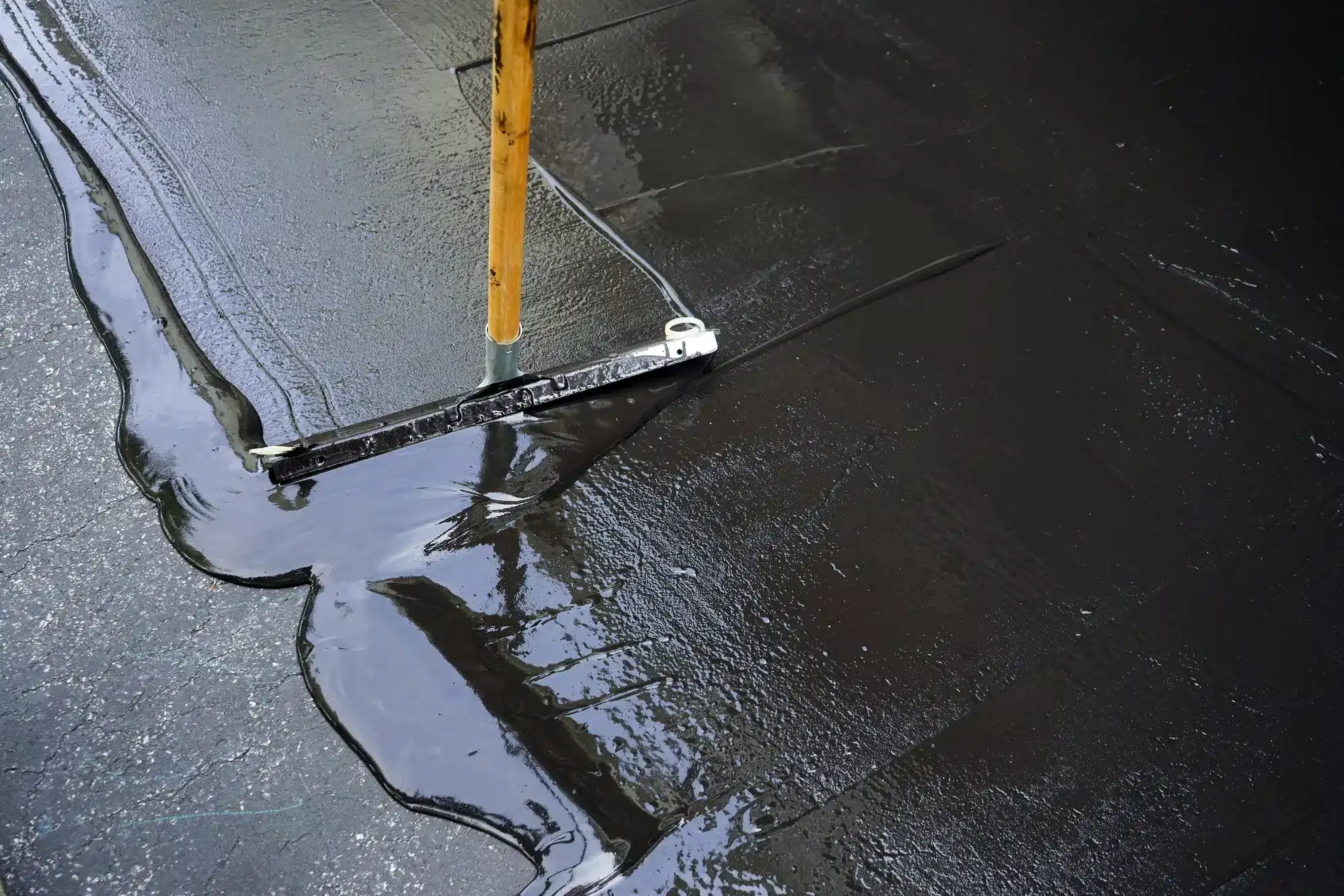
Sealcoating is a protective liquid coating applied to asphalt surfaces that acts as a barrier against Florida’s harsh elements. Think of it as sunscreen for your pavement—it blocks UV rays, repels water, and prevents oil and chemical damage that can destroy asphalt over time.
In Central Florida, your asphalt faces unique challenges. The intense heat can soften the binding materials, while UV rays break down the oils that keep asphalt flexible. Add in our heavy rainfall, and you have the perfect storm for pavement deterioration.
Professional sealcoating creates a waterproof barrier that reflects UV rays and prevents water infiltration. Studies show that property owners who sealcoat every 2-3 years save an average of 48% compared to those who skip this crucial maintenance step.
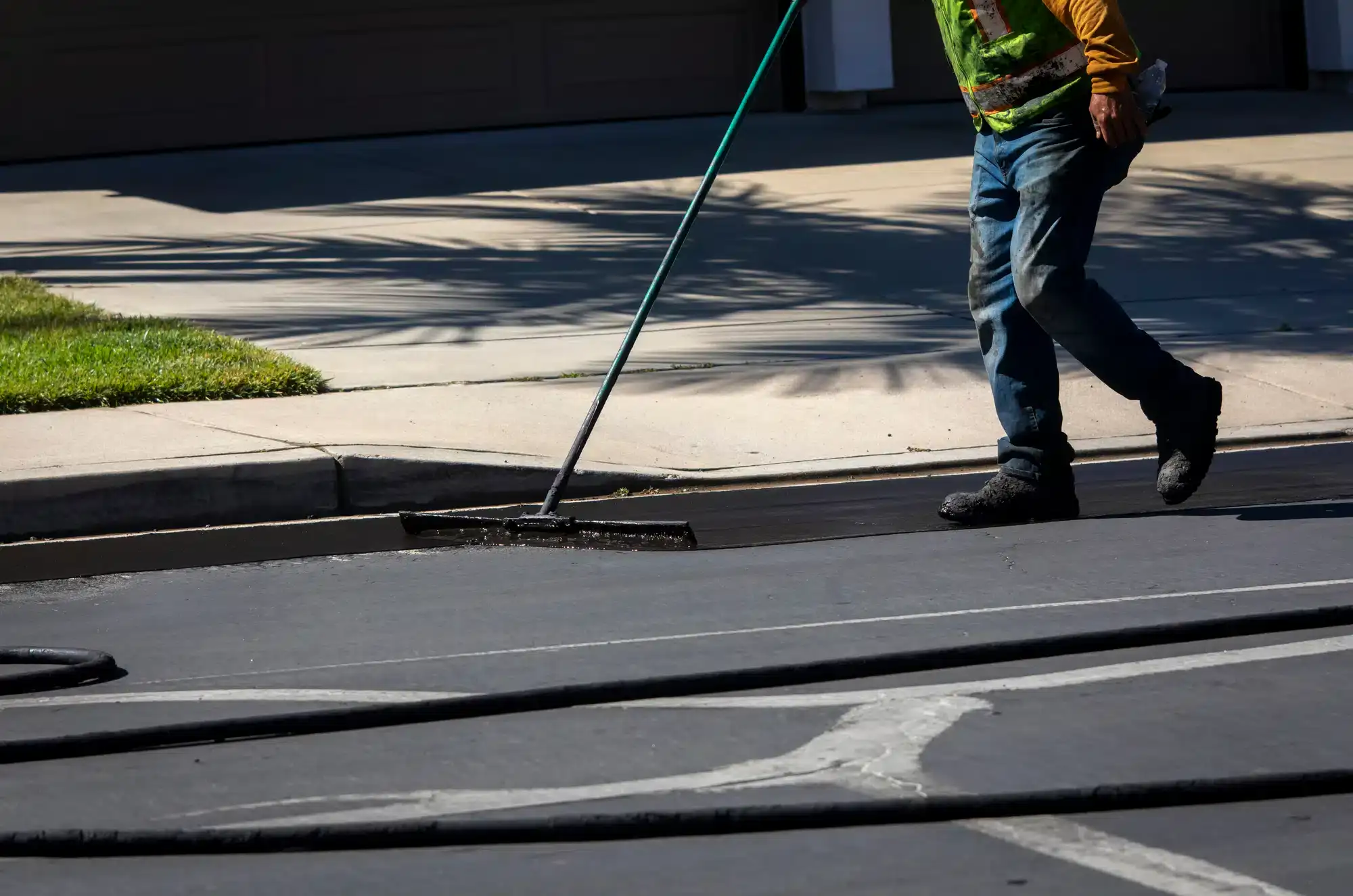
Florida’s subtropical climate creates a perfect storm for asphalt damage. During summer months, black asphalt surfaces can reach temperatures 40-50°F hotter than air temperature. On a 95°F day, your driveway surface might hit 140°F, causing the binding materials to soften and become sticky.
The sun’s UV radiation triggers a chemical process called oxidation, where light oils in the asphalt combine into heavier oils. This reduces the number of binding oils, making the surface brittle and prone to cracking. As oxidation progresses, you’ll notice your once-black asphalt fading to gray, followed by surface cracking and eventual raveling.
Water damage compounds these problems. Central Florida receives over 50 inches of rain annually, and water that seeps into tiny cracks can undermine the base layers. During temperature swings, this water expands and contracts, turning hairline cracks into potholes and creating the alligator cracking pattern you see on neglected parking lots.
The combination of heat, UV exposure, and moisture creates a cycle of deterioration that accelerates without protection. Humidity adds another layer of complexity, allowing moisture to penetrate the asphalt structure and weaken the bonds between aggregate and binder. This is why Florida asphalt needs more frequent maintenance than pavement in cooler, drier climates.
Skipping sealcoating might save money upfront, but it’s a costly mistake in Florida’s demanding climate. Without protection, asphalt deterioration accelerates rapidly, leading to repairs that cost 5-10 times more than preventive sealcoating.
Here’s what happens when you skip maintenance: Small cracks allow water penetration, which weakens the base and creates potholes. UV damage makes the surface brittle, leading to widespread cracking and raveling. Oil stains and chemical spills penetrate deeper without a protective barrier, causing permanent damage that requires patching or replacement.
A typical sealcoating job in Polk County costs $0.12-$0.20 per square foot. For a 600-square-foot driveway, that’s $72-$120 every 2-3 years. Compare that to asphalt replacement, which can cost $3-$7 per square foot, and the math becomes clear. Regular sealcoating can extend your pavement’s life from 15 years to 30+ years, essentially doubling your investment.
The hidden costs go beyond just pavement replacement. Deteriorated asphalt creates safety hazards, reduces property values, and can make your business or home look neglected. For commercial properties, poor pavement conditions can drive away customers and create liability issues. Regular sealcoating maintains that professional appearance while protecting your substantial investment in site development.
Want live answers?
Connect with a Central Florida Blacktop Paving expert for fast, friendly support.
The DIY approach might seem appealing, but sealcoating is more complex than it appears. Success depends on proper surface preparation, weather conditions, material quality, and application technique. In Florida’s climate, getting it wrong means the protection fails quickly, leaving you worse off than before.
We have access to commercial-grade materials not available to consumers, along with specialized equipment for even application. We understand Florida’s specific challenges and time applications around weather windows for optimal curing.
DIY materials cost $0.08-$0.15 per square foot, but that doesn’t include equipment rental, surface preparation supplies, or the time investment. Professional installation runs $1.25-$1.50 per square foot, including materials and labor, but delivers superior results that last longer.
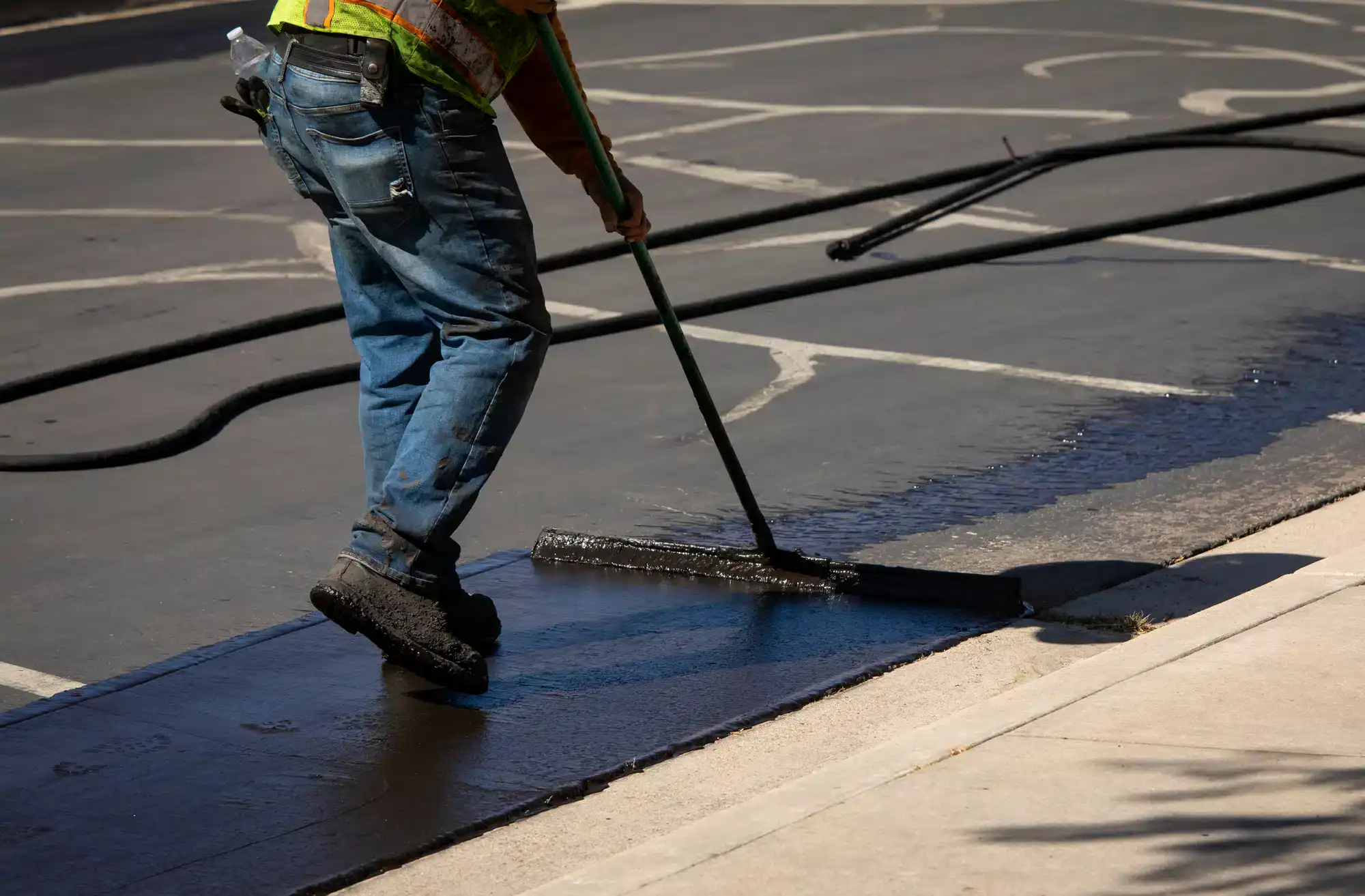
Florida’s climate demands precision in sealcoating application. We understand the narrow weather windows when conditions are right—dry weather with temperatures above 70°F and humidity levels that allow proper curing. We avoid the rainy season and schedule around afternoon thunderstorms common in Central Florida.
Surface preparation is critical and often underestimated by DIY approaches. We thoroughly clean the asphalt, removing debris, oil stains, and loose material that would prevent proper adhesion. We repair cracks and potholes before applying sealcoat, ensuring a uniform base that maximizes protection.
The application process itself requires skill and experience. Professional-grade spraying equipment provides even coverage at the correct thickness. Too thin, and you don’t get adequate protection. Too thick, and the sealcoat may not cure properly or could peel over time. We apply two thin coats rather than one thick coat, allowing each layer to cure correctly.
Timing is everything in Florida. We monitor weather forecasts and adjust schedules to ensure the sealcoat has 24-48 hours of dry conditions to cure properly. We understand how temperature and humidity affect curing times and adjust our approach accordingly. This expertise is what separates results that last from applications that fail within the first season.
Our professional sealcoating starts with a thorough assessment of your asphalt’s condition. We evaluate existing damage, drainage issues, and surface preparation needs before providing a detailed estimate. This isn’t a sales pitch—it’s a professional evaluation of what your project requires.
The actual process begins with comprehensive cleaning using pressure washers, blowers, and specialized equipment to remove all debris, oil stains, and loose material. Any cracks or potholes are repaired before sealcoating begins, ensuring a smooth, uniform surface.
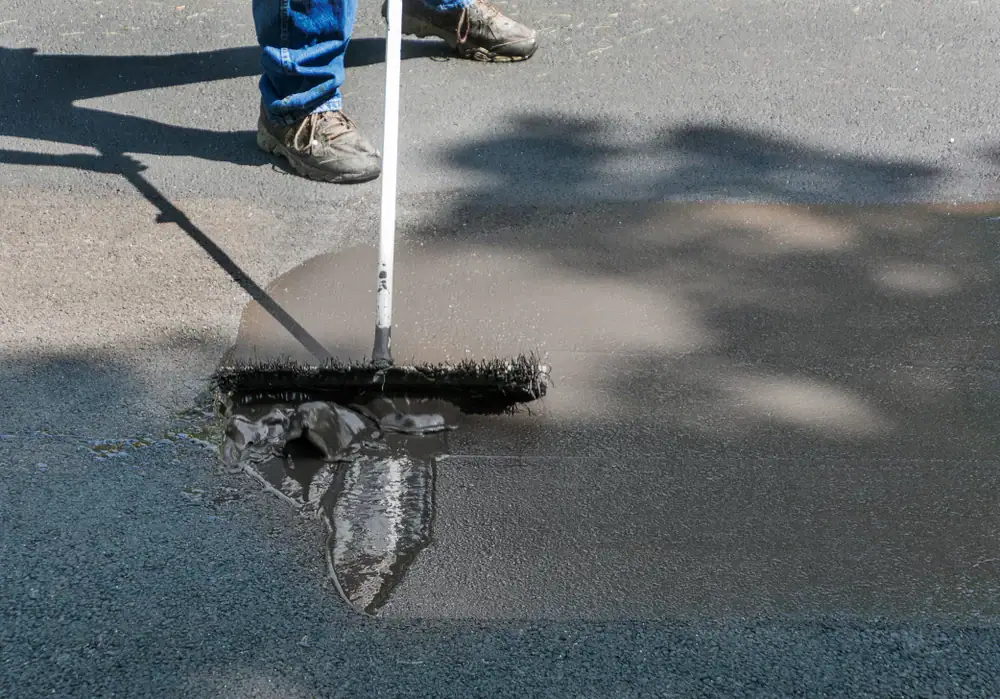
Application typically involves two coats of high-quality sealcoat applied with professional spray equipment. We monitor weather conditions throughout the process, ensuring optimal temperature and humidity for proper curing. Most residential driveways can be completed in one day, while larger commercial projects may take 2-3 days.
After application, the area must remain vehicle-free for 24-48 hours while the sealcoat cures. We provide clear instructions on when you can resume normal use and what to expect during the curing process. The result is a smooth, dark surface that provides maximum protection against Florida’s challenging climate conditions.
Regular sealcoating isn’t just maintenance—it’s insurance against the expensive repairs that come when Florida weather gets the upper hand on unprotected asphalt. The investment in professional sealcoating every 2-3 years protects your property value, maintains curb appeal, and extends your pavement’s lifespan by decades.
The transformation from faded, vulnerable asphalt to fresh, protected pavement changes how people perceive your entire property. More importantly, it prevents the cycle of deterioration that leads to costly reconstruction projects.
When you’re ready to protect your asphalt investment, we at Central Florida Blacktop Paving Inc. bring the specialized knowledge and proven techniques that deliver lasting results in our challenging climate.
Article details:
Share:
Continue learning: