Confused by wildly different quotes for driveway resurfacing? Here's what the numbers actually mean — and what drives the cost in Polk County.
Share:
Summary:
You’ve probably noticed your driveway starting to show its age — surface cracks spreading, the color fading from black to gray, maybe a rough patch or two that wasn’t there a couple years ago. So you start looking into what it costs to fix it, and suddenly you’re staring at quotes ranging from $900 to $4,500 for what sounds like the exact same job. That kind of range doesn’t make sense on the surface, and it makes it nearly impossible to know who to trust or what’s actually fair. This guide exists to clear that up — with real numbers, honest context, and information specific to what resurfacing actually looks like here in Polk County.
For asphalt driveway resurfacing in Polk County, the realistic range is $1 to $3 per square foot. A standard two-car driveway — roughly 400 to 600 square feet — typically lands somewhere between $400 and $1,800 depending on the condition of the surface, the prep work required, and the materials used.
Full driveway replacement, by comparison, runs $5 to $12 per square foot. That’s the core financial case for resurfacing when your base is still solid: you’re extending the life of your driveway by 8 to 15 years at roughly one-third the cost of tearing it out and starting over.
Those numbers hold up nationally, but Polk County has its own variables that affect where your project lands within that range — and a few that national cost guides don’t account for at all.
This is the question most homeowners are really asking when they search for driveway resurfacing costs. The price range isn’t noise — it’s information. Once you understand what’s actually driving it, the quotes start to make a lot more sense.
The biggest variable is prep work. A contractor who charges $900 for a 500-square-foot driveway is almost certainly skipping steps. That might mean no tack coat — the adhesive layer that bonds the new asphalt to the existing surface. It might mean no crack sealing before the overlay goes down. It might mean no drainage correction, so water still pools in the same low spots after the job is done. Each of those shortcuts saves the contractor time and money. You won’t notice the difference on day one. You’ll notice it in year two or three when the surface starts separating, cracking, or deteriorating in the same spots.
A properly done resurfacing job includes a base inspection before anything else, surface cleaning, crack and pothole repair, a tack coat, 1.5 to 2 inches of compacted hot-mix asphalt, and drainage slope correction where needed. That process takes longer and costs more — but it’s the difference between a job that lasts a decade and one that needs to be redone in a few years.
There’s also the material question. Standard asphalt mixes start to soften when temperatures exceed 85°F. In Polk County, that’s not an edge case — it’s a regular summer reality. Polymer-modified asphalt mixes are specifically formulated to handle high-temperature performance without rutting or surface deformation. Not every contractor uses them. The ones who don’t will often be cheaper upfront and more expensive over time.
When you’re looking at two quotes and one is significantly lower, the right question isn’t whether the cheaper contractor is ripping you off — it’s what they’re leaving out. Ask for an itemized breakdown. If they can’t or won’t provide one, that’s your answer.
Most cost guides for driveway resurfacing are written for a generic national audience. They don’t account for what it actually means to have an asphalt driveway in a place that gets 50 or more inches of rain a year, sustained summer heat well above 90°F, and UV exposure intense enough to oxidize and gray out a surface faster than most homeowners expect.
Drainage is the first thing that separates a well-done resurfacing job in Polk County from a mediocre one. When a driveway doesn’t have the right slope, water sits on the surface, works its way into existing cracks, and undermines the base from below. Over time, that’s what causes the kind of structural failure that turns a resurfacing candidate into a full replacement. Getting the drainage right isn’t optional here — it’s a core part of the job.
The soil composition across Polk County also matters more than people realize. Sandy soils in areas like Davenport, Haines City, and Lake Wales can shift and settle when base preparation is done poorly. Clay soils — more common around Lakeland and Bartow — expand and contract with moisture changes, which puts stress on the pavement above. A contractor who doesn’t account for what’s underneath your driveway is guessing, and that guess will show up eventually.
UV oxidation accelerates faster here than in northern markets. That’s why sealcoating every two to three years matters more in Polk County than the generic “every few years” advice you’ll read in most guides. A properly resurfaced driveway that’s maintained with regular sealing can hold up well for over a decade. One that’s left unprotected in the Florida sun will start showing wear much sooner.
None of this makes resurfacing a bad investment in Polk County — quite the opposite. But it does mean that who does the job and how they do it matters more here than in a milder climate.
Want live answers?
Connect with a Central Florida Blacktop Paving expert for fast, friendly support.
The terminology in this space gets blurry fast. Resurfacing, refinishing, repaving, overlaying — these words get used interchangeably in conversation, but they don’t always mean the same thing, and the cost difference between them is significant.
Resurfacing and refinishing, in most practical contexts, refer to the same thing: adding a new layer of asphalt over an existing surface that’s structurally sound. Repaving typically means removing the old material and starting fresh — which is sometimes necessary, but far more expensive. Knowing which one your driveway actually needs is the most important decision in this whole process.
Resurfacing works when the foundation underneath is still solid. If the base is failing — if you’re seeing large alligator-pattern cracking across wide sections, significant sinking or heaving, or cracks that go all the way through the pavement — an overlay won’t fix the problem. It’ll just cover it up temporarily, and the same damage will reappear through the new surface within a year or two.
The honest answer is that you can’t always tell from the surface alone whether your base is compromised. That’s why a proper base inspection before any quote is non-negotiable. A contractor who gives you a resurfacing price without looking at the foundation first is either guessing or not telling you the full picture.
Generally speaking, resurfacing is the right call when a driveway is less than 15 to 20 years old, has less than roughly 30% surface damage, and shows no signs of base failure. When those conditions are met, resurfacing at $1 to $3 per square foot is a significantly smarter investment than full replacement at $5 to $12 per square foot.
When the base is failing, replacement is the only real fix. And a contractor worth hiring will tell you that directly — even when it’s not the answer you were hoping for. At Central Florida Blacktop Paving Inc., that’s exactly the approach we take. If the base isn’t sound, we’ll say so upfront rather than take your money for a resurfacing job that won’t hold.
Polk County’s rapid residential growth over the past two decades means a large number of driveways in communities around Davenport, Winter Haven, Lake Wales, and Haines City were installed in the early 2000s through the mid-2010s. Many of those surfaces are now entering the window where resurfacing is the right call — before they deteriorate to the point where replacement becomes unavoidable.
If you’ve never had asphalt driveway resurfacing done before, it’s worth knowing what a professional job actually involves — both so you know what to expect on the day of the project and so you can recognize when a contractor is cutting corners.
The process starts before any equipment arrives. A proper evaluation of your existing surface and base tells us whether resurfacing is the right solution or whether something else is needed. That assessment drives everything else.
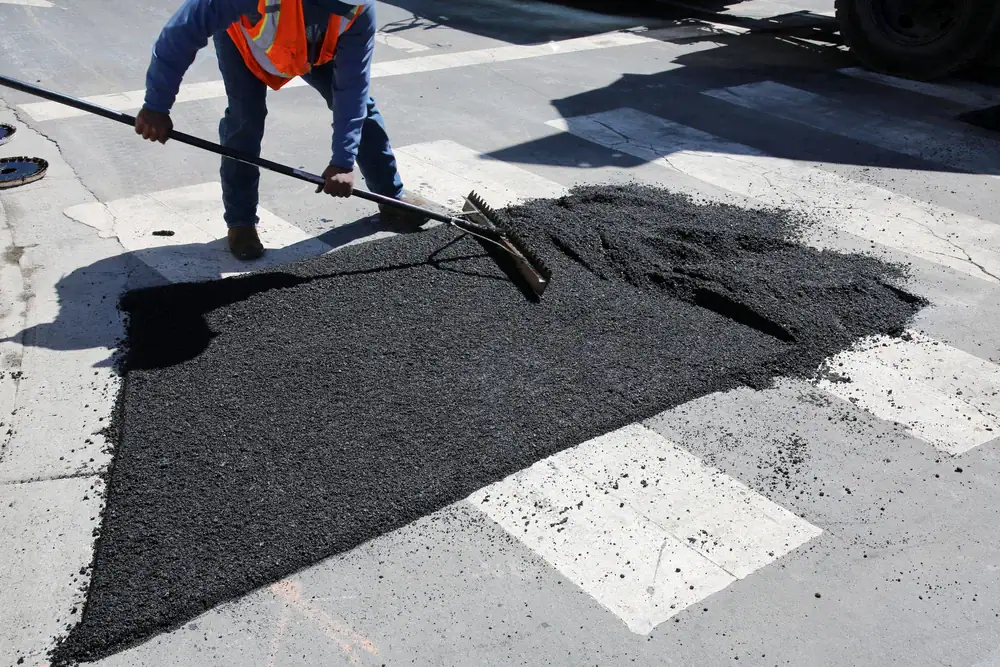
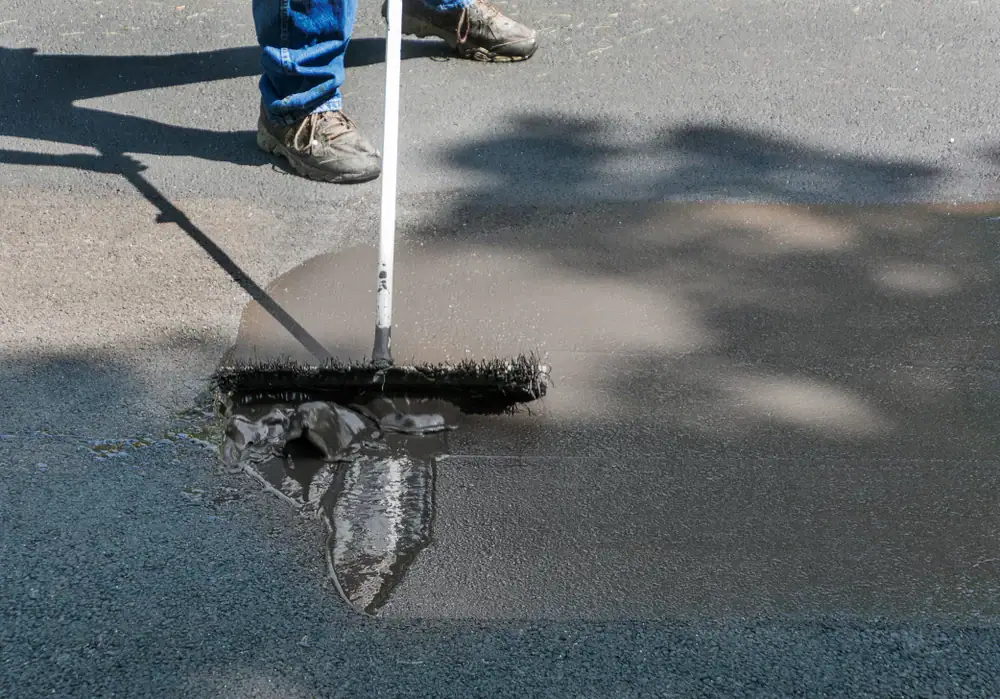
On the day of the job, the surface gets cleaned thoroughly — debris, loose material, and anything that would prevent the new asphalt from bonding properly. Any existing cracks or potholes get repaired before the overlay goes down, not after. Then a tack coat is applied — this is the adhesive layer that bonds the new asphalt to the old surface. Skipping the tack coat is one of the most common shortcuts in the industry, and it leads to delamination over time.
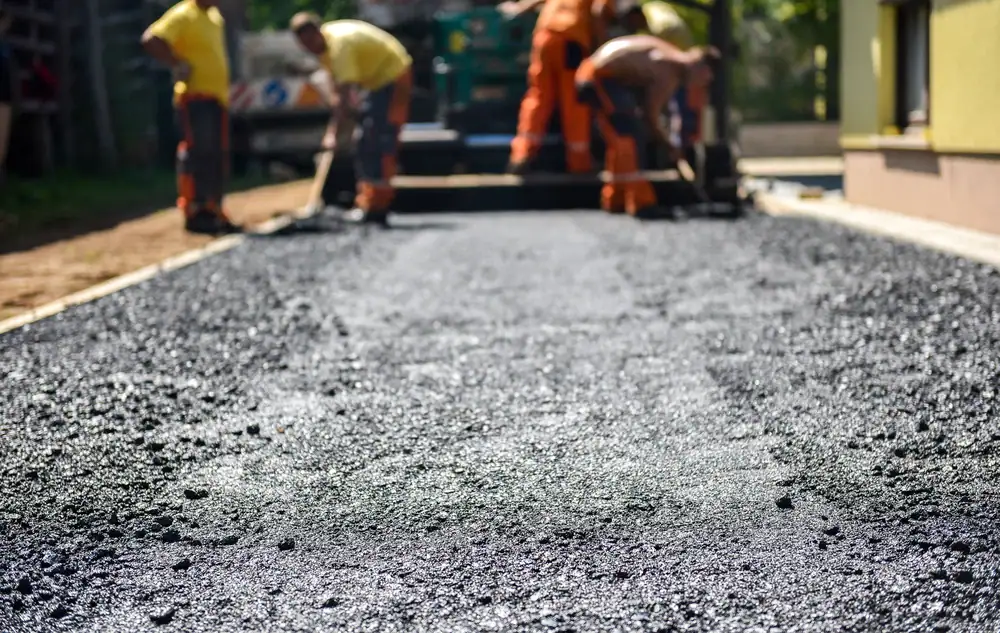
After the tack coat, 1.5 to 2 inches of hot-mix asphalt is laid and compacted. Drainage slope is checked and corrected during this phase — not as an afterthought. The goal is a surface that sheds water properly, because standing water is one of the primary causes of premature pavement failure in a climate like Polk County’s.
For most residential driveways, the entire job is done in a single day. You can typically drive on the surface within about 24 hours. There’s no week-long disruption, no blocking your garage for days on end.
Asphalt driveway resurfacing is not the same as sealcoating, and it’s not something you can replicate with a product from a hardware store. Sealcoating is a thin protective coating applied over existing asphalt — it’s maintenance, not resurfacing. True resurfacing involves commercial paving equipment, hot-mix asphalt, and compaction. The two aren’t interchangeable, even though they’re sometimes confused.
If you’ve made it this far, you’re probably in a better position to evaluate the quotes you’re getting — or to know the right questions to ask before you request one. Price matters, but what’s included in that price matters more. An itemized estimate that breaks down materials, prep work, and labor tells you far more than a lump sum ever will.
Resurfacing is one of the best investments you can make in a driveway that still has a solid foundation underneath it. Done right, it buys you 8 to 15 years of life at a fraction of what replacement would cost. Done poorly — with skipped prep, wrong materials, or no drainage correction — it’s money spent to delay the same problem by a year or two.
If you’re in Davenport, Lakeland, Winter Haven, Lake Wales, or anywhere else in Polk County and you’re ready to get a straight answer about what your driveway actually needs, we at Central Florida Blacktop Paving Inc. offer free consultations with no obligation. We’ll look at the base, give you an honest assessment, and put together a detailed estimate so you know exactly what you’re getting before any work begins.
Article details:
Share:
Continue learning: