Smart asphalt maintenance in Polk County means understanding Florida's heat, humidity, and rain challenges before they damage your investment.
Share:
Summary:
Florida isn’t just hot – it’s hot and humid with temperatures often climbing into the 90s°F, and asphalt surfaces under direct sun can reach well over 130–140°F. This creates maintenance challenges that contractors from other regions simply don’t understand.
When you combine moisture and extreme heat, humidity becomes one of asphalt’s greatest enemies, greatly weakening the material by allowing air gaps to form and creating cracks where water can enter. Most property owners don’t realize their maintenance approach needs to account for these unique conditions.
Every hard surface including asphalt absorbs heat, creating what’s called Urban Heat Island effect, and at peak afternoon temperatures from 90°F or above, roads start to buckle, ripple, and crack. This isn’t just a cosmetic issue – it’s the beginning of expensive structural problems.
Humidity routinely ranges between 70% and 90% in summer, and moisture-laden air can slow down the cooling and curing of new asphalt while contributing to moisture retention in pavement layers. What makes this particularly challenging in Polk County is how quickly these conditions can change.
When you experience rain after high temperatures, water infiltrates existing defects and humidity starts to grow, affecting the subbase of the asphalt and allowing air gaps to form, which leads to cracks. Once this cycle begins, the damage accelerates rapidly.
The key insight most property owners miss is that Florida’s climate doesn’t just cause surface damage – it attacks your asphalt from multiple angles simultaneously. Once a crack has begun, any water that enters begins to break down the binder cohesion, also causing potholes and raveling. This is why reactive maintenance rarely works in our climate.
In pavement maintenance, prevention is always more cost-effective than major repairs or replacement. But in Polk County’s climate, the cost difference between preventive and reactive maintenance is even more dramatic than in other regions.
High humidity levels can accelerate oxidation and cause asphalt to become brittle and less resilient. When property owners wait until they see obvious damage, they’re often looking at complete replacement rather than manageable repairs. A residential driveway that could have been maintained for hundreds of dollars might require thousands in replacement costs.
For commercial properties, the stakes are even higher. Your company’s image is affected by the condition of your commercial asphalt parking lot, and your business’ image is affected by the quality of your parking lot or paving. Customers notice cracked, pothole-filled parking lots, and it affects their perception of your business quality.
For commercial property managers, potholes in a parking lot can become liabilities, and for municipalities, heat and rain can shorten the lifespan of costly roadways. The liability issues alone make preventive maintenance a smart business decision.
What many don’t realize is that Florida’s weather creates a narrow window for effective maintenance. We often schedule paving projects for early morning starts, aiming to finish before daily thunderstorms roll in, and during peak hurricane season, we avoid non-essential paving work if tropical systems threaten. This means waiting until you have obvious problems might mean waiting months for ideal repair conditions.
Want live answers?
Connect with a Central Florida Blacktop Paving expert for fast, friendly support.
Given the challenges of humid climates, it’s essential to have a proactive approach to asphalt maintenance and conduct routine inspections and maintenance to identify and address issues before they escalate. The most successful property owners in Polk County follow specific maintenance protocols designed for our climate.
Effective maintenance starts with understanding timing. Spring’s moderate temperatures and lower humidity make it an excellent time for sealcoating projects, and the weather is typically stable enough to ensure proper curing while completing sealcoating before summer’s intense heat provides maximum protection.
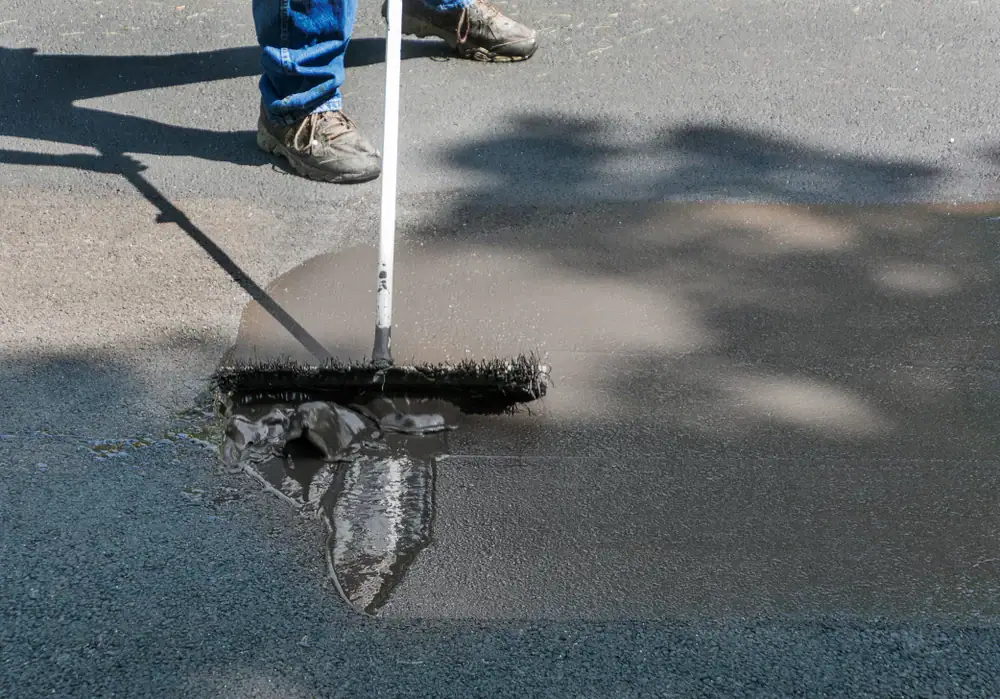
Seal Coating is a great way to prevent cracks and extend the life of your pavement, protecting asphalt from the two most damaging things – UV rays and rain. In Florida’s climate, this isn’t optional maintenance – it’s essential protection.
Since sealcoat protects asphalt against two of Florida’s specialties — rain and sunshine — heat damage can be prevented or minimized by reapplying this protectant on schedule, and a great time to sealcoat is when the heat is on as it helps materials bond with the surface.
Ensure there is proper drainage management to prevent standing water on the asphalt’s surface, as having poor drainage and standing water can accelerate deterioration. This is particularly critical in Polk County, where afternoon thunderstorms can dump significant water in short periods.
Conduct regular visual inspections and check your asphalt pavement for cracks, potholes, and any other irregularities on the surface, making sure to address any issues promptly, no matter how small they may seem. In Florida’s aggressive climate, small problems become big problems quickly.
The maintenance approach that works best combines scheduled preventive care with prompt response to emerging issues. Property owners who follow this approach consistently see their asphalt last significantly longer than those who wait for obvious problems to develop.
While basic maintenance can be handled in-house, professional services offer advanced solutions for weather-resilient pavements, with experts having access to cutting-edge weather-resistant materials and techniques that can significantly extend pavement life, and our expertise in local climate challenges allows for tailored solutions that address specific regional weather patterns.
For routine tasks like cleaning and basic inspection, property owners can handle these themselves. However, Florida’s climate creates situations where professional expertise becomes crucial. We will never “gamble” with the weather – your paving project will be done at the right time, or we won’t do it, and this diligence prevents costly fixes and ensures new pavement isn’t compromised by water before it fully sets.
Sealcoating, crack sealing, and any structural repairs require professional equipment and knowledge of local conditions. Quality asphalt paving is more than just mixing and pouring – it’s about understanding the environment and executing with skill and care, and heat, humidity, and rain become manageable factors in the hands of experts.
The decision point often comes down to risk versus cost. DIY maintenance might save money upfront, but mistakes in Florida’s challenging climate can lead to complete pavement failure. We understand the specific timing, materials, and techniques that work in Central Florida’s unique conditions.
We understand the complexities of asphalt materials, proper site preparation, drainage requirements, and the challenges of asphalt paving in Florida’s unique climate, delivering precise, durable solutions that stand the test of time. This expertise becomes particularly valuable when dealing with commercial properties where downtime costs money and liability issues matter.
Smart asphalt maintenance in Polk County means understanding that Florida’s climate creates unique challenges that require specific solutions. The combination of intense heat, high humidity, and torrential rains demands a proactive approach that most property owners don’t realize they need.
The most successful property owners treat asphalt maintenance as an investment rather than an expense. They understand that preventive care costs significantly less than reactive repairs, especially in our aggressive climate. When you work with contractors who understand Central Florida’s specific challenges, your asphalt investment can provide decades of reliable service.
If you’re ready to protect your asphalt with maintenance strategies that actually work in Polk County’s climate, we bring the local expertise and proven techniques your property deserves.
Article details:
Share:
Continue learning: