After a hurricane, your asphalt might look fine — and still be failing. Here's how to tell the difference before it gets expensive.
Share:
Summary:
After a major storm rolls through Polk County, most people are focused on the obvious — roof damage, downed trees, flooded interiors. The driveway or parking lot usually gets a quick glance, and if nothing looks catastrophically wrong, it gets checked off the list.
That’s understandable. But it’s also how a manageable repair turns into a full replacement.
Hurricane flooding doesn’t just damage what you can see. It works on the layers underneath your asphalt — the base and subgrade — and that kind of damage can take weeks or months to show up at the surface. By then, you’re dealing with something much worse than a crack.
Here’s what you actually need to look for, and what it means when you find it.
If you manage a commercial property in Polk County — a shopping center, office complex, apartment community, or industrial facility — your parking lot took a hit during hurricane season whether it looks like it or not. The question isn’t whether there’s damage. It’s what kind, and how far it’s progressed.
The most immediate concern is drainage. If you’re noticing standing water in areas that drained fine before the storm, that’s not a minor inconvenience. It’s a signal that something has changed structurally. Water that pools on asphalt and stays there is actively weakening the base beneath it with every passing day.
The second thing to look for is new cracking — especially patterns that look like a web or interconnected grid. That’s called alligator cracking, and it’s not a surface issue. It means the base layer has failed.
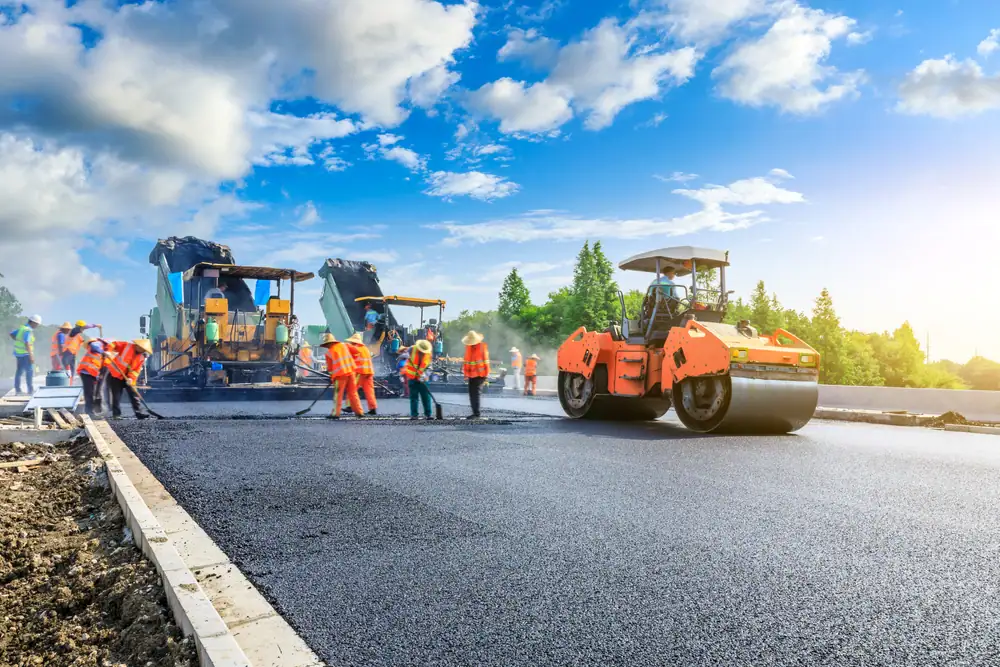
Most people think of asphalt as a single layer — the dark surface you drive on. In reality, a properly built asphalt surface is a system. You have the surface course on top, a base layer of compacted aggregate beneath it, and a subgrade of native soil below that. Each layer has a job to do, and when one fails, the others follow.
During a hurricane, the threat isn’t just the wind — it’s the water. Polk County received 10 to 18 inches of rainfall during Hurricane Milton, and local water managers described it as a 100-year rain event. That volume of water doesn’t just sit on top of asphalt. It finds every crack, every weak seam, every low point, and works its way down into the base and subgrade layers.
Once water saturates those layers, they lose their ability to support the surface above them. Here’s what makes this particularly tricky: the asphalt surface itself can look completely intact while the base underneath it has been structurally compromised. There’s no visible sign at the surface until traffic loads cause the weakened base to collapse — and then you get sudden potholes, deep ruts, or sections of asphalt that shift and sink.
This is why the initial construction quality matters so much. Asphalt that was built with proper base compaction, correct drainage grading, and the right mix for Florida’s climate handles flooding significantly better than asphalt that was rushed or built to a lower standard. If the base wasn’t right to begin with, a major storm accelerates whatever failure was already coming.
For commercial properties along Polk County’s heavily trafficked corridors, this matters even more. A parking lot that handles daily vehicle loads under normal conditions may not have the structural reserve to handle those same loads after the base has been saturated and weakened by a storm.
This is the part that catches most property managers off guard. After Hurricane Milton flooded intersections across Lakeland, Haines City, and Kathleen, a lot of property owners walked their lots, saw no obvious potholes or major cracks, and moved on. That’s a reasonable response to visible information. The problem is that post-flood asphalt damage splits into two categories — visible and hidden — and the hidden kind is often more serious.
Visible damage is straightforward: potholes, washouts, severe cracking, sections of asphalt that have heaved or sunk. You see it, you know you have a problem, you call someone. Hidden damage is different. It’s the internal weakening of the base and subgrade layers that doesn’t show up at the surface right away.
The water that infiltrated during the storm has undermined the structural integrity of the pavement system, but the surface looks normal. It might stay looking normal for weeks. Then one day, under the weight of a delivery truck or just repeated daily traffic, a section collapses.
For Polk County specifically, this problem is compounded by soil conditions. Parts of the county have clay-heavy soils that expand and contract with moisture changes, which puts additional stress on the base layer after a flood event. Other areas have sandy soils that can shift and settle when base preparation wasn’t adequate. Either way, a post-storm surface inspection that only looks at what’s visible on top isn’t enough.
The practical takeaway: if your parking lot was underwater or heavily saturated during a storm, it warrants a professional assessment — not just a visual walkthrough. The cost of identifying hidden damage early is a fraction of what it costs to repair the structural failure that follows if you don’t.
Want live answers?
Connect with a Central Florida Blacktop Paving expert for fast, friendly support.
For residential homeowners in Lakeland, Winter Haven, Davenport, and the surrounding Polk County communities, the concern is usually simpler but no less real. A damaged driveway isn’t just an eyesore — it affects property value, creates a tripping hazard, and if water is draining toward your home’s foundation instead of away from it, it can cause problems that go well beyond the driveway itself.
The good news is that most residential driveway damage after a hurricane falls into categories that are straightforward to assess and address, as long as you catch them before they progress. The key is knowing what you’re looking at.
Start at the edges. Edge cracking — where the sides of the driveway have started to crack and crumble — is one of the first signs that the base has been compromised. Then look for surface depressions, any spot where the driveway has started to dip or bow. And check where the water goes. If it’s pooling on the driveway surface rather than running off to the sides, your drainage grade may have shifted.
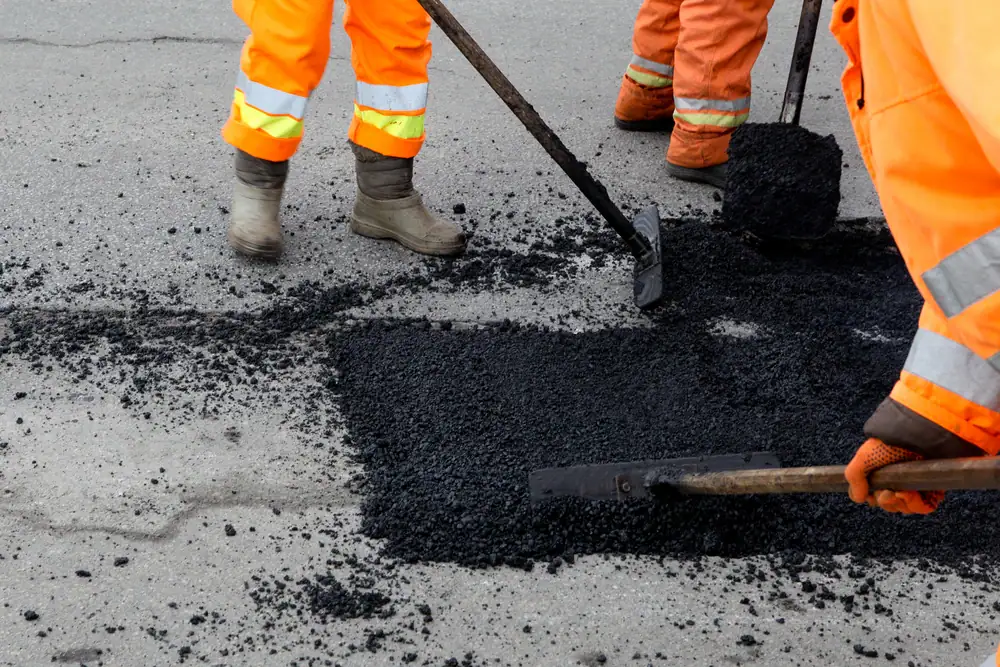
This is the question most homeowners want answered before they call anyone, and it’s a fair one. Nobody wants to pay for a full replacement when a repair would do the job, and nobody wants to spend money on a repair that fails in six months because the real problem wasn’t addressed.
If your driveway has surface cracking that hasn’t penetrated deep into the base, if less than 25 to 30 percent of the surface is affected, and if the pavement is under 20 years old, resurfacing is likely a viable option. That means grinding down the top layer and applying fresh asphalt over a base that’s still structurally sound. When done correctly, a resurfaced driveway can last another 10 to 15 years.
If you’re seeing alligator cracking — that interconnected web pattern across a significant portion of the surface — that’s a base failure, not a surface problem. Putting a new layer of asphalt over a failed base doesn’t fix anything. It just delays the same failure by a year or two, and you end up spending more in the long run. At that point, the honest answer is full reconstruction: remove the existing pavement, address the base, and start fresh.
Cracks wider than a quarter inch are another threshold worth knowing. Left untreated, a crack that size allows water to reach the subbase and, in Florida’s rainy season, that means ongoing damage with every storm. A crack that costs relatively little to seal today can become a pothole that costs significantly more to repair next season.
After a storm like Milton, with the rainfall volumes Polk County experienced, even driveways that look mostly intact may have cracks that have widened or base layers that have absorbed more water than they should have. A professional eye can tell the difference between surface wear and structural damage in a way that a homeowner walking the driveway simply can’t.
There’s a natural tendency after a hurricane to deal with the urgent things first and circle back to the driveway or parking lot later. But “later” has a cost that most people don’t account for.
Every rain event after the storm — and Florida’s rainy season runs from May through September, with hurricane season extending to November 30 — adds more water to a base layer that’s already been compromised. The damage doesn’t stay static while you’re waiting. It accumulates. A base that was weakened during the storm gets worse with each subsequent soaking, and what might have been a resurfacing job in October can become a full reconstruction job by January.
There’s also a practical capacity issue. Fall is the busiest season for asphalt repair work in Florida. Property managers and homeowners who identify damage in September and October are competing for contractor scheduling slots with everyone else who experienced the same storm. The earlier you get an assessment done, the more options you have — both in terms of timing and in terms of what repair approaches are still available to you.
For commercial property managers specifically, there’s a budget cycle consideration as well. Year-end is when maintenance decisions need to be made and documented. Getting an assessment and a written estimate in hand before the end of the fiscal year gives you the information you need to plan, whether the work happens immediately or gets scheduled for early in the new year.
The longer saturated base layers stay under traffic loads, the more they degrade. That’s not a sales pitch. It’s just how pavement failure works.
If your property in Polk County went through hurricane season with any significant rainfall — and virtually all of it did — the right move is a professional assessment before the damage progresses further. Not because every surface needs major work, but because you can’t make a good decision without accurate information.
What you want from that assessment is straightforward: someone who will look at the base condition, not just the surface; give you an honest read on whether repair or replacement makes sense; and put it in writing with a clear breakdown of what’s involved.
That’s exactly how we approach it at Central Florida Blacktop Paving Inc. We work exclusively in asphalt — no concrete, no pavers — which means every assessment we do is grounded in 40 years of experience with exactly this kind of problem. If you’re in Lakeland, Winter Haven, Davenport, Haines City, or anywhere else in Polk County and you want a straight answer about what your asphalt actually needs, reach out to us for a free consultation.
Article details:
Share:
Continue learning: