Florida's two-season climate plays by its own rules. Here's how to keep your parking lot ahead of the damage before the rains arrive.
Share:
Summary:
If you manage a commercial property in Polk County, you already know that Florida does not follow the rulebook most asphalt maintenance advice is written around. There’s no spring thaw to signal the start of paving season. No freeze-thaw cycle cracking pavement from below in January.
What you have instead is six months of intense UV exposure, followed by a rainy season that can drop several inches of water in a single afternoon. That combination — sun, heat, and heavy rain — is what drives asphalt deterioration here, and it moves faster than most property managers expect. Here’s what to schedule, and when, to stay ahead of it.
The single most important window for commercial asphalt services in Polk County runs from October through May — Florida’s dry season. This is when conditions are right for sealcoating, crack sealing, and surface repairs.
Once June arrives and the afternoon thunderstorms become a daily event, water is actively working its way into every unsealed crack, every small surface void, every spot where the pavement has started to oxidize and pull apart. The property managers who get the most life out of their parking lots are not the ones who react when something looks bad. They’re the ones who schedule preventive work in the dry window, every single year, before the rainy season can do its damage.
Polk County sits on a mix of sandy and clay soils depending on where you are in the county, and beneath much of that sits a limestone base layer. That detail matters more than most property managers realize.
When water finds its way through cracks in the asphalt surface and reaches that limestone, it doesn’t just sit there — it erodes the foundation from below. The surface above starts to sag, then crack further, then fail in ways that go well beyond what a simple patch can fix. Sandy soils, common in parts of the county, can shift and settle when base preparation wasn’t done right the first time. Clay soils expand and contract with moisture changes, which puts stress on the pavement from underneath — stress that shows up as cracking and surface movement, especially after a wet summer.
This is why drainage is not optional in Polk County. The county’s flat terrain means water doesn’t naturally run off the way it does in hillier markets. Every commercial lot here needs to be designed — or maintained — with slope and drainage in mind.
A parking lot that pools water after a storm is one that’s aging faster than it should be, regardless of how good the surface looks. If your lot has areas where water consistently stands after rain, that’s not a minor inconvenience. It’s a sign that your pavement is being undermined from below, and it will cost significantly more to fix once the base has been compromised than it would have cost to address the drainage issue early.
One of the most common and costly mistakes property managers make is misreading the condition of their pavement. Not every deteriorating lot needs to be torn out and rebuilt. But not every lot can be saved with a coat of sealant either.
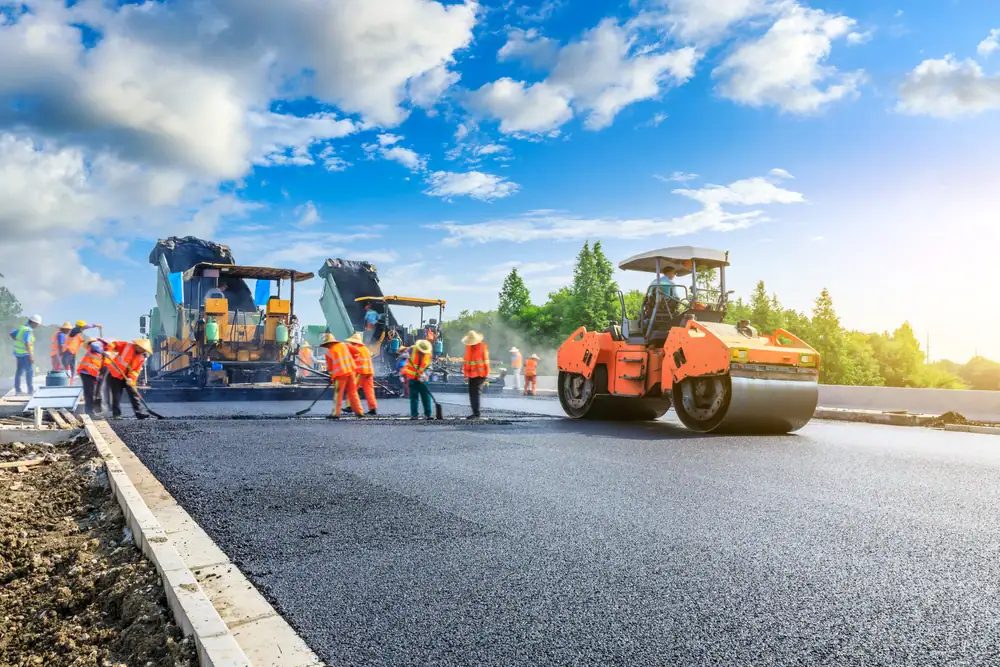
Understanding where your pavement falls on that spectrum is the difference between a smart maintenance decision and an expensive one. Resurfacing — applying one to two inches of new hot-mix asphalt over an existing structurally sound base — costs roughly $1 to $3 per square foot. Full reconstruction runs $5 to $12 per square foot. That’s a 40 to 60 percent cost difference for the same parking lot.
Resurfacing is the right call when the existing base is still solid and less than about 25 to 30 percent of the pavement has failed structurally. Beyond that threshold, you’re looking at reconstruction. The problem is that most property managers don’t have a way to assess this themselves, and some contractors have a financial interest in recommending the more expensive option.
A straightforward inspection from a contractor who will tell you what you actually need — not what’s most profitable to sell — is worth more than any single piece of maintenance work. That honest assessment is what should drive your decision, not a sales pitch. For Polk County properties that were paved during the development boom of 2015 through 2022, many lots are now entering their first real maintenance window. The base is still sound. The surface is showing early oxidation and hairline cracking. This is exactly the moment when a resurfacing or sealcoating program pays for itself many times over, because the window to avoid full replacement is still open — but it won’t stay open indefinitely.
Want live answers?
Connect with a Central Florida Blacktop Paving expert for fast, friendly support.
There’s no mystery to what keeps a commercial parking lot in good shape. The tasks themselves are straightforward. What separates well-maintained properties from deteriorating ones is the discipline to schedule them on a consistent cycle — and the knowledge to sequence them correctly, because doing them out of order wastes money.
Here’s how a sound annual maintenance program actually works for a Polk County commercial property.
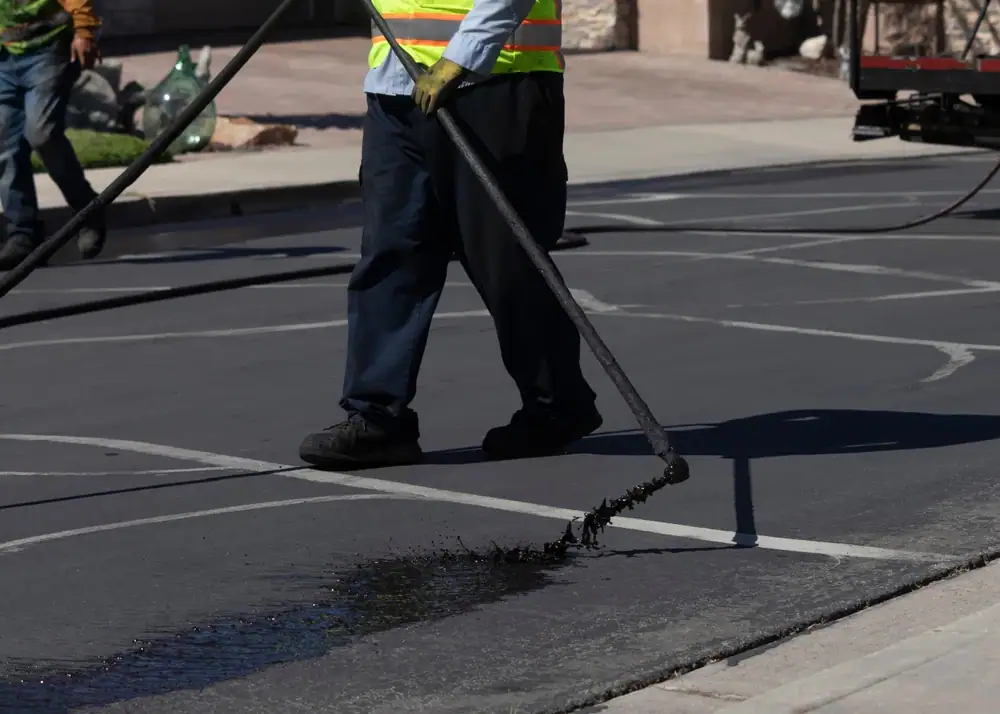
Start with a thorough inspection. This sounds obvious, but many property managers skip it and go straight to sealcoating because it’s visible and feels productive. The problem is that sealcoating over active cracks doesn’t fix them — it traps moisture inside them.
A proper inspection identifies what needs to be addressed before any surface treatment goes down. Crack sealing comes next. A hairline crack that costs roughly $50 to seal today can become a $500 pothole repair within a year if Florida’s summer rains get into it and the base layer starts to deteriorate. Seal the cracks in the dry season, before June, and you remove that pathway entirely.
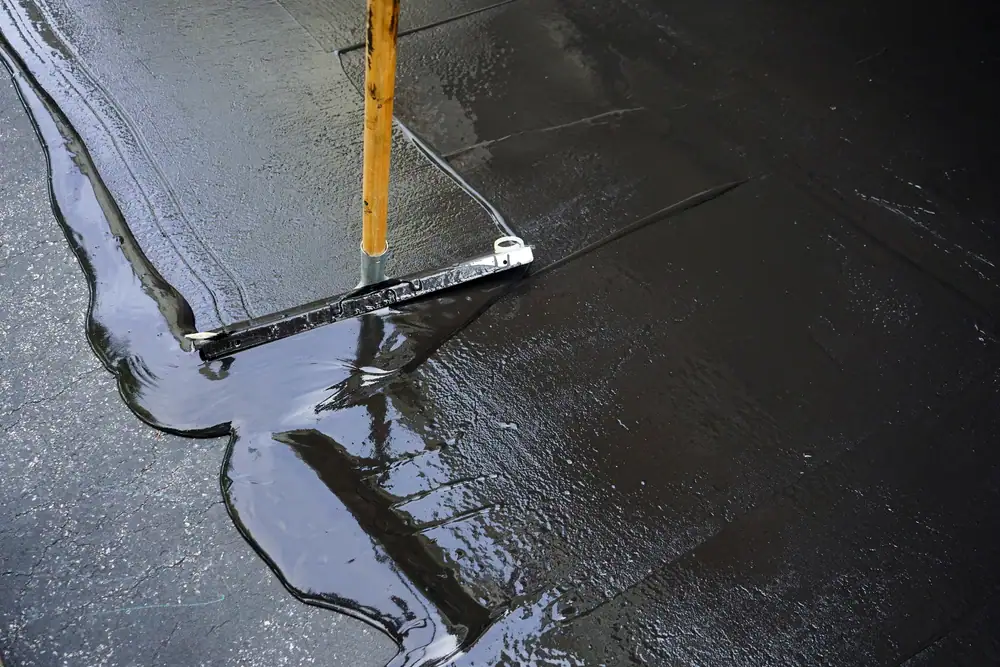
Sealcoating follows crack sealing, not the other way around. Think of sealcoating as a protective barrier against UV oxidation and water penetration — it works on asphalt that’s in good condition, not as a repair for asphalt that’s already failing. In Florida’s climate, a commercial parking lot should be sealcoated every two to three years. The UV exposure alone — at Polk County’s latitude, through a long, cloudless dry season — oxidizes unprotected asphalt faster than most property managers expect. Once asphalt turns gray and brittle, it becomes far more vulnerable to cracking, and the cost to restore it climbs accordingly.
Pothole repair is its own task, separate from crack sealing. Any open pothole on a commercial property is both a liability and an accelerant — water pools in it, the edges keep breaking down, and the surrounding pavement is compromised with every vehicle that passes over it. Address potholes promptly, not at the next scheduled maintenance interval.
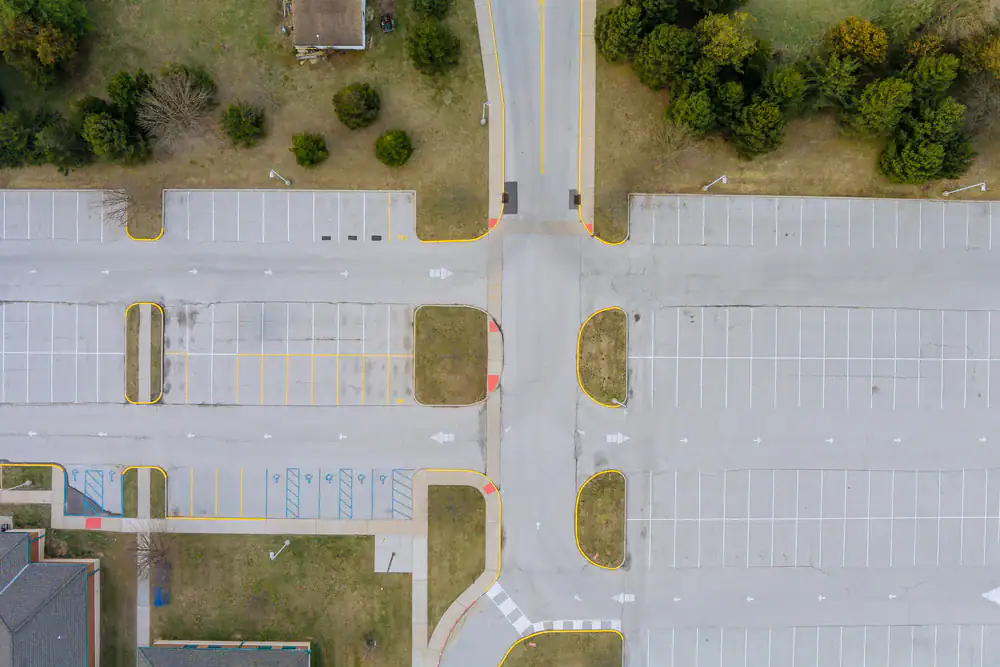
Line striping is often treated as the last item on a property manager’s list, but it belongs on the annual schedule for two reasons that go beyond appearance. First, faded or missing pavement markings are a safety issue — they affect traffic flow, pedestrian crossings, and fire lane visibility.
Second, for commercial properties, ADA-compliant parking stall markings, accessible route designations, and signage placement are a legal requirement, not a suggestion. A parking lot that hasn’t been restriped in several years is a lot that may be quietly accumulating liability. In Polk County’s resort and commercial corridors — particularly along US-27 in Davenport and the industrial areas along US-98 near Lakeland — high-traffic properties see their striping fade faster than lower-volume lots. Heavy truck traffic, delivery vehicles, and consistent daily use wear down surface markings more quickly. If you manage a property in one of those corridors, annual restriping is not an overcorrection. It’s appropriate for the use case.
Drainage maintenance is the fifth task, and arguably the one most specific to this market. Clearing drainage channels, checking that surface slope is still functioning correctly, and addressing any areas where water is pooling are all part of keeping Florida asphalt alive. A lot that drains well after a summer storm is a lot that’s not being undermined by water infiltration. A lot that pools water is one that’s aging in fast-forward.
The sequence for all five tasks matters: inspect first, seal cracks, sealcoat the surface, restripe, and address drainage. Done in that order, in the dry season window before June, this is the program that consistently extends commercial pavement life to 15 years or more. Done reactively, or out of sequence, the same budget produces far shorter results.
The property managers who get the longest life out of their asphalt are not the ones with the biggest maintenance budgets. They’re the ones who act before the damage compounds. A $50 crack seal in March doesn’t feel significant. The $50,000 parking lot reconstruction it prevents five years from now is very significant — and very avoidable.
Polk County’s climate gives you a clear window every year to get ahead of the rainy season. The dry months are when conditions are right, when sealcoating cures properly, when crack sealing holds. Use that window, sequence the work correctly, and you’re not playing catch-up every summer.
If you’re not sure where your lot stands — whether it needs sealcoating, resurfacing, or something more involved — we at Central Florida Blacktop Paving Inc. offer free consultations and provide a detailed, honest assessment of what your pavement actually needs. No upselling, no guesswork. Just a straight answer from a team that has been working Florida asphalt, in Florida’s climate, for over 40 years.
Article details:
Share:
Continue learning: