Polk County's heat, rain, and sandy soils wear asphalt down faster than most property managers realize. Here's what actually keeps a parking lot from failing.
Share:
Summary:
If you manage a commercial property in Polk County, your parking lot is probably the last thing you want to think about — until a tenant calls about a pothole, someone trips on a crack, or your ownership group asks why the lot looks like it’s been through a decade of neglect in five years. Florida’s climate doesn’t give asphalt much of a break. The heat, the rain, the UV, and the soil conditions here accelerate deterioration in ways that catch a lot of property managers off guard. This guide walks through what parking lot maintenance actually involves in this market, what it costs, and how to stay ahead of the problems before they get expensive.
A well-maintained asphalt parking lot can last 20 to 25 years — sometimes longer. A neglected one might start failing in 10 to 12. That gap isn’t just about the quality of the original installation. It’s almost entirely about what happens after the asphalt goes down.
The deterioration curve isn’t linear, either. Asphalt holds up reasonably well through its first 15 years, then quality loss accelerates sharply. What that means practically: a lot that looks fine at year 12 can look genuinely bad by year 17 if nothing was done in between. Preventive maintenance during those middle years is what separates a lot that gets resurfaced from one that needs to be completely rebuilt.
Most of the parking lot maintenance guidance you’ll find online was written for northern markets. It references freeze-thaw cycles, winter salt damage, and spring repair windows. None of that applies here — but that doesn’t mean Polk County asphalt has it easy.
Florida’s UV radiation is relentless. Year-round sun exposure oxidizes the binder in asphalt, making it brittle and prone to cracking faster than it would in a cooler, cloudier climate. Add in a six-month rainy season running from May through October, and you have a situation where water is constantly finding any opening it can — cracks, low spots, drainage gaps — and working its way into the sub-base. Once water gets under the asphalt, the base starts to erode, and that’s when you start seeing potholes and structural failure rather than just surface cracks.
The soil conditions in Polk County add another layer of complexity. Properties throughout the Lakeland area and communities like Nichols deal with a mix of sandy and clay soils that respond differently to moisture. Sandy soil can shift and settle when base preparation is inadequate. Clay soils expand when wet and contract when dry, which stresses the asphalt from below. Neither of these is an insurmountable problem — but they do mean that a contractor unfamiliar with local conditions can produce a parking lot that starts failing long before it should.
Then there’s the heat. Summer temperatures regularly exceed 90°F across Polk County, which softens asphalt and makes it more susceptible to rutting under heavy traffic loads — particularly in areas like Lakeland’s industrial and distribution corridor along I-4, where truck traffic is constant. The combination of heat, UV, moisture, and soil variability makes this one of the more demanding environments for asphalt in the country, even without a single freeze-thaw event.
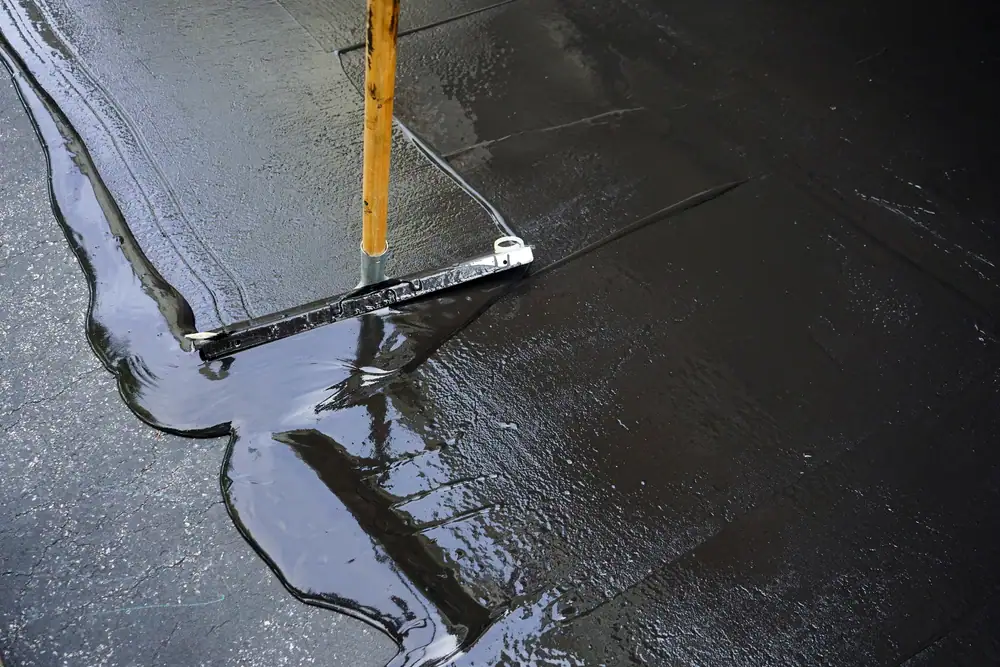
Seal coating asphalt is often misunderstood as a cosmetic service — something you do when the lot starts looking faded. It isn’t. Sealcoating creates a protective barrier over the asphalt surface that blocks UV oxidation, repels water, and resists petroleum spills from vehicles. It’s the primary reason a maintained lot outlasts a neglected one by a decade or more.
In Polk County’s climate, commercial parking lots should be sealcoated every two to three years. That schedule might sound frequent, but the cost makes the case quickly. Sealcoating runs $0.14 to $0.25 per square foot. Full asphalt replacement runs $4 to $10 per square foot. For a mid-size commercial lot, the difference in long-term spend between a maintained surface and a neglected one can be substantial — and that’s before you factor in the disruption cost of a full reconstruction project versus a routine maintenance visit.
The timing of sealcoating matters too. On a newly installed lot, you’ll want to wait six to twelve months for the asphalt to fully cure before applying the first coat. After that, a consistent two-to-three-year cycle keeps the surface protected. Florida’s climate allows sealcoating to be scheduled year-round, though professional contractors will time applications to avoid peak humidity windows where curing can be affected. One practical note for property managers: sealcoating is most effective when crack sealing is done first. Applying sealer over open cracks without addressing them first is a shortcut that shortens the life of both treatments.
Asphalt sealcoating is one of those services where doing it on a predictable schedule — rather than waiting until the lot looks bad — is what actually keeps costs manageable. By the time a lot looks like it needs sealcoating, it usually needed it a year ago.
Want live answers?
Connect with a Central Florida Blacktop Paving expert for fast, friendly support.
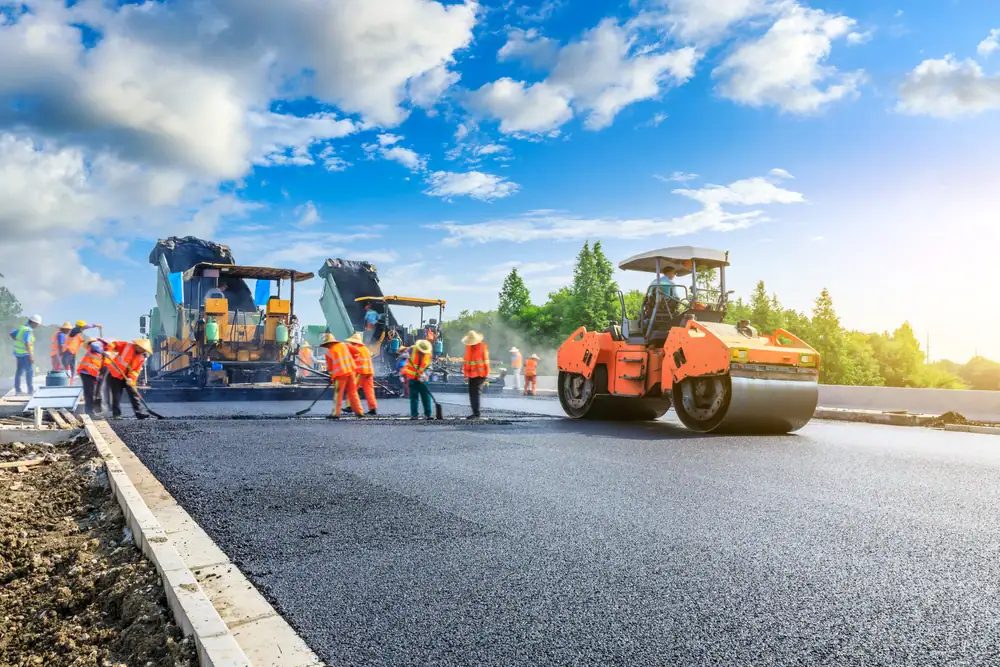
When sealcoating and crack sealing aren’t enough — when the surface has deteriorated beyond what a topcoat can address — resurfacing is typically the next step before full replacement. Asphalt resurfacing involves laying approximately two inches of new hot-mix asphalt over the existing surface, assuming the base is still structurally sound. It extends the life of the lot by 10 to 15 years and costs a fraction of a full rebuild.
For commercial parking lots in Polk County, asphalt resurfacing typically runs $2 to $4 per square foot. That range reflects variation in lot size, surface preparation needs, and material specifications. The key qualifier is base condition — resurfacing only works when the existing base hasn’t failed. If you’re seeing alligator cracking (the interconnected web of cracks that looks like, well, alligator skin), that’s a sign of structural failure, and resurfacing over it won’t hold. That’s a replacement conversation.
When you get a resurfacing quote and see a per-square-foot number, it’s worth understanding what that figure actually covers — because not all quotes are built the same way.
The cost of asphalt resurfacing reflects several components: surface preparation (cleaning, crack sealing, and any patching of localized damage before the overlay goes down), the asphalt material itself, equipment and labor for installation, and compaction. In Polk County, the material specification matters more than most property managers realize. Polymer-modified hot-mix asphalt, which is formulated to handle high temperatures without softening and deforming, costs more than standard mixes — but standard mixes that perform acceptably in northern climates can rut and deform under Polk County’s summer heat and heavy traffic loads.
A quote that comes in significantly below the $2 to $4 per square foot range for commercial resurfacing in this market deserves scrutiny. Low bids often reflect thinner material, skipped surface prep, or a mix specification that isn’t appropriate for Florida conditions. The overlay might look fine for a year or two, then start failing in ways that cost more to fix than the money saved on the original job.
For property managers who need to present a budget to an ownership group or board, the framing that tends to land well is this: resurfacing at $2 to $4 per square foot now, versus full replacement at $4 to $10 per square foot in five years if the surface is left to deteriorate. The math is straightforward, and it’s the kind of documentation that gets maintenance budgets approved.
One of the most common questions property managers bring to an estimate appointment is some version of: “Do I need to repave this whole thing, or can you just fix the bad spots?” It’s a fair question, and the honest answer depends on what’s failing and why.
Surface-level cracking — cracks that are isolated, not interconnected, and haven’t allowed significant water infiltration — is typically a repair and resurfacing situation. Crack sealing stops water from getting in, and resurfacing restores the surface layer. If the base is intact, that’s a cost-effective path with a long service life ahead.
Parking lot repair gets more complicated when the damage is structural. Alligator cracking, large-scale depressions, or areas where the pavement is visibly sinking are signs that the base has been compromised — usually by water infiltration that was left unaddressed for too long. In those cases, patching the surface without addressing the base is a temporary fix at best. The patch will fail, often within a season or two, because the underlying problem hasn’t been solved.
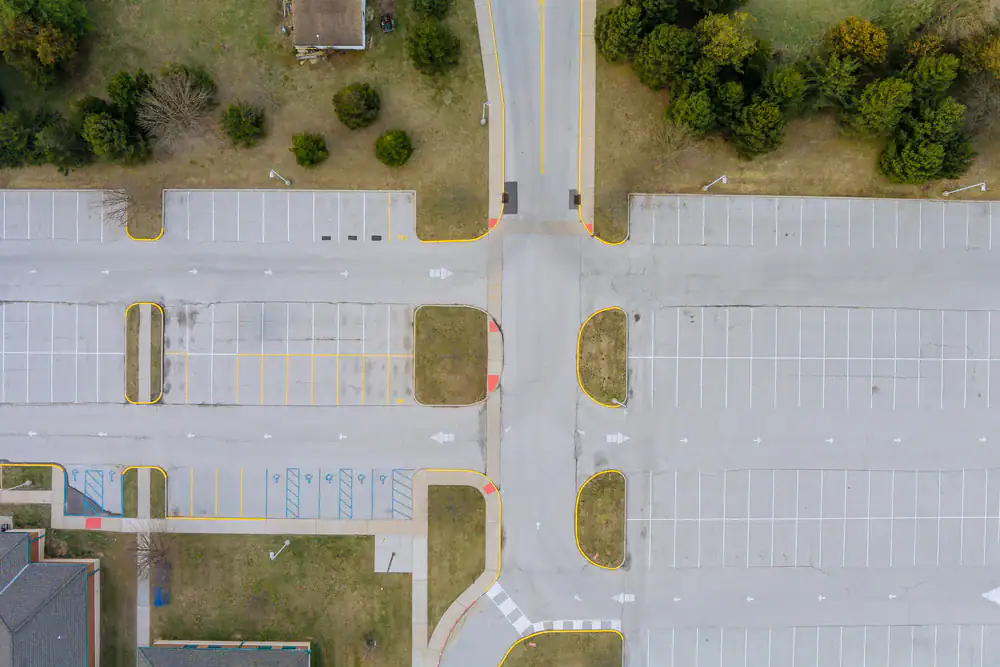
For commercial paving projects in Polk County, the practical approach is a lot-by-lot assessment rather than a blanket recommendation. A thorough on-site evaluation looks at crack patterns, drainage behavior, base condition, and traffic load to determine what the lot actually needs — not what’s easiest to sell. In some cases, that means recommending targeted repairs and a resurfacing schedule. In others, it means having a direct conversation about the fact that the base has failed and replacement is the only option that will hold. Property managers who’ve been burned by contractors recommending more than necessary tend to appreciate that kind of straight talk, even when the news isn’t what they were hoping for.
The Davenport and Haines City areas near the US-27 corridor have seen significant commercial development in recent years, and a lot of those parking lots are now reaching the age where maintenance decisions become critical. Getting ahead of that curve — rather than waiting for visible failure — is what separates a lot that stays in service for 30 years from one that becomes a capital expenditure problem.
Parking lot maintenance in Central Florida isn’t complicated, but it does require a different approach than what works in other markets. The climate here is genuinely demanding — the UV, the rainy season, the heat, the soil variability across Polk County — and the maintenance schedule and materials need to reflect that reality.
The short version: sealcoat on a consistent two-to-three-year cycle, seal cracks before water gets in, resurface when the surface layer is done but the base is still solid, and replace only when the base has actually failed. That sequence, followed consistently, is what keeps a commercial parking lot in service for 25 to 30 years without a full reconstruction.
If you’re managing a property in Polk County and you’re not sure where your lot stands, a free on-site evaluation is the right first step. We at Central Florida Blacktop Paving Inc. have been doing this work in this market for over four decades — asphalt only, no concrete or pavers — and we’re happy to give you a straight assessment of what your lot needs, even if the answer is that it doesn’t need much yet.
—
FREQUENTLY ASKED QUESTIONS
What is the lifespan of an asphalt road or parking lot?
With consistent maintenance — sealcoating every two to three years, crack sealing as needed, and resurfacing when the surface layer wears — a commercial asphalt parking lot in Polk County can last 20 to 30 years or more. Without maintenance, that lifespan can be cut roughly in half. Polk County’s UV exposure and six-month rainy season accelerate deterioration compared to northern markets, which is why the maintenance schedule here needs to be more consistent, not less.
What does asphalt driveway repair cost?
Repair costs vary depending on what’s failing and why. Individual pothole repairs typically run $100 to $400 each. Crack sealing is significantly less expensive per linear foot and is the most cost-effective intervention when addressed early. For more widespread surface damage across Polk County properties, resurfacing — which runs $2 to $4 per square foot for commercial surfaces — is often more economical than patching every problem area individually.
What is the average cost to resurface a driveway?
For residential asphalt driveway resurfacing in Polk County, costs typically fall in the $2 to $4 per square foot range, depending on the condition of the existing surface, the size of the project, and the preparation work required. A detailed on-site estimate is the only reliable way to get an accurate number for your specific property, since base condition and drainage factors vary considerably across Polk County’s different soil types — sandy soils in some areas, clay-heavy in others.
Article details:
Share:
Continue learning: