Your asphalt gives you warnings before it fails. Here's how to read them — and what to do before the damage gets expensive.
Share:
Summary:
Most people don’t think about their asphalt until something goes wrong. A crack spreads. A pothole appears. Water starts pooling in places it never used to. By then, the easy fixes are usually off the table.
The good news is that asphalt gives you warnings. It doesn’t fail silently. And if you know what to look for, you can catch problems early — when a maintenance visit is all it takes, rather than a full replacement that costs ten times more.
Here are the five signs that your asphalt maintenance is failing, and what each one actually means for your pavement.
There’s a difference between asphalt that looks a little worn and asphalt that’s actively breaking down. The surface might still feel solid underfoot while the base beneath it is losing structural integrity. That’s the part most property owners miss — because they’re judging by appearance alone.
What you’re really watching for is a pattern of change. A single small crack isn’t necessarily alarming. But cracks that are multiplying, widening, or reappearing after you’ve patched them? That’s your pavement telling you something is wrong at a deeper level. The five signs below are the most common ones we see on driveways and parking lots across Polk County — and each one points to a specific problem worth addressing.
The first sign is cracking — but not all cracks are equal. Hairline cracks along the surface are early-stage oxidation, and they’re manageable. What you want to watch for is a web-like pattern of interconnected cracks, sometimes called alligator cracking. That pattern tells you the base beneath the surface layer has weakened, usually from water getting in through smaller cracks that weren’t sealed in time. Once you’re seeing alligator cracking across a significant area, sealcoating alone won’t fix it. You’re looking at a repair or resurfacing conversation.
The second sign is color. Fresh asphalt is a deep, rich black. As it ages and oxidizes — a process driven almost entirely by UV exposure — it fades to gray. That gray color isn’t just cosmetic. It means the binder that holds the asphalt together is drying out and becoming brittle. Here in Polk County, where the UV index runs between 10 and 11 from March through October, this process happens faster than it would in a northern state. Fading that’s gone unchecked for several years usually means the surface is significantly more vulnerable to cracking than it looks.
The third sign is water that doesn’t drain. After a typical Polk County afternoon storm — the kind that rolls through between June and September and drops an inch of rain in forty minutes — your asphalt should shed water cleanly. If you’re seeing puddles that sit for hours, or water that consistently collects in the same low spots, that’s a drainage problem. And drainage problems are serious. Standing water doesn’t just sit on the surface; it works its way into any existing crack, softens the base material beneath, and accelerates the kind of structural failure that turns a $300 maintenance visit into a $5,000 resurfacing job.
The fourth sign is one you feel rather than see. If you walk across your driveway or parking lot and notice areas that feel slightly spongy or give a little under your weight, that’s a base problem. The asphalt surface above might look intact, but the material supporting it has been compromised — usually by water infiltration or by a base that was never properly prepared in the first place. Soft spots don’t resolve on their own. They get worse under traffic, and they tend to collapse into potholes relatively quickly once the surface layer can no longer hold.
The fifth sign is edge deterioration. The edges of an asphalt surface — where it meets grass, gravel, or a curb — are the most vulnerable points. They don’t have lateral support on one side, so they’re the first place you’ll see crumbling, chipping, or gradual breakaway. Some edge wear is normal over time, but when it’s accelerating or happening on a surface that’s only a few years old, it usually points to either a drainage issue directing water toward the edge or an installation problem with the base or thickness at the perimeter.
Both of these signs — soft spots and edge crumbling — are ones we pay close attention to during maintenance visits. After four decades of working on asphalt in Central Florida, we’ve learned that what’s happening at the edges and beneath the surface tells you far more about a pavement’s condition than what’s visible in the middle. Catching either of these early means the repair is simpler, faster, and a fraction of the cost of letting it go.
Want live answers?
Connect with a Central Florida Blacktop Paving expert for fast, friendly support.
Florida’s climate is hard on asphalt in ways that aren’t always obvious. There’s no freeze-thaw cycle here, so the cracking patterns you’d see in northern states from frost heaving don’t apply. But the combination of intense UV, heavy seasonal rainfall, and heat that softens the surface during summer months creates its own set of problems — and they move fast without a consistent maintenance program.
The general guideline for sealcoating is every two to three years, but in Polk County, sun exposure and the annual rainy season can push that timeline. A surface that was sealed three years ago and has seen four consecutive summers of afternoon thunderstorms may already be showing signs of sealer breakdown. The timing of when you maintain matters almost as much as whether you maintain at all.
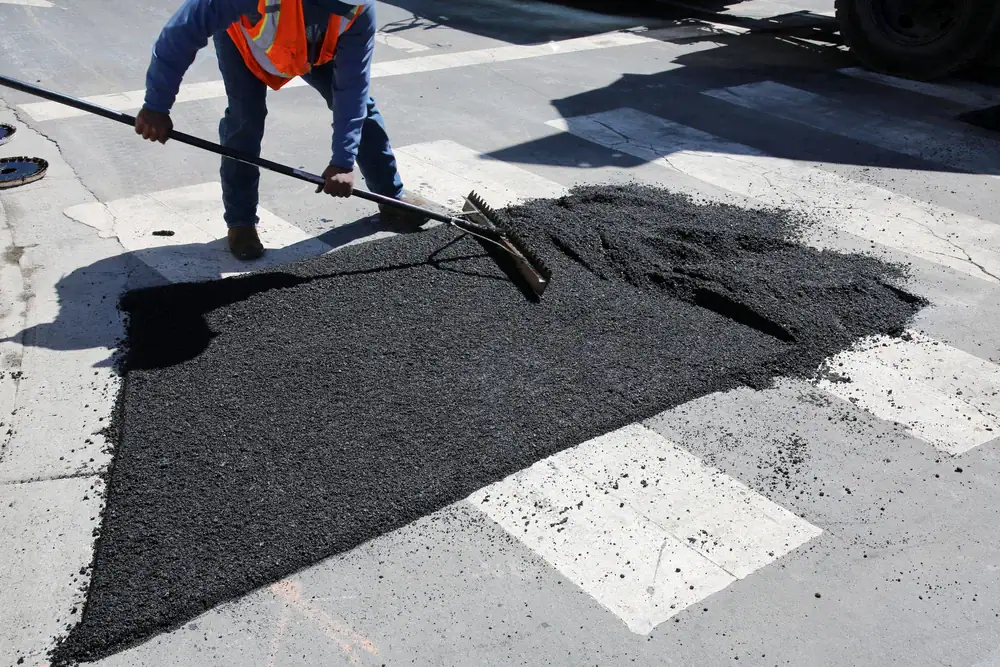
Parking lot maintenance follows the same principles as residential asphalt, but the stakes are higher and the failure timeline is faster. Commercial lots handle heavier traffic loads, more frequent turning and braking, and in some cases delivery trucks that put real stress on the surface. A parking lot that looks fine to a casual observer can be quietly losing its structural integrity in the areas that see the most use.
The most common mistake we see with commercial property owners in Polk County is treating maintenance as reactive rather than scheduled. Something breaks, they call someone, it gets patched. Then the same area breaks again six months later because the underlying cause — usually drainage or base softening — was never addressed. Patching the surface without understanding why that spot failed is like putting a bandage over something that needs stitches.
A proper parking lot maintenance program includes regular sealcoating on the appropriate schedule, crack sealing before water gets into the base, and periodic drainage inspections — especially heading into and coming out of the summer rainy season. For lots near the I-4 corridor in Davenport or the commercial corridors along US-27 and US-192, where delivery traffic is heavier than average, those inspections matter even more. High-traffic areas break down faster, and the maintenance schedule should reflect that.
Line striping is also part of a complete maintenance picture, though it’s often treated as an afterthought. Faded lines aren’t just a cosmetic issue — they create confusion in parking areas and can become a liability concern for commercial property managers. A well-maintained lot looks intentional, and that reflects directly on the business operating out of it.
This is one of the most common questions we hear, and the honest answer is: it depends on your specific surface, but every two to three years is a reliable baseline for most properties here in Polk County. New asphalt should be sealed approximately six months after installation, once the surface has had time to cure. After that, the schedule depends on traffic volume, how much direct sun the surface gets, and how well the drainage is working.
A residential driveway on the shaded side of a house in Lakeland might hold a seal for three years comfortably. A commercial parking lot off Kathleen Road with full sun exposure and daily traffic from a retail business may need attention closer to the two-year mark. The condition of the sealer is more important than the calendar date — if the surface has faded back to gray and water is no longer beading on the surface, it’s time to reseal regardless of when it was last done.
One thing worth knowing: sealcoating requires dry conditions and warm temperatures to cure correctly. In Polk County, that means scheduling around the summer rainy season. Late spring — April and May — is often ideal, because you’re ahead of the June-through-September storm pattern and the surface has time to cure fully before the heaviest rain months arrive. Fall, after the rainy season winds down in October, is another good window. Trying to seal during the rainy season is possible, but it requires careful scheduling and at least 24 to 48 hours of dry weather before and after application.
The cost of staying on schedule is modest — sealcoating a typical residential driveway runs a few hundred dollars, and commercial lots in Polk County generally fall in the range of $0.15 to $0.30 per square foot depending on size and condition. Compare that to what resurfacing costs, and the math for regular maintenance is straightforward.
If one or two of these signs sound familiar, the most important thing you can do is get an honest assessment before the problem gets bigger. Most asphalt issues are fixable at the maintenance level when they’re caught early. The ones that aren’t are usually the ones that sat unaddressed through a few more rainy seasons than they should have.
A good contractor will look at the surface, check the drainage, and tell you plainly what they’re seeing — including whether maintenance is the right call or whether something more significant needs to happen. That’s exactly what we offer at Central Florida Blacktop Paving Inc. We’ve been working on asphalt in Polk County for over 40 years, and we’re not in the business of recommending work that isn’t needed.
If your driveway or parking lot is showing any of these signs, reach out to us for a free consultation. No pressure, no guesswork — just a clear look at what you’re dealing with and what it will take to fix it.
Article details:
Share:
Continue learning: