Sealcoating does more than make your driveway look new. Here's what it's actually protecting your asphalt from — and why it matters in Florida's climate.
Share:
Summary:
Most people notice their driveway is turning gray or starting to crack and assume it’s just age. Sometimes it is. But more often, it’s the result of asphalt that lost its protection long before the visible damage showed up.
Seal coat is the layer that prevents that from happening. It’s not a cosmetic fix or a contractor upsell — it’s a maintenance step that directly determines how long your asphalt lasts and how much you’ll spend keeping it that way.
If you’re in Polk County and wondering whether sealcoating is actually worth doing, here’s an honest breakdown of what it protects against, how the process works, and what to expect.
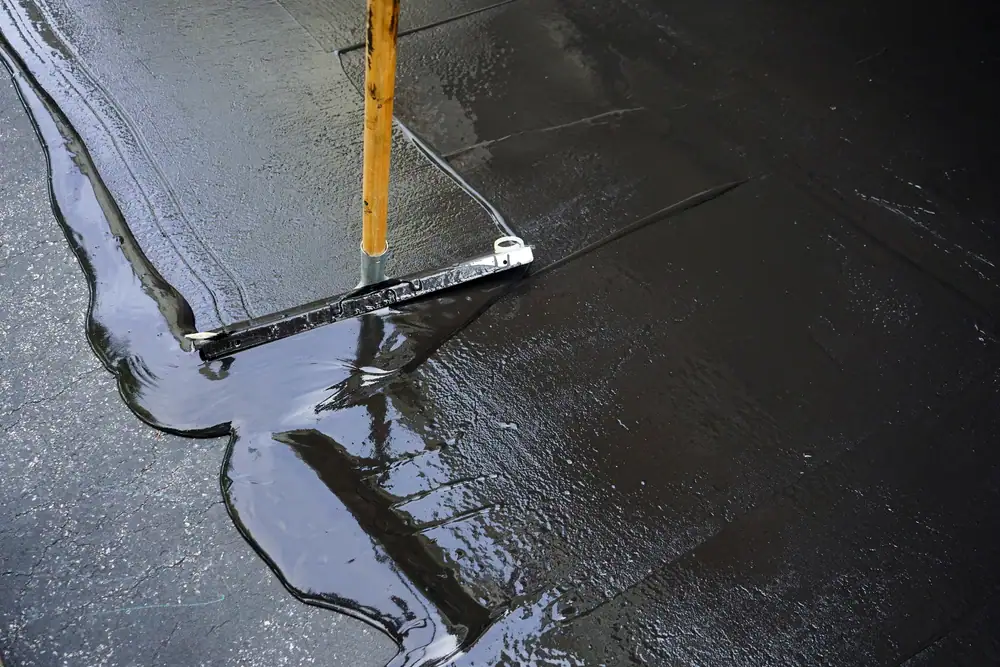
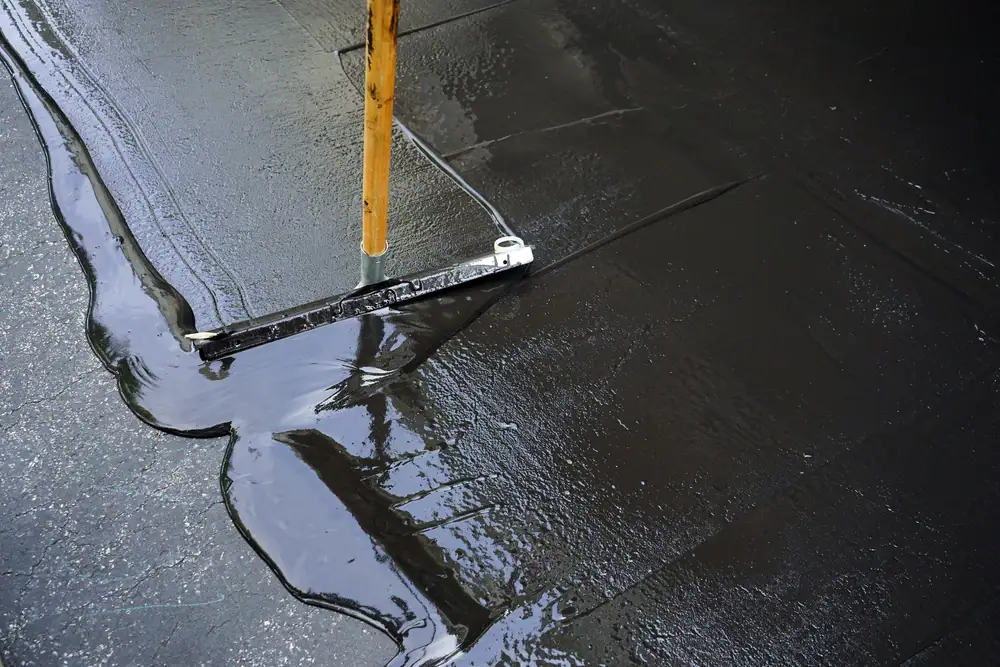
Asphalt isn’t a single solid material — it’s a mix of aggregate and binder, and it’s the binder that breaks down over time. UV rays dry it out. Water gets underneath it. Vehicle fluids dissolve it. Seal coat creates a protective barrier that slows all of that down significantly.
The four main threats sealcoating defends against are UV oxidation, water infiltration, chemical exposure, and surface wear. In most U.S. markets, UV and water are the primary concerns. In Polk County, both are extreme — and they work together in ways that accelerate damage faster than most property owners realize.
Central Florida gets more annual sunshine than almost anywhere else in the country, and Polk County sits right in the middle of it. Asphalt surface temperatures here regularly hit 130–140°F during summer months. At those temperatures, the binder that holds your pavement together starts to oxidize and dry out — even if the surface still looks fine.
Oxidation is the process that turns asphalt from deep black to gray. That color change isn’t cosmetic. It means the binder is depleting, the surface is becoming brittle, and small cracks are forming at the aggregate level before you can see them with the naked eye. Once the binder is gone, water gets in. Once water gets in, you’re looking at structural failure — not just a surface issue.
Seal coat works by replenishing the surface oils, slowing oxidation, and creating a UV-resistant layer that takes the punishment instead of the asphalt beneath it. Think of it as a sacrificial coating. It wears down over time by design, protecting the pavement underneath while it does.
In northern climates, UV is a seasonal concern. In Polk County, it’s year-round. That’s why the reapplication window here — typically every two to three years — is shorter than what you’d hear from a contractor working in a cooler market. The exposure is simply more intense, and the math reflects that.
If your driveway is already graying, that’s the signal that oxidation is actively underway. Sealcoating at that stage can stop it from progressing. Waiting until cracks appear means the binder is already compromised, and you’re looking at more expensive repairs before sealcoating even makes sense.
Central Florida receives more than 50 inches of rain per year, and most of it falls in intense afternoon bursts during the June through September rainy season. A single storm can drop two inches in an hour. For unsealed asphalt, that kind of rainfall doesn’t just sit on the surface — it finds every small crack and works its way down to the base.
Polk County’s geography makes this especially relevant. Lakeland is built around 38 lakes. Winter Haven sits in the middle of a chain of more than 50. Properties near these water bodies deal with higher ambient moisture and drainage conditions that put more consistent pressure on pavement. In areas like Poinciana and parts of Davenport, sandy soils are common — and while sandy soil drains well, it also shifts when it gets saturated, which can undermine the base layer beneath your asphalt.
Once water reaches the base, the damage moves fast. The foundation erodes, the surface starts to sag, and you get the kind of cracking that no amount of sealcoating can fix. At that point, you’re looking at resurfacing or full replacement — not maintenance.
Sealcoating prevents this by creating a waterproof barrier at the surface. Water runs off instead of infiltrating. The base stays stable. The asphalt stays structurally intact. It’s not a dramatic intervention — it’s a simple layer that stops the most common failure sequence before it starts.
This is why sealcoating matters more in Polk County than it would in, say, Arizona. The UV is comparable. The rainfall is not. You’re dealing with both, simultaneously, for most of the year. Unsealed asphalt in this climate degrades faster than property owners expect. Without a regular sealcoating schedule, major deterioration can set in within three to five years.
Want live answers?
Connect with a Central Florida Blacktop Paving expert for fast, friendly support.
The quality of a sealcoating job comes down almost entirely to what happens before the product goes on. Most sealcoating failures — peeling, flaking, uneven wear — trace back to skipped prep work, not the product itself.
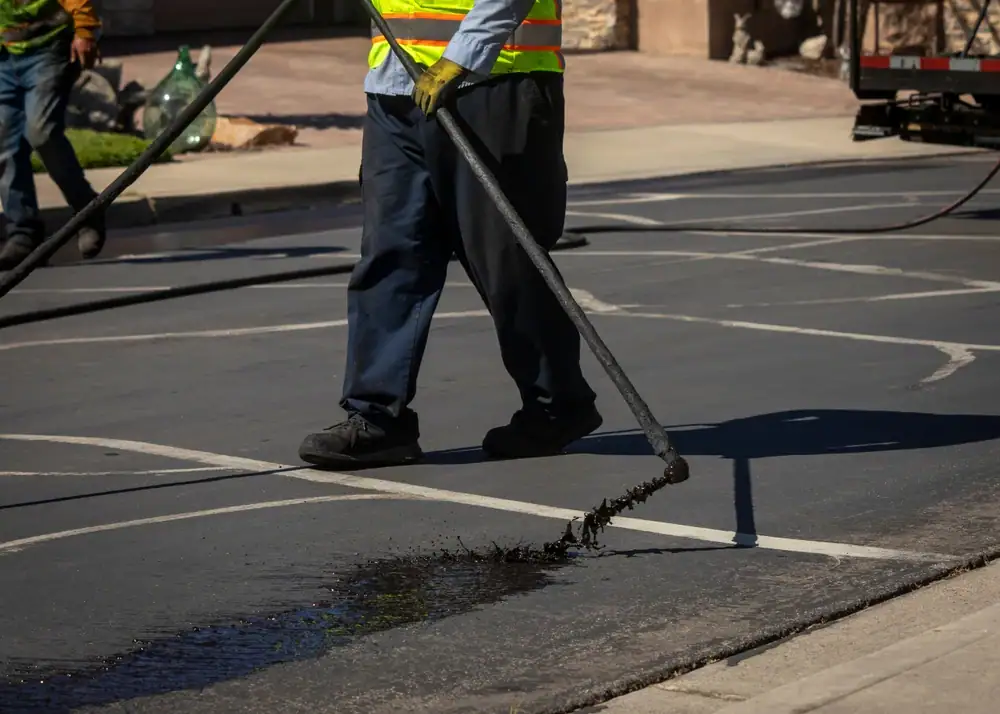
A professional application starts with thorough surface cleaning: removing debris, dirt, and any material that would prevent the sealer from bonding properly. Then any existing cracks get filled. Then, and only then, does the sealcoat go on — in two coats, with proper drying time between them.
Surface prep is the part of the job that low-bid contractors skip because it takes time and doesn’t show up in the finished product. You can’t tell from looking at a freshly sealed driveway whether we cleaned it properly, filled the cracks, or just sprayed over whatever was there. You find out twelve months later when it starts peeling.
The right sequence starts with a complete surface clean — blowers, brooms, and in some cases pressure washing — to remove anything that would prevent adhesion. Loose aggregate, oil spots, plant material, and standing debris all compromise the bond between the sealcoat and the asphalt surface. Oil stains in particular need to be treated before application, because sealcoat won’t adhere properly to petroleum-contaminated areas.
Crack filling comes next. This is a separate step from sealcoating, and it’s important to understand that distinction. Sealcoat is not a crack filler. It’s a surface coating. Applying it over unfilled cracks doesn’t seal those cracks — it bridges them temporarily and fails quickly. Cracks need to be cleaned out and filled with a dedicated crack filler before any sealcoat is applied. We do this as a standard part of every job, not an add-on.
Once the surface is clean and cracks are filled, the sealcoat goes on in two coats. A single thin coat is a common shortcut — it uses less material and goes faster, but it doesn’t provide the coverage or durability that two properly applied coats deliver. Each coat needs adequate drying time before the next one goes on, and the full cure before vehicle traffic is typically 24 to 48 hours depending on temperature and humidity.
In Florida’s climate, timing the application matters. Sealcoat needs dry conditions and temperatures above roughly 50°F to cure properly. During the summer rainy season, morning applications before afternoon storms are common and workable. The dry season — November through April — is the optimal window for Polk County, with lower humidity and consistent temperatures that support ideal curing conditions.
Not all sealcoating products are the same, and the differences matter more in Florida than in most other markets. The three main types are coal tar emulsion, asphalt emulsion, and acrylic sealer — and each performs differently under the conditions Polk County regularly delivers.
Coal tar emulsion is the traditional standard. It offers strong resistance to fuel and chemical spills, which makes it a common choice for commercial parking lots where vehicle fluid exposure is higher. It’s durable and provides good UV resistance, though it has a stronger odor during application and longer off-gassing time.
Asphalt emulsion sealer is water-based and the most widely used product in Florida’s residential market. It bonds well to asphalt surfaces, provides solid UV and water protection, and performs reliably in high-heat environments. It’s the right choice for most residential driveways in Polk County when applied correctly and at proper thickness.
Acrylic sealers are the premium option — more flexible, more UV-resistant, and more durable in extreme temperature swings. In a climate where surface temperatures regularly exceed 130°F and then drop significantly overnight, flexibility matters. A sealer that becomes brittle in temperature cycles will crack and fail faster than one that moves with the pavement.
What doesn’t work is a watered-down product applied in a single thin coat. This is the most common failure mode in DIY sealcoating and low-bid contractor work. The hardware store bucket isn’t the same formulation as a commercial-grade product, and brush application doesn’t achieve the consistent coverage and adhesion that spray equipment with continuous agitation provides. The difference in longevity is significant — a professionally applied job in Polk County should last two to three years before reapplication is needed. A DIY application with hardware store product typically shows wear within twelve months.
For newly paved driveways — and there are a lot of them in Davenport and Haines City right now given the pace of new construction — the timing of the first application matters. New asphalt needs six to twelve months to cure before sealcoating. Applying too early traps oils that need to off-gas during the curing process. If your driveway was installed in the last year, it’s worth checking that window before scheduling your first seal.
The math isn’t complicated. Sealcoating in Polk County runs $0.12 to $0.20 per square foot. Asphalt replacement runs $3 to $7. For a standard driveway, that’s roughly $72 to $120 every two to three years versus $1,800 to $4,200 when the pavement fails. Properly maintained asphalt in this climate can last 20 to 25 years. Without maintenance, you’re typically looking at replacement in 10 to 15.
The catch is that sealcoating only works when it’s done right. The prep has to be thorough. The product has to be appropriate for Florida’s conditions. The application has to be two coats, not one. And it has to happen before the damage is already structural — because sealcoating protects intact asphalt. It doesn’t rebuild what’s already broken.
If your driveway is graying, showing surface cracks, or just hasn’t been sealed in a few years, now is the right time to get an honest assessment. We’ve been doing exactly this work in Polk County for over 40 years — asphalt only, no concrete, no pavers — and we’re happy to take a look and give you a straight answer about what your pavement actually needs.
Article details:
Share:
Continue learning: