Planning a parking lot paving project? Discover what commercial property owners need to know about site preparation, drainage, ADA requirements, and choosing the right paving contractor.
Share:
Summary:
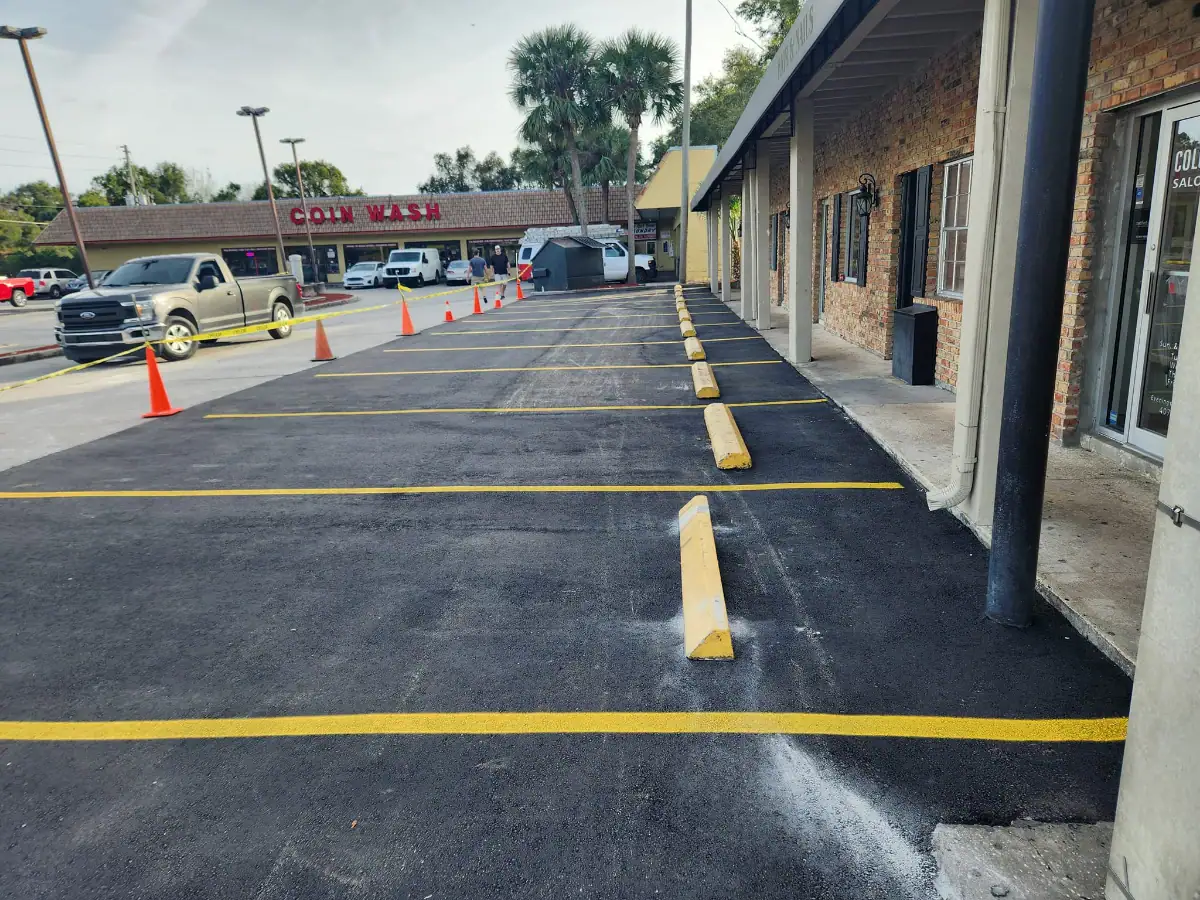
Planning a commercial paving project starts with understanding what you actually need. The size of your lot, the type of traffic it handles, and your budget all play a role in determining the right approach.
Most commercial parking lot paving projects cost between $2.50 and $7 per square foot, depending on site conditions, asphalt thickness, and whether you need extensive site preparation. That means a 10,000 square foot lot could run anywhere from $25,000 to $70,000. The wide range isn’t arbitrary—it reflects real differences in what your property needs.
Before you get quotes, think about your traffic patterns. A retail center with constant customer turnover has different requirements than an office building where cars sit all day. Loading zones, delivery trucks, and heavy equipment change everything about thickness requirements and base preparation. These aren’t details to figure out later—they shape your entire project scope and budget from day one.
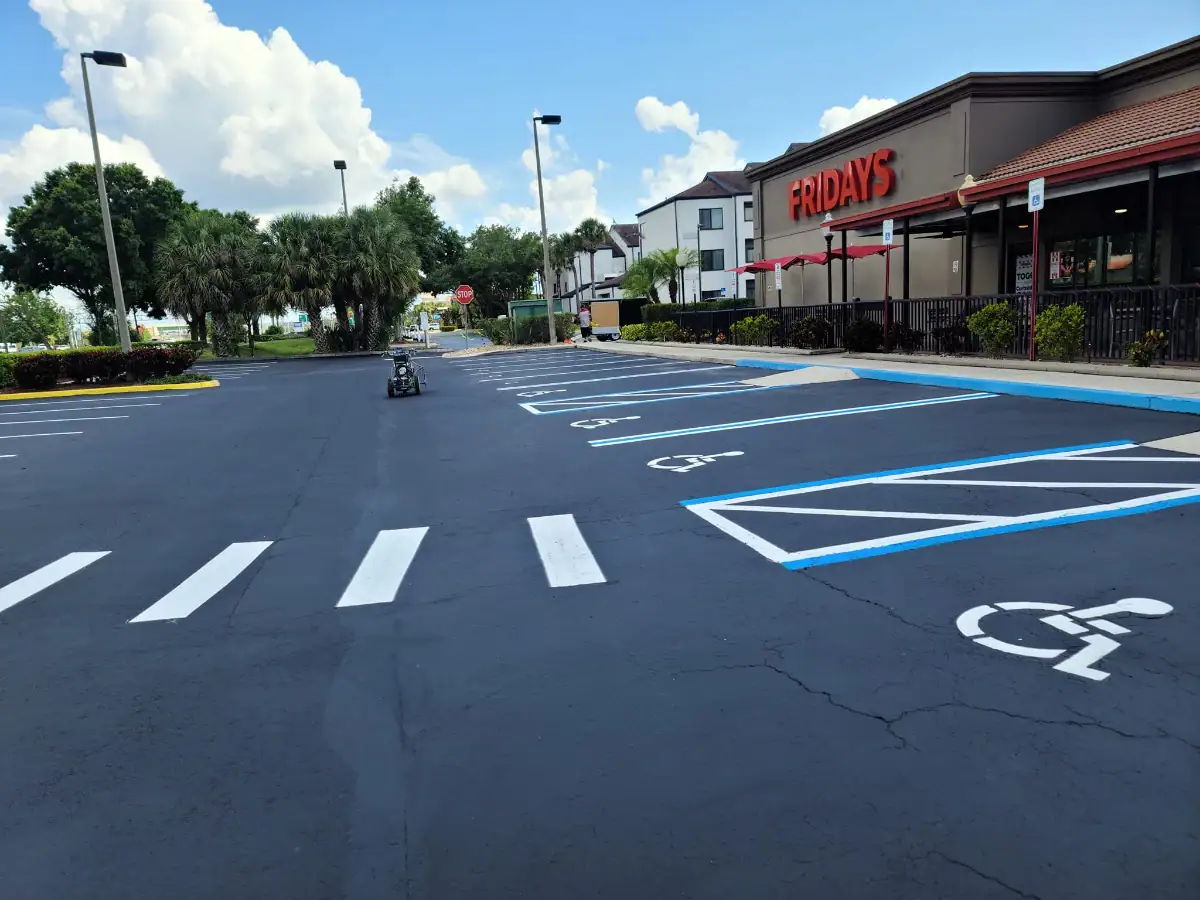
Site preparation is where parking lot projects either succeed or fail. You can’t see what’s underneath the asphalt, but that hidden foundation determines whether your lot lasts three years or thirty.
We start by evaluating your subgrade—the soil underneath everything else. In Polk County, FL, soil conditions vary, and some areas have clay or unstable soils that need to be removed and replaced. We use heavy equipment to proof-roll the area, identifying soft spots that would eventually cause the pavement above to crack and settle. If your subgrade isn’t stable, nothing you put on top of it will perform properly.
Once soft areas are identified, they’re excavated and filled with compacted aggregate material—typically 12 inches of uniformly-sized rock for commercial applications. This creates a stable working platform that won’t shift under the weight of vehicles. The subgrade must be graded to proper contours before any aggregate or asphalt goes down, establishing the drainage patterns that will protect your pavement for decades.
Skipping proper subgrade preparation is the most common way contractors cut costs, and it’s the mistake that costs property owners the most money down the road. A parking lot built on poor subgrade will develop cracks, potholes, and drainage problems within just a few years. You’ll end up paying twice—once for the cheap installation, and again for the repairs or complete replacement.
The aggregate base layer comes next, typically 6 to 8 inches for light-duty commercial lots and 8 to 12 inches for heavy-duty applications. This layer must be placed in lifts, compacted properly, and checked for proper grade and moisture content. The base distributes vehicle loads across the subgrade and provides additional stability. Without adequate base thickness, even thick asphalt will crack under normal traffic loads.
Water is asphalt’s worst enemy. Poor drainage causes more parking lot failures than any other single factor, and in Florida’s heavy rainfall climate, drainage design isn’t optional—it’s essential.
Proper parking lot drainage requires a slope between 2% and 5% across paved surfaces. That translates to roughly 1/4 inch per foot of fall. This slope directs water away from the pavement surface toward catch basins, storm sewers, or designated drainage areas. Without adequate slope, water pools on the surface, eventually finding its way through small cracks into the base layers below.
When water penetrates beneath the asphalt surface, it weakens the subgrade and base materials. In areas with freeze-thaw cycles, this trapped moisture expands when frozen, pushing the pavement upward and creating more cracks. Even in Florida’s climate, moisture infiltration combined with UV exposure and traffic loads accelerates deterioration. What starts as a small crack becomes a pothole, and one pothole leads to more extensive damage.
During the design phase, we evaluate the entire site for drainage patterns. We identify where water naturally flows, where it tends to accumulate, and how to direct it away from both the parking lot and adjacent buildings. This might involve installing catch basins at low points, creating swales along edges, or connecting to existing storm water systems.
The grading work happens during site preparation, before any aggregate or asphalt is placed. Once the subgrade is shaped to the proper contours with adequate slope, that drainage pattern is locked in. You can’t fix drainage problems after the asphalt is down without tearing everything out and starting over. This is why we spend significant time on grading and why cutting corners here costs so much later.
Standing water in your parking lot isn’t just unsightly—it’s a warning sign of structural problems developing beneath the surface. Property owners who notice pooling after rainstorms should address drainage issues before they lead to pavement failure. Sometimes localized repairs can fix problem areas, but often poor drainage indicates fundamental design flaws that require more extensive work.
Want live answers?
Connect with a Central Florida Blacktop Paving expert for fast, friendly support.
Asphalt thickness isn’t a one-size-fits-all specification. The right thickness for your parking lot depends on the type of traffic you expect and the quality of your base preparation.
For light-duty commercial parking lots—primarily passenger vehicles with minimal truck traffic—3 to 4 inches of compacted asphalt over a 6-inch aggregate base provides adequate durability. This works for most office buildings, small retail centers, and similar applications where heavy vehicles are rare.
Heavy-duty commercial parking lots need more substantial construction. Loading docks, delivery areas, and spaces where trucks regularly park require 4 to 7 inches of asphalt thickness. Some high-traffic areas or locations with frequent heavy truck traffic might need even more. The additional thickness distributes vehicle loads more effectively, preventing rutting and premature failure. Skimping on thickness in heavy-use areas is false economy—you’ll pay for it in repairs within just a few years.
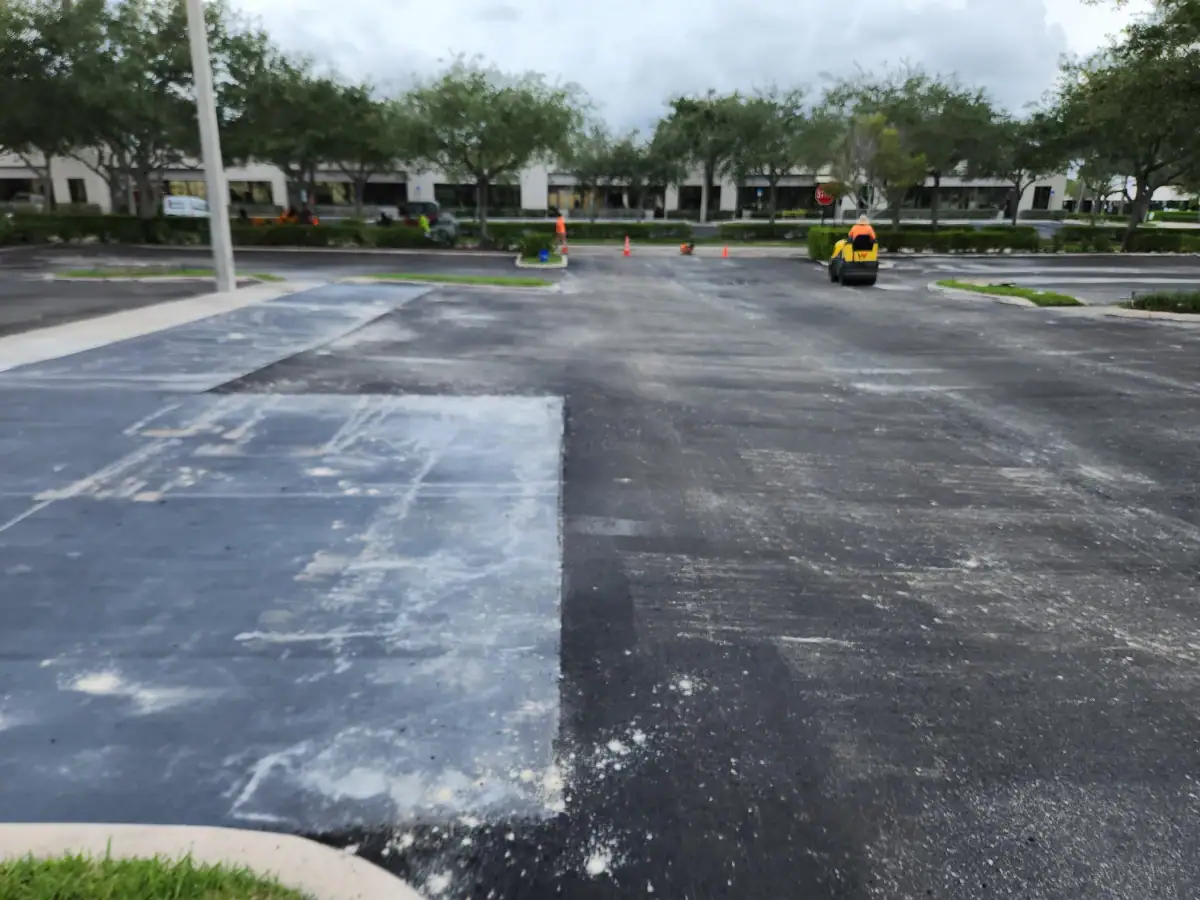
Understanding the paving process helps you know what to expect and recognize whether your contractor is doing quality work. Professional parking lot installation follows a specific sequence, and each step builds on the previous one.
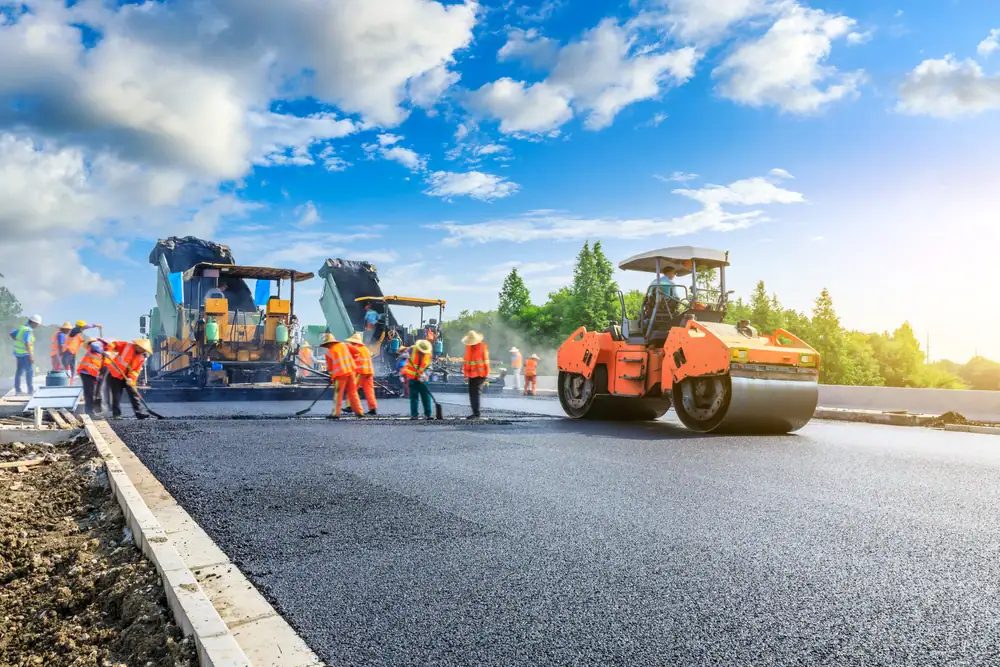
After site preparation and base installation are complete, the asphalt paving begins. Hot-mix asphalt is delivered from the plant in dump trucks and loaded into a paving machine. The paver distributes the material in passes typically 8 to 20 feet wide, maintaining consistent thickness and proper cross-slope for drainage. Modern pavers use laser-guided systems to ensure even application and correct elevation.
The asphalt is applied in layers. For most commercial applications, we install a binder course first—a coarser mix with larger aggregate that provides structural strength. This layer is typically 1.5 to 2 inches thick for standard applications, or up to 2.5 inches in heavy-duty areas. After the binder course is compacted, the surface course goes down. This final layer uses smaller aggregate for a smoother finish and is usually 1.5 to 2 inches thick.
Compaction happens immediately after each layer is placed, while the asphalt is still hot. Vibratory rollers ranging from 3 to 10 tons compact the material to proper density, eliminating air voids and creating a strong, durable surface. Proper compaction is critical—inadequately compacted asphalt will deteriorate quickly under traffic loads.
After paving is complete, the asphalt needs time to cure before you can allow full traffic. Most lots can handle light traffic within 24 hours, but heavy loads should wait 2 to 3 days. The surface continues to harden over the following weeks as it cools and cures completely.
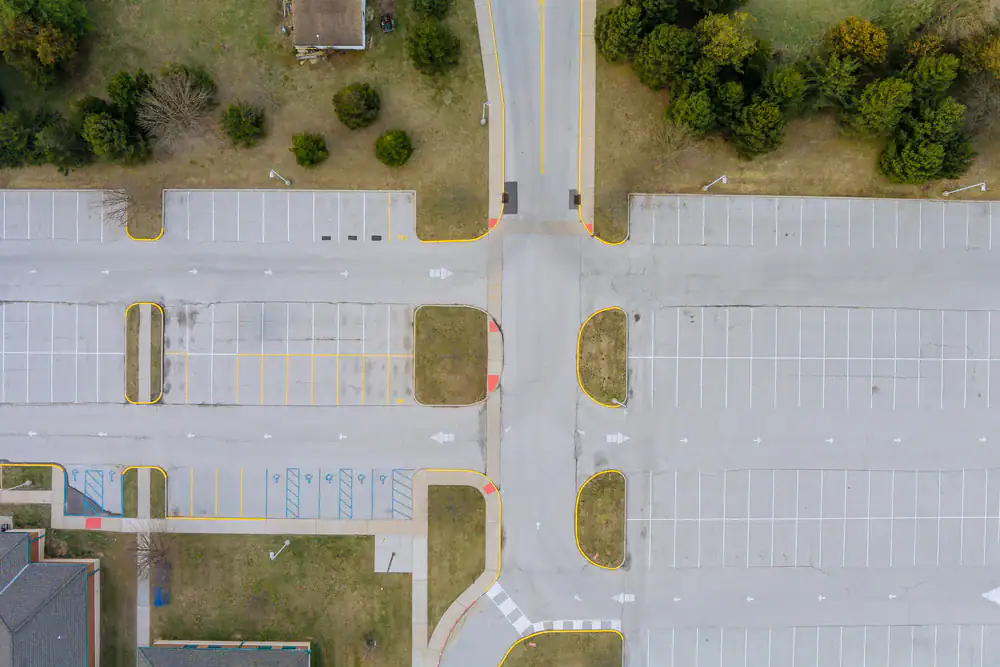
Striping and marking come last, after the asphalt has cured sufficiently for paint to adhere properly. This includes parking space lines, directional arrows, crosswalks, fire lanes, and ADA-compliant accessible parking markings. Professional striping uses durable traffic paint that withstands weather and vehicle traffic, typically lasting 18 to 24 months before restriping is needed.
The entire process for a medium-sized commercial parking lot typically takes 3 to 7 days from start to finish, weather permitting. Rain can delay paving operations since asphalt must be placed on dry surfaces in appropriate temperatures. In Florida, year-round paving is generally possible, but extreme heat or unexpected storms can affect scheduling.
ADA compliance isn’t optional, and the penalties for getting it wrong are steep. The Americans with Disabilities Act requires specific features in commercial parking lots to ensure accessibility for people with disabilities. Non-compliance can result in fines of $75,000 for a first offense and up to $150,000 for repeat violations, plus potential lawsuits.
The number of accessible parking spaces required depends on your total parking capacity. For lots with 1 to 25 spaces, you need at least one accessible space. As lot size increases, the required number of accessible spaces increases on a sliding scale. One critical requirement: at least one of every six accessible spaces must be van-accessible, with a minimum of one van-accessible space in every lot.
Standard accessible parking spaces must be at least 8 feet wide with an adjacent 5-foot access aisle. The access aisle provides space for wheelchair users to enter and exit vehicles and must be marked with diagonal striping to prevent parking. Two accessible spaces can share one access aisle, which helps maximize your lot layout.
Van-accessible spaces have different requirements. They need either an 11-foot-wide parking space with a 5-foot access aisle, or an 8-foot-wide space with an 8-foot access aisle. Van-accessible spaces also require at least 98 inches of vertical clearance throughout the parking space, access aisle, and vehicular route to and from the space.
All accessible parking spaces must be located on the shortest accessible route to an accessible building entrance. The route from parking to entrance cannot have curbs or stairs, must be at least 3 feet wide, and must have a firm, stable, slip-resistant surface. If your building has multiple accessible entrances, accessible parking should be dispersed to provide options near different entrances.
Signage is mandatory for all accessible parking spaces. Each space must have a sign featuring the International Symbol of Accessibility, mounted at least 60 inches above the ground measured to the bottom of the sign. Van-accessible spaces require an additional “Van Accessible” designation on the sign. The signs must be visible even when vehicles are parked in the spaces.
Access aisles must be marked clearly with diagonal striping and must be level—the maximum slope in any direction is 1:48. The access aisle must connect directly to an accessible route leading to the building entrance. Parking spaces themselves must also meet slope requirements and be clearly marked to define their width.
When you’re restriping an existing parking lot, ADA compliance requirements still apply. In fact, restriping triggers an obligation to bring the lot into compliance because it’s considered readily achievable—relatively inexpensive compared to major construction. This is why working with a paving contractor who understands ADA requirements matters. Getting it wrong means doing it over, and doing it over costs money.
A well-executed parking lot paving project comes down to understanding what matters and choosing a contractor who doesn’t cut corners. Proper site preparation, adequate drainage design, correct asphalt thickness, and ADA compliance aren’t extras—they’re the fundamentals that determine whether your investment lasts three years or thirty.
The parking lot is often the first thing customers see when they visit your business. A smooth, well-maintained surface with clear striping and proper accessibility features tells them you pay attention to details and care about their experience. On the flip side, a cracked, poorly drained lot with faded markings raises questions about how you run the rest of your operation.
When you’re ready to move forward with a parking lot paving project in Polk County, FL, working with an experienced contractor makes all the difference. At Central Florida Blacktop Paving Inc., we understand the specific challenges of paving in Central Florida’s climate and have the expertise to design and install parking lots that perform for decades. From initial consultation through final striping, we focus on doing it right the first time so you can focus on running your business.
Article details:
Share:
Continue learning: