From sandy soil to rainy season timing, here's what Polk County homeowners actually need to know before paving a driveway.
Share:
Summary:
Most people don’t think about their driveway until something goes wrong — a crack that keeps spreading, a pothole that’s swallowing tire rims, or water that pools against the garage every time it rains. By then, the question isn’t whether to fix it. It’s who to trust with the job.
In Polk County, that question matters more than most places. Between the sandy soil, the summer storms, and a real problem with door-to-door paving scams, getting this right takes more than a quick Google search. This page breaks down the full picture — what driveway paving actually involves, what it should cost, and what separates a contractor worth hiring from one worth avoiding.
A lot of contractors make driveway paving sound simple — show up, lay asphalt, done. But the work that determines whether your driveway lasts five years or twenty-five happens before a single ton of asphalt gets laid.
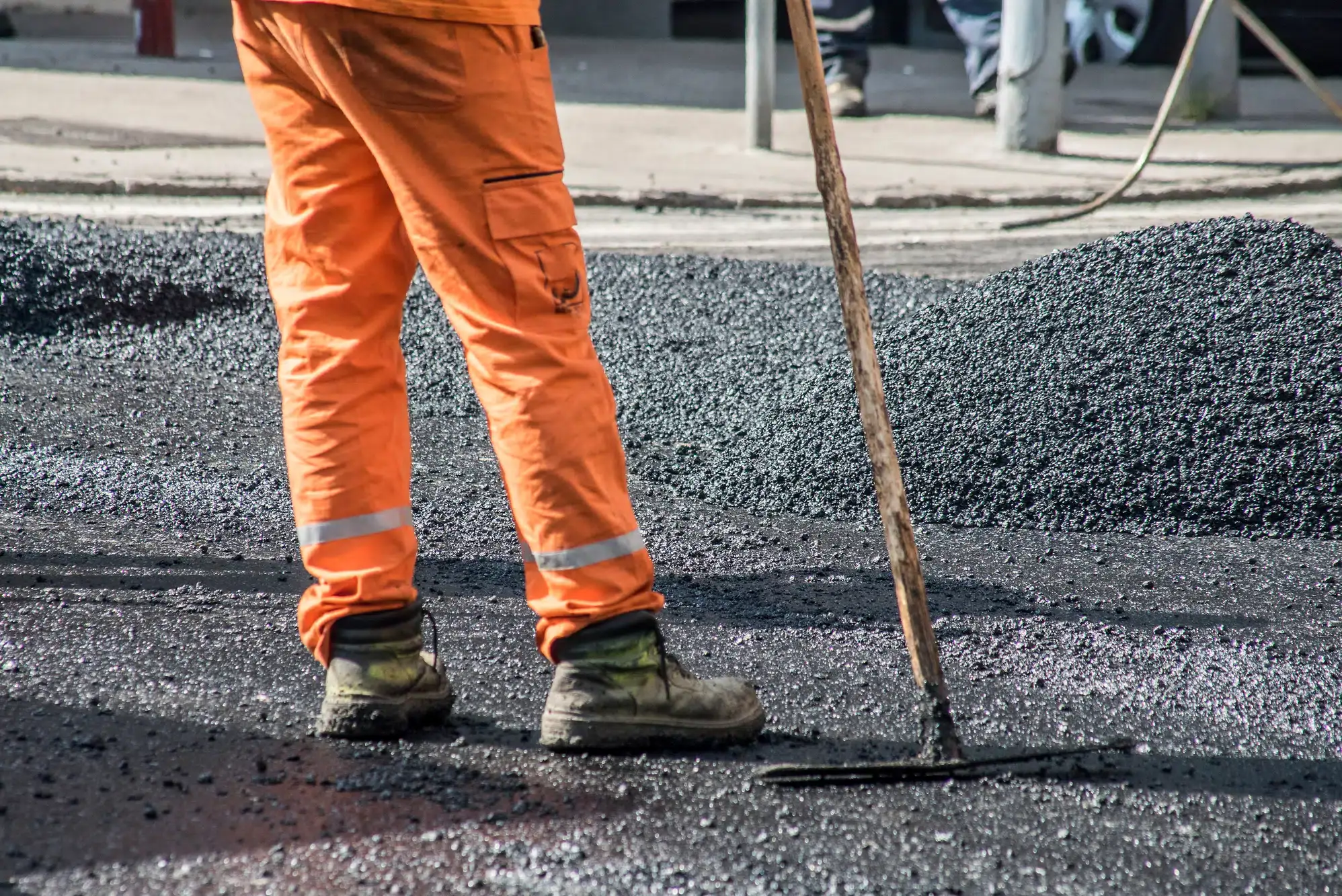
It starts with an on-site assessment. Every property in Polk County is a little different — lot grade, drainage patterns, soil composition, access width. A proper evaluation looks at all of it before anyone touches a shovel. From there, the crew preps the subgrade, installs a compacted gravel base (typically four to eight inches deep), and only then begins the asphalt installation. Most residential driveway projects take two to three days from start to finish, and you’re usually back on it within 24 to 48 hours.
Here’s the part most homeowners never hear about until after something goes wrong: the asphalt itself is almost secondary. What determines longevity is what’s underneath it.
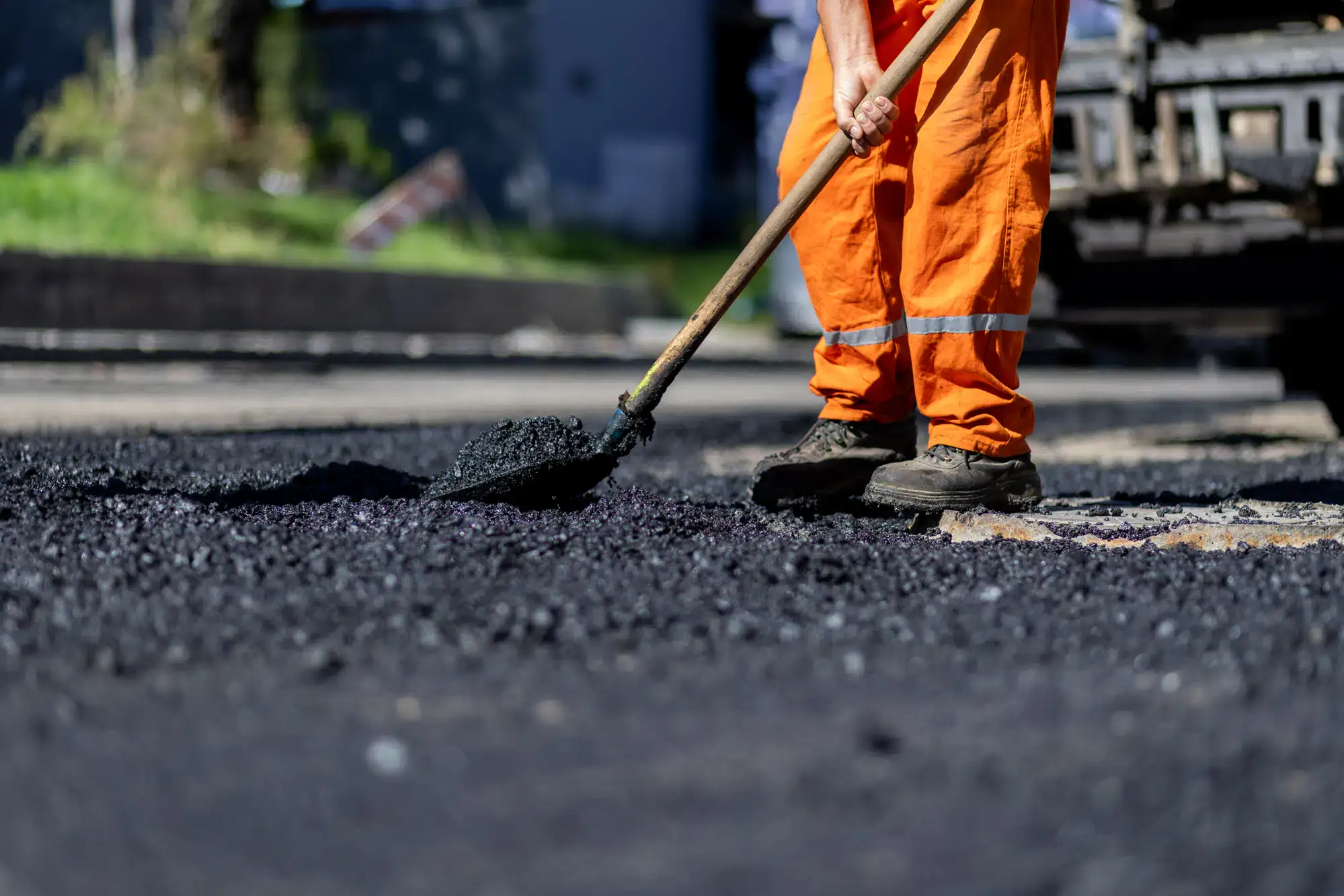
Polk County sits on sandy soil throughout much of its terrain — from South Lakeland down through the Davenport corridor and out toward Bartow. That sand shifts. When a contractor skips proper base compaction or uses inadequate base depth, the asphalt above it doesn’t have stable support. It flexes under load, develops cracks along the surface, and starts failing in spots within a year or two. You’ll see it most in driveways where heavy vehicles park regularly, or where water has nowhere to drain.
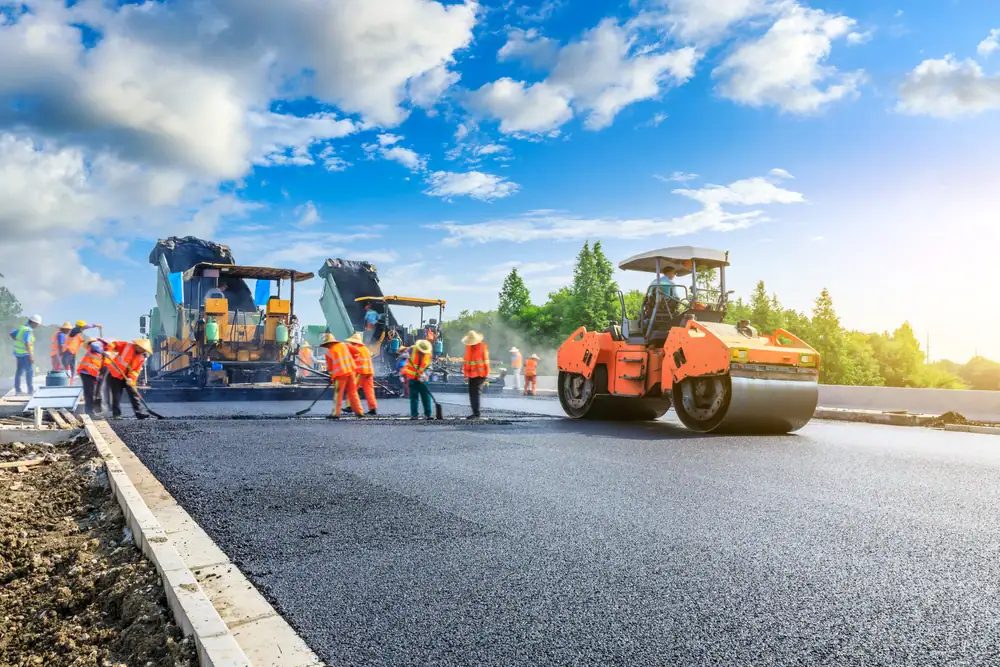
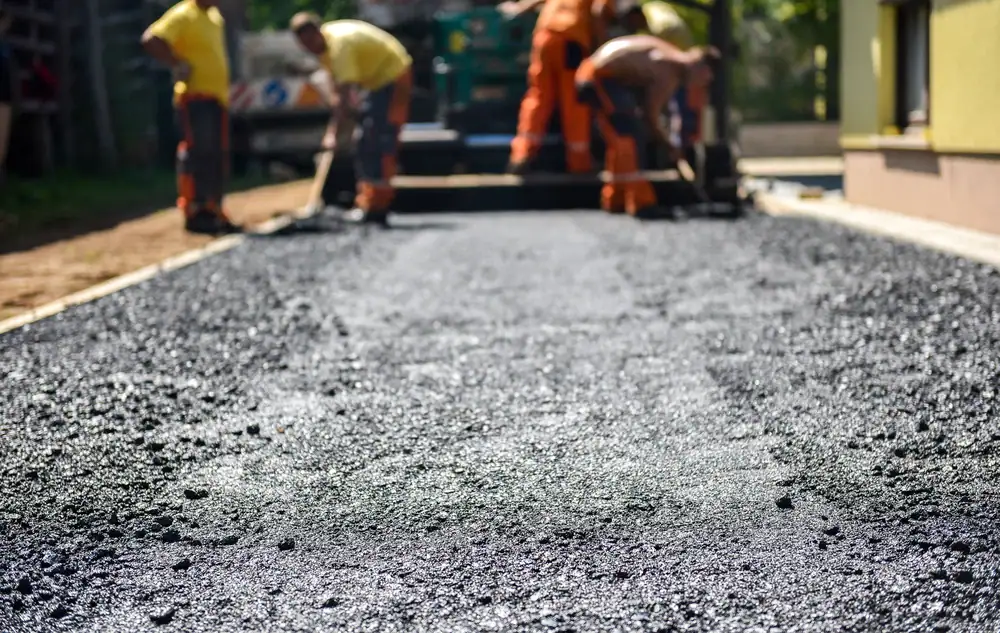
The asphalt laying process itself also has a narrow window. Hot-mix asphalt needs to be laid at around 300°F to bond properly. That means the crew has to move at pace — paver machine, dump trucks, and roller working in sequence. A crew of six to eight people is standard for a reason. If the mix cools too much before compaction, the surface won’t hold. This is one of the reasons modern equipment matters: older machinery can’t maintain the pace and temperature control that quality asphalt paving requires.
We use polymer-modified asphalt formulated specifically for Florida heat rather than standard northern mixes. That distinction is meaningful. Standard mixes soften in sustained 90°F-plus temperatures — exactly what Polk County delivers from May through October. The polymer modification keeps the binder stable under heat and UV exposure, which is a major factor in how long your driveway actually lasts.
For standard passenger vehicles, two to three inches of asphalt over a properly compacted base is the right spec. If you’re parking an RV, a boat trailer, or anything heavier, that goes up to three to four inches. These aren’t arbitrary numbers — they’re based on load distribution and what the surface will realistically handle over time.
There’s a well-documented scam that runs through Florida every year, and Polk County is not immune to it. It goes by a few names — “paving gypsies,” door-to-door paving crews, traveling asphalt scammers. The pitch is usually the same: they’re in your neighborhood doing a job nearby, they have leftover asphalt, and they can pave your driveway today at a steep discount.
Here’s the problem with that story: hot-mix asphalt cannot be transported between job sites. It cools and loses workability within a short window. Any crew claiming to have “leftover” hot-mix is either lying or using cold-mix material — a low-grade product that compacts poorly and fails quickly. The BBB has documented individual cases where homeowners lost more than $8,000, and in one extreme case, a homeowner who agreed to a $1,500 patch job ended up billed $64,000 after a crew paved the entire driveway without authorization.
The red flags are consistent: no written contract, cash-only payment, pressure to decide the same day, unmarked trucks, no local address. A legitimate contractor will never show up uninvited and push for an immediate decision. We’ll give you a written estimate, a clear scope of work, and time to review it.
When you’re evaluating any contractor, ask to see their license and proof of insurance. In Florida, contractor licensing falls under Chapter 489 of the Florida Statutes, and you can verify it through the DBPR. A+ BBB accreditation is another signal worth checking — it takes years of consistent performance to earn and maintain. We’ve held ours for decades. A business that has been operating in Polk County for 40 years has a track record you can actually verify, which is something a crew passing through town simply cannot offer.
Want live answers?
Connect with a Central Florida Blacktop Paving expert for fast, friendly support.
Cost is usually the first question, and it deserves a straight answer. For professional asphalt driveway installation in Polk County, the typical range runs $7 to $13 per square foot, all-in, including labor and materials. A single-car driveway under 400 square feet generally runs $1,200 to $6,000. A two-car driveway in the 600 to 800 square foot range typically falls between $4,200 and $12,000. If you’re replacing an existing driveway and demolition is involved, add $1 to $3 per square foot for removal and disposal. Overlaying a structurally sound existing surface costs less — usually $3 to $7 per square foot — but only makes sense when the base underneath is still solid.
The per-square-foot number is a starting point, not a final answer. Several factors push that number in either direction, and understanding them helps you evaluate quotes honestly rather than just picking the lowest one.
Base preparation is the biggest variable. A driveway that needs significant regrading, drainage work, or deep base installation because of compromised soil will cost more than one going in on stable, well-drained ground. In Polk County’s sandy terrain, base work is rarely something you want to cut corners on — it’s the difference between a surface that holds and one that starts failing by year two.
Drainage design is another cost factor that often gets overlooked until water is running toward a foundation. Proper grading — crowning the center so water sheds to the edges, sloping away from the structure — is part of what a quality installation includes. If your current driveway has pooling problems, that’s a design issue, not a maintenance issue, and it needs to be addressed in the new installation rather than deferred.
Access also affects pricing. Narrow lots, tight turns, or properties with limited equipment access take longer and require more precise work. Davenport’s resort communities and some of Lakeland’s older subdivisions have access constraints that we need to assess in person before quoting — which is exactly why phone-only estimates are unreliable.
The price for asphalt paving also reflects material quality. Polymer-modified mixes cost more than standard hot-mix, and the difference shows up in how the surface performs over a Florida summer. A bid that comes in significantly below the market range almost always reflects a shortcut somewhere — thinner asphalt, inadequate base depth, or a material spec that won’t hold up in the heat.
Expanding an existing driveway — widening it, adding a turnaround area, or putting in a parking pad for a boat or RV — is a different scope than a full replacement, and the pricing reflects that.
For the new area being added, you’re generally looking at the same $7 to $13 per square foot range for the paved surface itself. But expansion projects have their own considerations. The transition zone where new asphalt meets existing pavement needs to be properly graded and joined — a butt joint that isn’t handled correctly becomes a crack point within a season. The existing surface also needs to be evaluated. If it’s in poor condition, extending it rather than replacing it can create an uneven result that looks and performs worse than starting fresh.
Driveway parking additions are increasingly common in Polk County, where the average household runs two cars and many properties also accommodate boats, trailers, or recreational vehicles. A proper RV or boat pad typically requires three to four inches of asphalt rather than the standard two to three, because of the static load weight involved. Getting that spec right from the start prevents the surface depression and cracking that shows up when a heavy vehicle parks in the same spot repeatedly.
Permits are worth checking before any expansion project. In Polk County, driveway work that changes dimensions or materials may require a permit, and HOA communities — which are dense throughout Davenport, Winter Haven, and many Lakeland subdivisions — require separate approval. We handle that research and coordination as part of the process, so the project doesn’t stall because of a paperwork step that got missed.
The short version: look for someone local, licensed, insured, and willing to put everything in writing. Look for years of experience in this specific market — not just paving installation experience in general, but knowledge of Polk County’s soil, its drainage patterns, its permit requirements, and its seasonal timing. Ask about base preparation. Ask what mix we use. A contractor who can answer those questions clearly is one who actually knows what they’re doing.
Good driveway paving isn’t complicated to explain. It’s just not as common as it should be. The work that makes a blacktop driveway last 20 to 25 years — proper base compaction, correct material spec, thoughtful drainage design — takes more time and costs a little more upfront. But it’s a fraction of the cost of doing it twice.
We offer free on-site consultations with no obligation. You’ll talk directly to the owner, get a written estimate, and leave with a clear picture of what the job entails — no pressure, no surprises.
Article details:
Share:
Continue learning: