Budgeting for parking lot resurfacing in Polk County? Here's what Central Florida properties actually pay — and what moves the number up or down.
Share:
Summary:
You’ve got a parking lot that’s seen better days. Maybe tenants have said something. Maybe you’re pulling together a capital expenditure request and need a real number — not a range so wide it’s useless. Either way, you’ve probably already found that most cost guides online are written for a national audience and don’t account for what Florida’s sun, summer storms, and sandy soils actually do to asphalt over time.
This page is different. We’re going to give you honest, Polk County-specific numbers, explain what drives costs up or down in this market, and help you figure out whether you’re looking at a resurfacing job or something more involved.
For commercial parking lots in Polk County, resurfacing typically runs between $2 and $5 per square foot. A 10,000 square foot lot — common for a mid-size retail strip or medical office — lands somewhere between $20,000 and $50,000 depending on the condition of the existing surface, whether drainage work is needed, and what the scope of prep looks like before the new layer goes down.
Compare that to full replacement, which runs $5 to $12 per square foot for the same lot. That’s the difference between a $50,000 project and a $120,000 one. Resurfacing, when it’s the right call, saves you 40 to 60 percent — and buys your pavement another 8 to 15 years of serviceable life.
The catch is that “when it’s the right call” part. Not every lot is a good candidate, and that’s worth understanding before you start getting quotes.
The $2 to $5 range isn’t random. Several factors pull that number in one direction or the other, and knowing them helps you walk into a contractor conversation with realistic expectations.
Lot size matters, but not always the way you’d expect. Larger lots tend to come in at a lower cost per square foot because mobilization costs — getting equipment to the site, setup, traffic management — are spread across more surface area. A 5,000 square foot lot might run closer to $4 to $5 per square foot, while a 25,000 square foot lot might come in at $2 to $3.
Surface condition is probably the biggest variable. If your lot has widespread cracking that needs to be addressed before the overlay goes down, or if there are low spots where water pools during Polk County’s summer storms, that prep work adds to the total. A lot that’s been maintained — sealed every few years, cracks addressed early — is cheaper to resurface than one that’s been ignored for a decade.
Drainage is a Polk County-specific issue worth calling out. The county gets around 51 inches of rain per year, most of it concentrated between June and September. If your lot doesn’t drain well, resurfacing without addressing that problem is a short-term fix. Contractors who know this market will factor drainage into the scope. Contractors who don’t may skip it, and you’ll be back to square one after the first rainy season.
Finally, there’s the question of milling versus a straight overlay. In some cases, the top layer of deteriorated asphalt is ground off before the new layer goes down — this is called a mill-and-overlay. It costs more upfront but creates a better bond and a more uniform surface. Whether it’s the right approach depends on the existing asphalt’s condition and thickness. A good contractor will tell you which method makes sense for your specific lot, not just default to the cheaper option.
This is the question most property managers are really trying to answer when they search for resurfacing costs. And it’s worth getting right, because choosing the wrong path is expensive either way — resurfacing a lot that needed replacement means the job fails in a year or two, while replacing a lot that only needed resurfacing means spending twice what was necessary.
The general threshold is this: if less than 25 to 30 percent of your lot’s surface needs repair and the base underneath is structurally sound, resurfacing is the appropriate solution. If damage is more widespread, or if you’re seeing what’s called alligator cracking — that interconnected, scaly pattern that looks like the name suggests — that’s a sign the base has failed. No amount of surface work fixes a failed base. It needs to come out.
Standing water is another signal. If certain areas of your lot hold water for hours after a storm, that’s not just a nuisance — it’s accelerating base damage. Water finds its way into surface cracks, softens the material underneath, and turns a resurfacing candidate into a replacement job faster than anything else in Florida’s climate.
For properties along Lakeland’s US-98 corridors, the retail strips near Winter Haven’s Chain of Lakes area, or the commercial developments around the US-27 and I-4 interchange in Davenport — lots that were built in the 1990s and early 2000s are hitting their natural resurfacing window right now. Many of them are good candidates. Some aren’t. The only way to know for certain is to have someone assess the base, not just look at the surface.
One thing to watch for when getting quotes: a contractor who recommends full replacement without performing a base assessment, or one who recommends resurfacing without checking whether the base can support it, is guessing. Either guess costs you money.
Want live answers?
Connect with a Central Florida Blacktop Paving expert for fast, friendly support.
Understanding the process helps you evaluate quotes, ask better questions, and know whether the contractor in front of you actually knows what they’re doing. A resurfacing job isn’t just paving over what’s there — there’s a sequence to it, and skipping steps is where corners get cut.
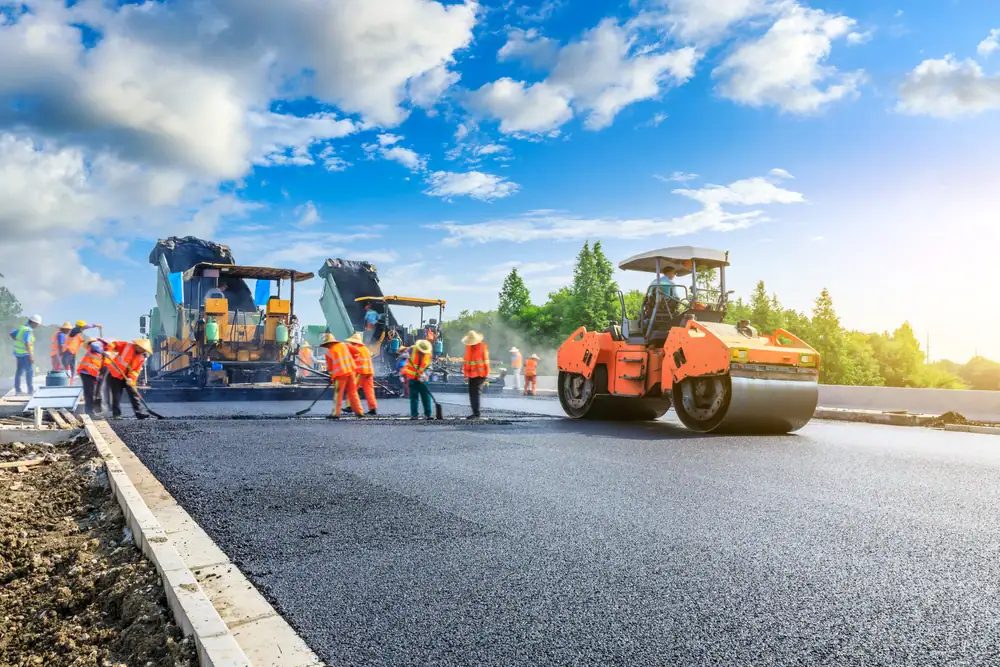
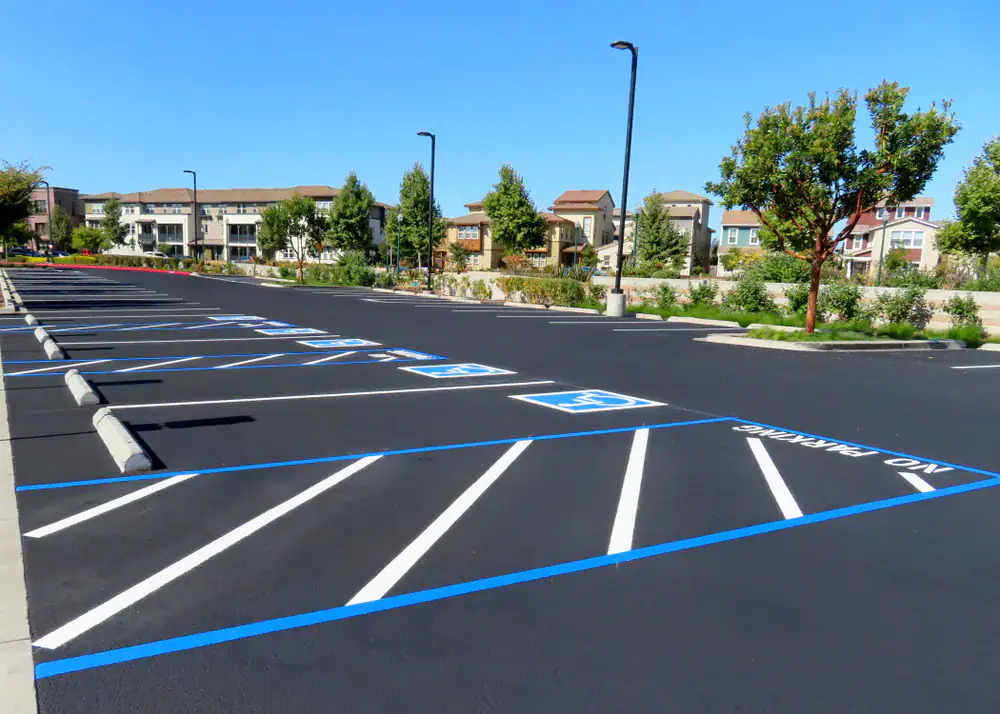
The work starts with a thorough assessment of the existing surface and base. From there, any significant cracks or damaged areas are addressed before the overlay goes down. The surface is cleaned, and the new asphalt layer — typically 1.5 to 2 inches for commercial applications — is applied, compacted, and finished. On commercial lots, line striping and ADA-compliant markings are part of the final step.
For most commercial property managers in Polk County, the disruption question is just as important as the cost question. You can’t simply shut down a retail parking lot or a medical office lot for three days without consequences.
The good news is that resurfacing doesn’t have to mean a full closure. Most commercial lots can be phased — one section at a time — so that a portion of the lot remains accessible throughout the project. The timeline depends on lot size and scope, but a typical commercial resurfacing project runs one to three days for the paving itself. Add time for prep work and striping, and you’re usually looking at a week from start to finish, including cure time before the lot is fully back in service.
Scheduling matters in Polk County. Asphalt can’t be laid in wet conditions, which means summer projects need to work around the afternoon storms that roll through the area from June through September. The practical approach is to schedule work for morning starts, get the material down before the typical early-afternoon buildup, and plan for weather contingencies. Contractors who’ve worked in this market know the pattern. Those who haven’t tend to lose days to weather they didn’t plan for.
Florida’s climate does offer one real advantage over northern markets: there’s no paving season here. Work can be scheduled year-round, which means you’re not competing with every other property manager in Polk County for a contractor’s April through October window. If your budget is approved in January, you can get on the schedule in January.
New asphalt needs 24 to 48 hours before light vehicle traffic and a few days before it’s fully cured for heavy use. Your contractor should be clear about this timeline upfront so you can communicate it to tenants before work begins.
The asphalt industry has more than its share of contractors who win bids by cutting scope rather than cutting fat. One common tactic: submitting a bid that’s 15 to 18 percent cheaper than competitors by installing 25 percent less asphalt than the job requires. The finished lot looks fine. Six months later, you start to see why the price was low.
The most reliable protection against this is a written, itemized estimate. Not a one-line total, but a breakdown that shows square footage, asphalt thickness, material specifications, prep work, striping, and any drainage or repair work included in the scope. If two quotes are far apart, a line-item comparison will usually show you exactly where the difference lives.
Beyond the estimate, the basics matter: a valid state contractor license, general liability insurance, and workers’ compensation coverage. Ask for a certificate of insurance before work begins — any reputable contractor will provide one without hesitation.
Experience with commercial properties specifically is worth asking about. Residential driveway work and commercial parking lot work aren’t the same job. Commercial lots carry heavier loads, require ADA-compliant design, and often involve more complex phasing to keep a business operational during construction. A contractor who primarily does driveways may not have the crew size, equipment, or project management experience that a 20,000 square foot commercial lot requires.
We bring 40 years of industry experience to every asphalt resurfacing project across Polk County. Our seven-person crew runs 2023 or newer equipment, and we provide a straightforward approach to estimating: every quote includes a detailed cost breakdown with no surprises at invoice time. We work directly with property owners and managers — not through a sales layer — and we’ve built long-term relationships with commercial clients throughout Lakeland, Winter Haven, Davenport, Bartow, and the surrounding areas because we treat every project like our name is on it. Because it is.
If you’ve made it this far, you have a clearer picture of what resurfacing actually costs in this market, what drives the number up or down, and what the process looks like from assessment to final striping. More importantly, you know the right questions to ask before you sign anything.
The next step is straightforward: get a written estimate from a contractor who will assess your lot properly, explain what they’re recommending and why, and put the full scope in writing. That conversation costs you nothing and tells you a lot about who you’re dealing with.
Central Florida Blacktop Paving Inc. offers free consultations for commercial property managers throughout Polk County. If you’re ready to get a real number for your lot — or just want a second opinion on a quote you’ve already received — reach out and we’ll take a look.
Article details:
Share:
Continue learning: