Wondering what asphalt sealing costs in Central Florida? Here's what Polk County homeowners actually pay — and what drives the price up or down.
Share:
Summary:
If your driveway is starting to look more gray than black, you’ve probably already Googled what it costs to fix it. The problem is the numbers you find are all over the place — $150 here, $900 there — and none of them seem to account for Florida’s climate, your specific driveway, or the fact that not every contractor does the job the same way.
We work with Polk County homeowners every week who want straight answers. What does asphalt sealing actually cost in Central Florida? What’s driving that number? And how do you know if the quote you’re getting is fair? Let’s get into it.
For most residential driveways in the Polk County area, we charge between $300 and $700 for professional asphalt sealing, with the typical range landing around $0.80 to $3.15 per square foot depending on the size of the surface, its current condition, and how much prep work is involved. Florida-specific data from Orlando and Tampa markets puts the number closer to $2.60–$3.15 per square foot when you factor in labor and materials together — and Polk County pricing tends to fall within that same window.
A standard two-car driveway around 800 square feet will generally run between $400 and $600 with proper prep included. Smaller single-car driveways in the 400–480 square foot range typically cost $150–$300. Larger driveways or extended surfaces pushing 1,500–2,000 square feet can reach $700–$1,300 or more, depending on condition.
One thing to know: we have a minimum service fee in the $100–$200 range regardless of how small the job is. That’s not a red flag — it’s just the reality of mobilizing equipment and crew for any project.
The number on your quote should never just be a total. A legitimate asphalt sealing estimate breaks down what’s actually happening — and if a contractor can’t explain what’s included, that’s worth paying attention to.
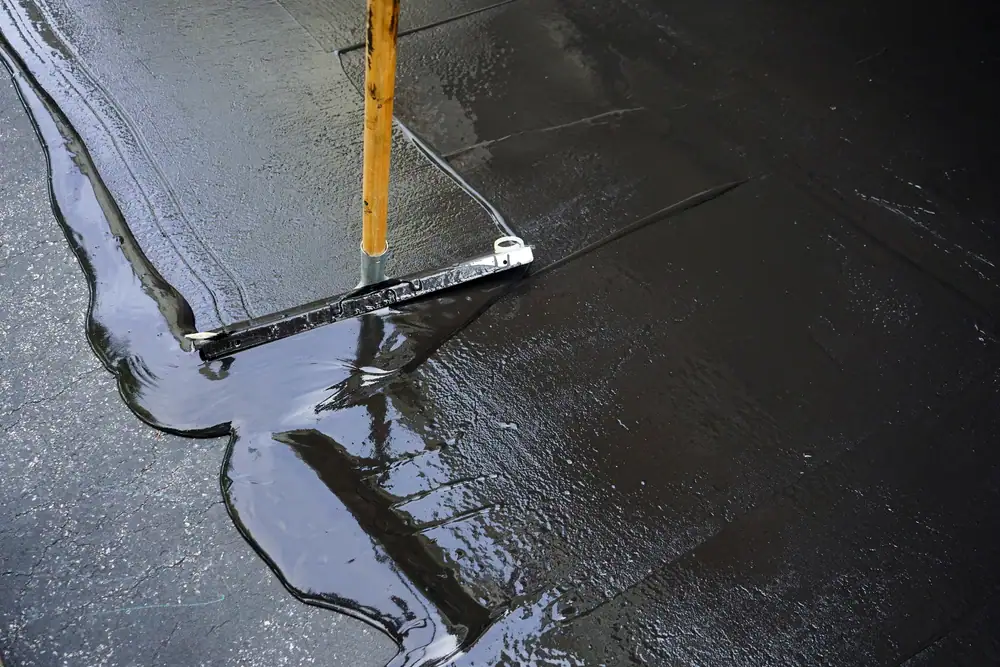
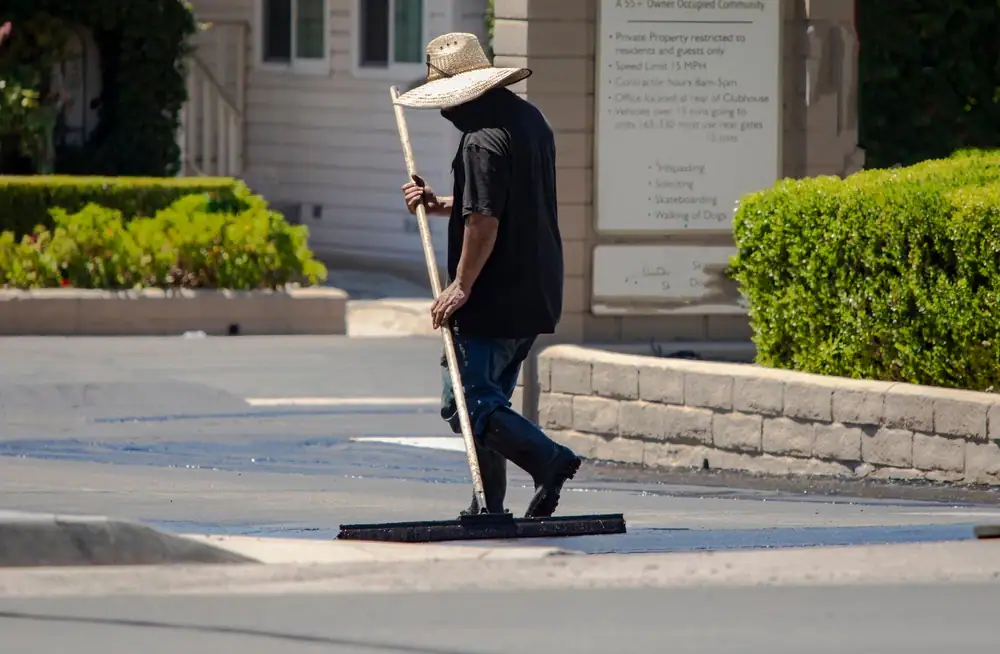
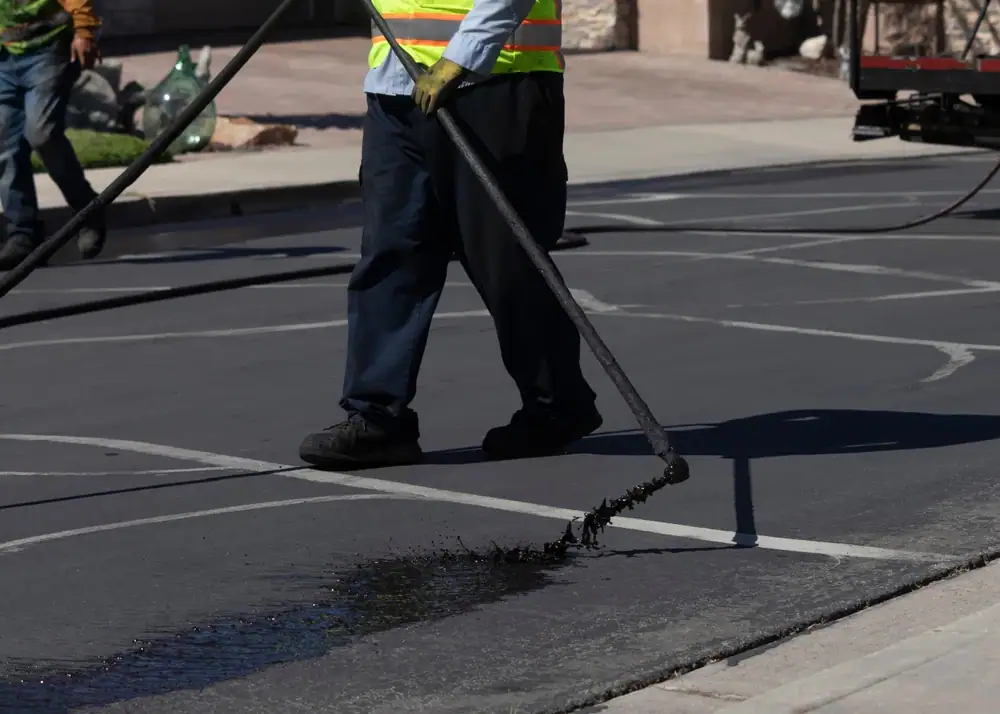
Here’s what a proper sealcoating job covers: surface cleaning with commercial equipment (not just a quick sweep), oil stain treatment with a primer so the sealant actually bonds, crack filling before any coating goes down, application of the sealant itself — typically one to two coats — and adequate cure time before the surface sees traffic again. Each of those steps has a cost attached to it. When a quote comes in unusually low, one or more of those steps is usually what got cut.
Power washing or surface prep is sometimes charged separately at around $0.27–$0.39 per square foot. Crack sealing runs roughly $0.30–$0.60 per linear foot depending on the extent of the damage. If a section of the driveway has more significant deterioration — not just surface cracks but actual structural breakdown — that area may need patching at $3–$4 per square foot before sealing can happen. These aren’t upsells. They’re the difference between a seal coat that lasts three to five years and one that starts peeling before the year is out.
We provide a written quote that itemizes all of this before any work starts. You know exactly what you’re paying for — surface prep, crack filling, sealant type, number of coats, and the total. No line items that appear after the job is done.
The math on DIY sealcoating looks appealing until you actually run it. A 5-gallon bucket of consumer-grade sealant covers roughly 70–80 square feet per gallon, so a 1,000 square foot driveway needs six to eight buckets — that’s $240–$320 in materials alone, before you account for a power blower, squeegee, edging tape, oil primer, or the time it takes to do it right. When all of that gets factored in, DIY sealcoating often ends up costing $2–$5 per square foot — which can actually exceed what we charge.
And that’s before you consider the result. Consumer products sold at home improvement stores are diluted formulations designed to be easy to apply, not built for maximum durability. We use commercial-grade sealants with higher solid content, applied at the correct coverage rate using spray equipment that delivers consistent thickness across the entire surface. The difference in finish is visible. More importantly, the difference in lifespan is significant — our professional application typically lasts three to five years; DIY results in Florida’s UV environment often start breaking down within 12–18 months.
Florida’s climate makes this gap wider than it would be in a northern market. Polk County gets over 230 sunny days a year and 50+ inches of rain, most of it concentrated between June and September. That combination of UV intensity and heavy moisture is exactly what sealcoating is designed to defend against — but only if the sealant is the right formulation for the climate and applied correctly. We use polymer-modified sealants specifically suited to Central Florida’s heat and UV levels. That’s not a marketing claim — it’s a material decision that directly affects how long the seal holds up.
Want live answers?
Connect with a Central Florida Blacktop Paving expert for fast, friendly support.
Two driveways in the same Polk County neighborhood can come in at very different price points, and it usually comes down to a few specific variables. Square footage is the most obvious one — larger surfaces cost more. But condition matters just as much. A driveway that’s been sealed regularly and maintained well needs less prep work than one that’s been ignored for a decade. The more cracking, oxidation, or oil damage present, the more prep is required before sealant can go down.
Sealant type also affects cost. Asphalt emulsion sealants — the type best suited for Florida’s warm climate — run slightly higher than basic coal tar products but hold up better in heat and UV. The number of coats matters too. High-traffic areas and commercial surfaces typically warrant two coats for adequate protection, which adds to the total but extends the life of the seal considerably.
Polk County is one of the most lake-dense counties in Florida, and that geography matters for asphalt. Properties near Lake Hollingsworth, Lake Mirror, or anywhere along the Chain of Lakes in the Winter Haven area deal with elevated ambient moisture year-round. Higher humidity and proximity to water accelerate the oxidation process — the UV-driven breakdown that turns black asphalt gray and brittle. What might be a three-year sealcoating cycle in a drier climate often becomes a two-year cycle here.
The summer rainy season amplifies this. From June through September, Polk County gets daily afternoon downpours that push water into every surface crack and work their way down to the base layer. Once water reaches the limestone base beneath your driveway, it starts eroding the foundation from below — which is how you end up with soft spots, sunken sections, and the kind of structural damage that sealcoating can no longer fix. Catching it at the surface level, before water infiltration becomes a base problem, is the entire point of regular maintenance.
The I-4 corridor growth has also put a lot of driveways in Davenport, Auburndale, and Haines City in the five-to-fifteen-year age range — exactly when the first or second sealcoating cycle is most cost-effective. A driveway at that stage still has a healthy base; it just needs its surface protected before UV and moisture do real damage. Waiting another few years often means the conversation shifts from sealcoating to resurfacing, which costs significantly more.
We’ve worked in South Lakeland neighborhoods with mature oak canopy, newer developments along Kathleen Road, and resort-style communities in Davenport where HOA standards require driveways to stay in presentable condition. The conditions vary. The underlying principle doesn’t — protect the surface while it’s still worth protecting.
One of the real advantages of being in Central Florida is that sealcoating isn’t a seasonal service here. Ground temperatures in Polk County rarely drop below the application threshold even in December or January, which means you’re not competing with a six-month backlog the way homeowners in northern states are. You can schedule in the fall, winter, or early spring and get the same quality result.
That said, timing still matters. The most popular windows are late spring — March through May, before the rainy season starts — and early fall, October through November, once the heavy afternoon storms have backed off. Both of those windows give the sealant ideal curing conditions: warm temperatures, low humidity relative to summer, and a lower chance of rain in the 24–48 hours after application. Sealant needs that window to cure properly. A crew that applies sealant knowing rain is in the forecast isn’t doing you any favors.
Summer sealcoating is possible, but it requires working around Florida’s predictable afternoon storm pattern — typically scheduling early morning applications and monitoring the forecast carefully. We operate year-round and know how to work within these windows without cutting corners on cure time. If you’ve been putting off scheduling because you weren’t sure about timing, the honest answer is: most of the year works fine in Polk County. The goal is just to avoid the active rainy season peak and make sure the surface has at least 24 clear hours after application. We’ll tell you exactly what conditions we need when we give you your quote — no guesswork on your end.
The short answer is yes — consistently. Full asphalt replacement runs $6–$12 per square foot. Sealcoating runs a fraction of that. A driveway that gets sealed every two to three years can last 25 years or more without structural failure. One that gets ignored typically needs resurfacing or full replacement within 10–15 years, sometimes sooner in Florida’s climate. The math isn’t complicated.
What makes the difference isn’t just whether you seal — it’s whether the job is done right. Proper prep, the right sealant for the climate, correct application, adequate cure time. Those details determine whether your driveway looks good and holds up for years or starts peeling by next spring.
If you’re in Polk County and you want a straight quote with no surprises, we’re worth a call. We’ve been doing this work in this county for over 40 years, we only do asphalt, and we’ll tell you exactly what your driveway needs — and what it doesn’t.
Article details:
Share:
Continue learning: