Hear from Our Customers
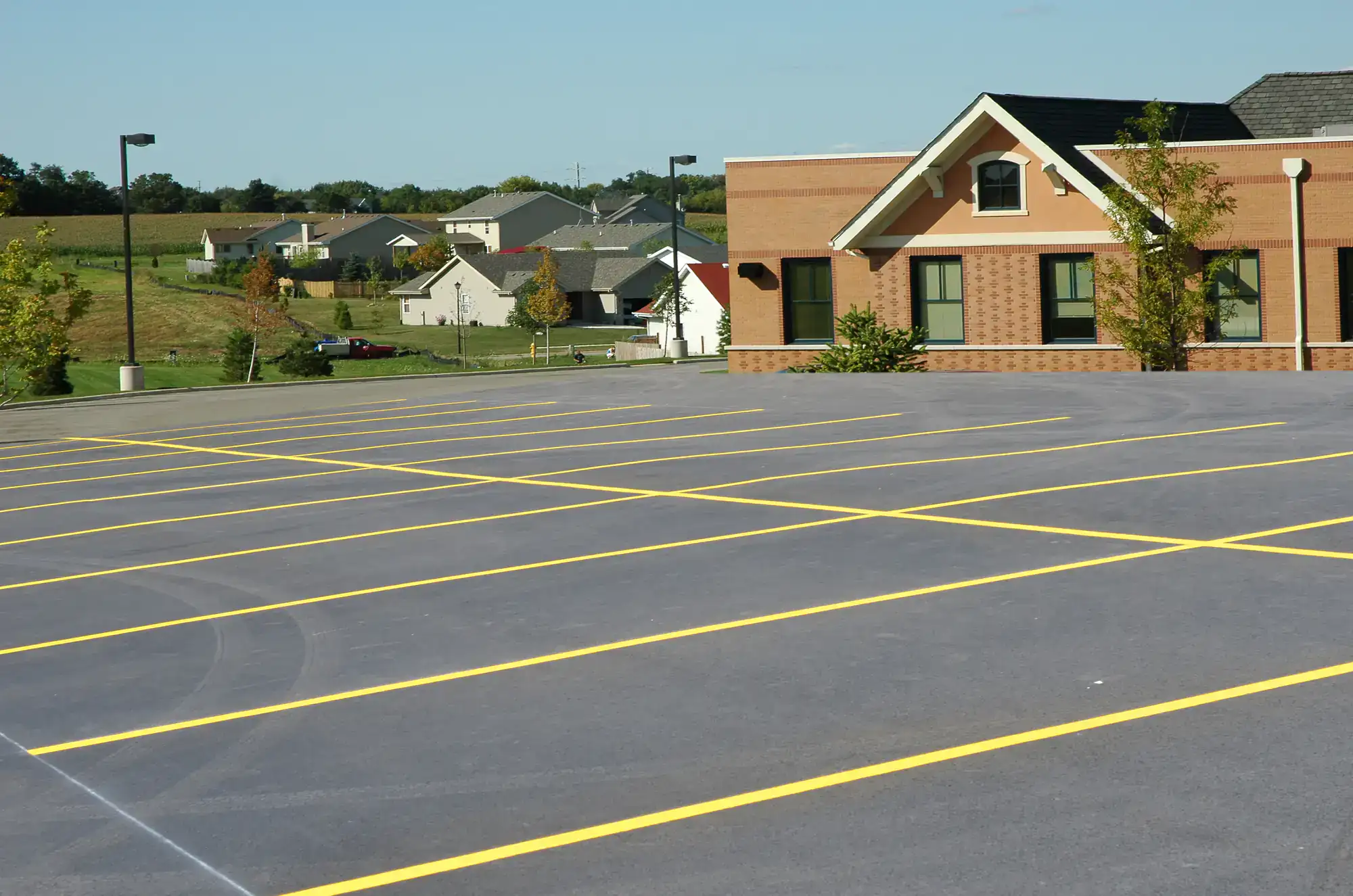
A smooth, level parking lot means customers aren’t dodging potholes or questioning whether your business is worth their time. First impressions happen in seconds, and cracked, faded asphalt sends the wrong message before anyone walks through your door.
When your commercial asphalt paving is installed correctly, you’re looking at 20+ years of reliable service with basic maintenance. That’s two decades without worrying about liability claims from trip hazards or constant patching that eats into your budget. The surface drains properly, resists Florida’s UV damage, and keeps looking professional year after year.
You also avoid the headache of shutting down operations for weeks. Most commercial parking lot paving projects wrap up in days, not months, so your business keeps moving while the work gets done.
We’ve been handling commercial paving across Auburndale and the surrounding Polk County area for years. Based in Winter Garden, we know exactly what Florida’s climate does to asphalt and how to build surfaces that last despite the heat, humidity, and afternoon storms that roll through Central Florida.
Auburndale sits right in the middle of a growing commercial corridor, with businesses ranging from retail centers to industrial facilities. Every one of them needs parking lots and access roads that can handle heavy traffic without breaking down. We work with property managers, business owners, and facility directors who need reliable work completed on schedule and within budget.
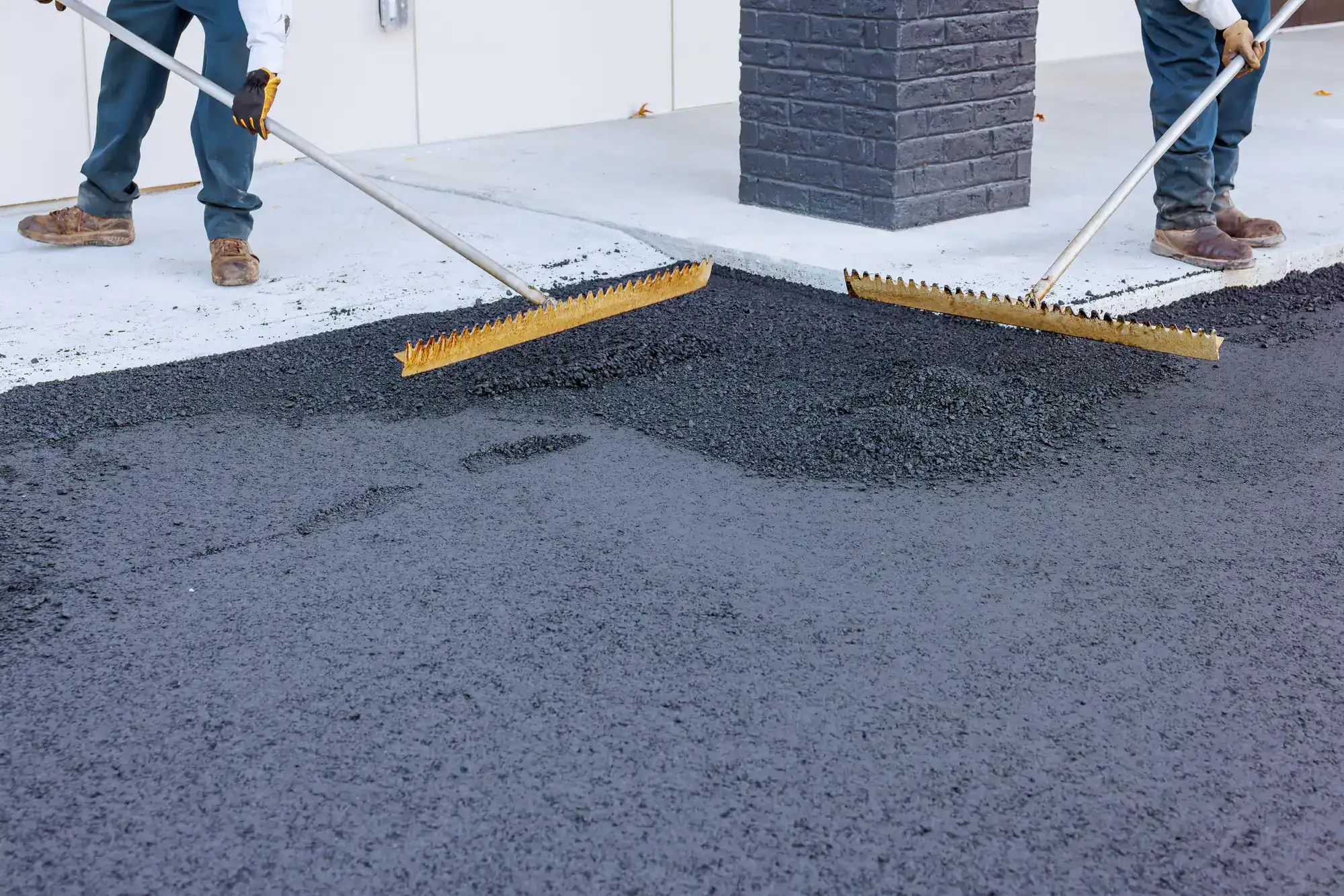
First, our team evaluates your site to understand drainage patterns, soil conditions, and traffic load. This isn’t a quick glance from the parking lot—it’s a proper assessment that determines base depth, asphalt thickness, and grading requirements. If your property has drainage issues or soft spots, those get addressed before any paving starts.
Next comes site preparation. Existing damaged asphalt gets removed, and the base layer goes down using compacted aggregate. This base is what keeps your parking lot from sinking or cracking under weight, so it’s built to proper specifications based on your traffic volume. For heavy commercial use, that means a thicker, more stable foundation.
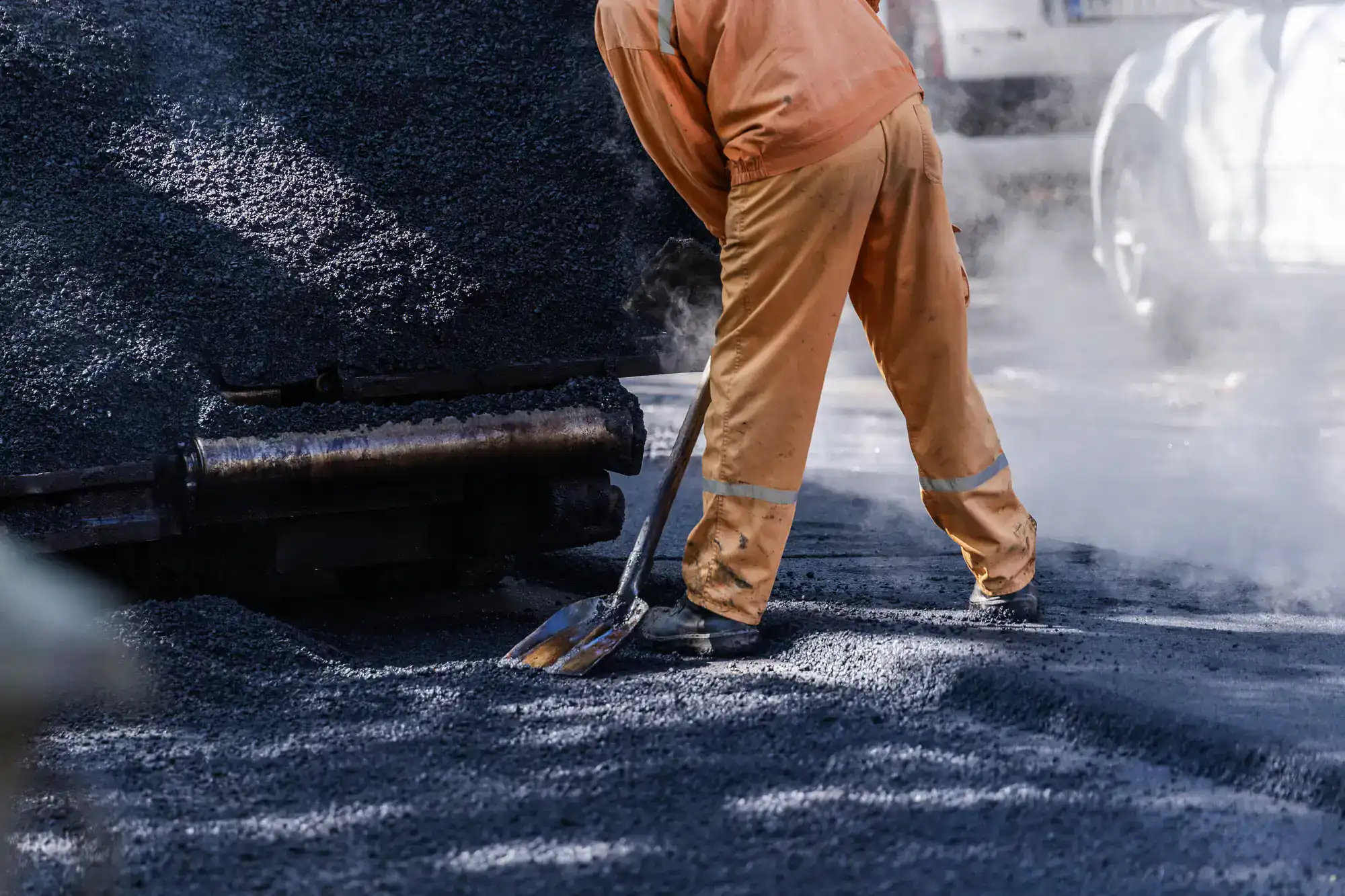
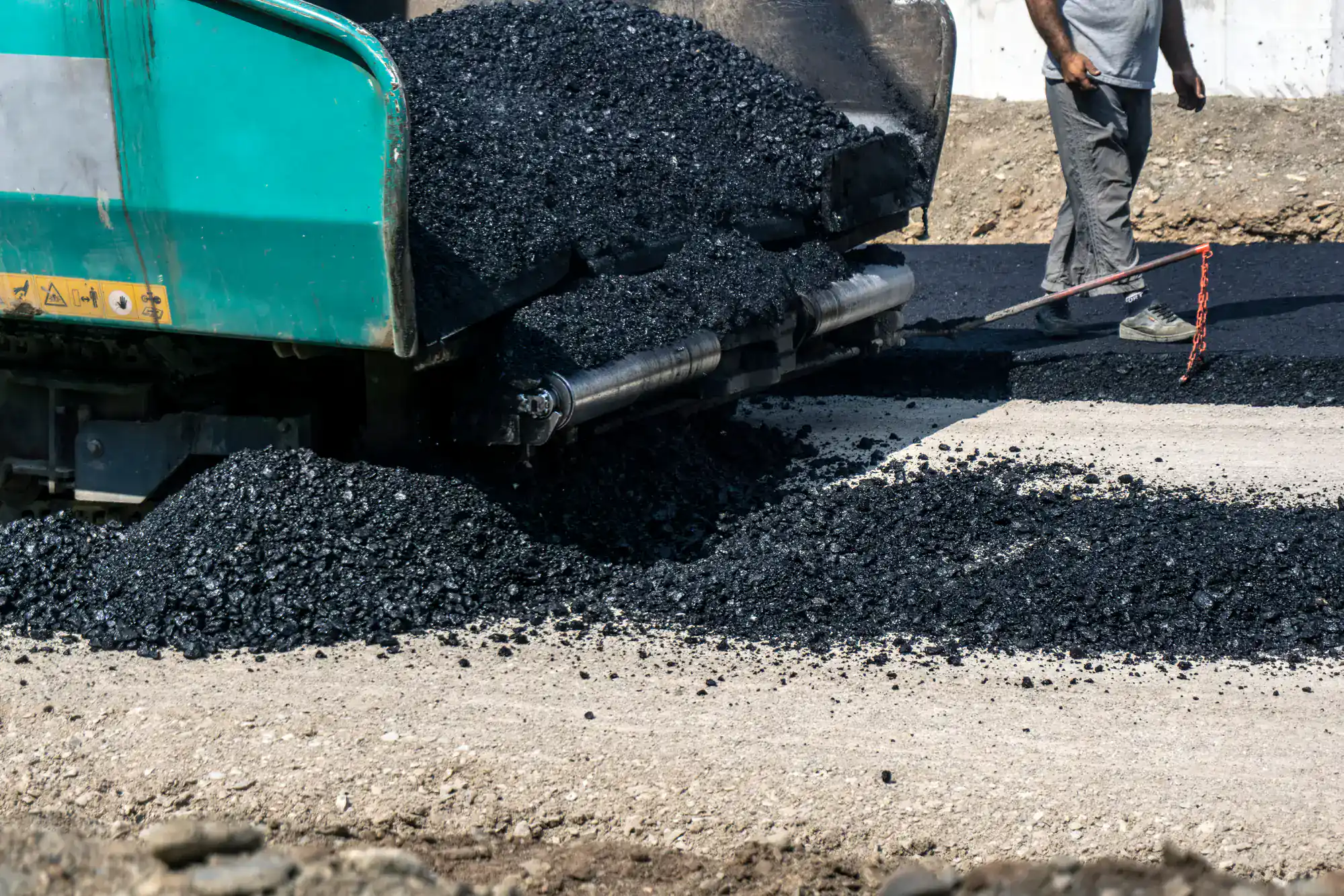
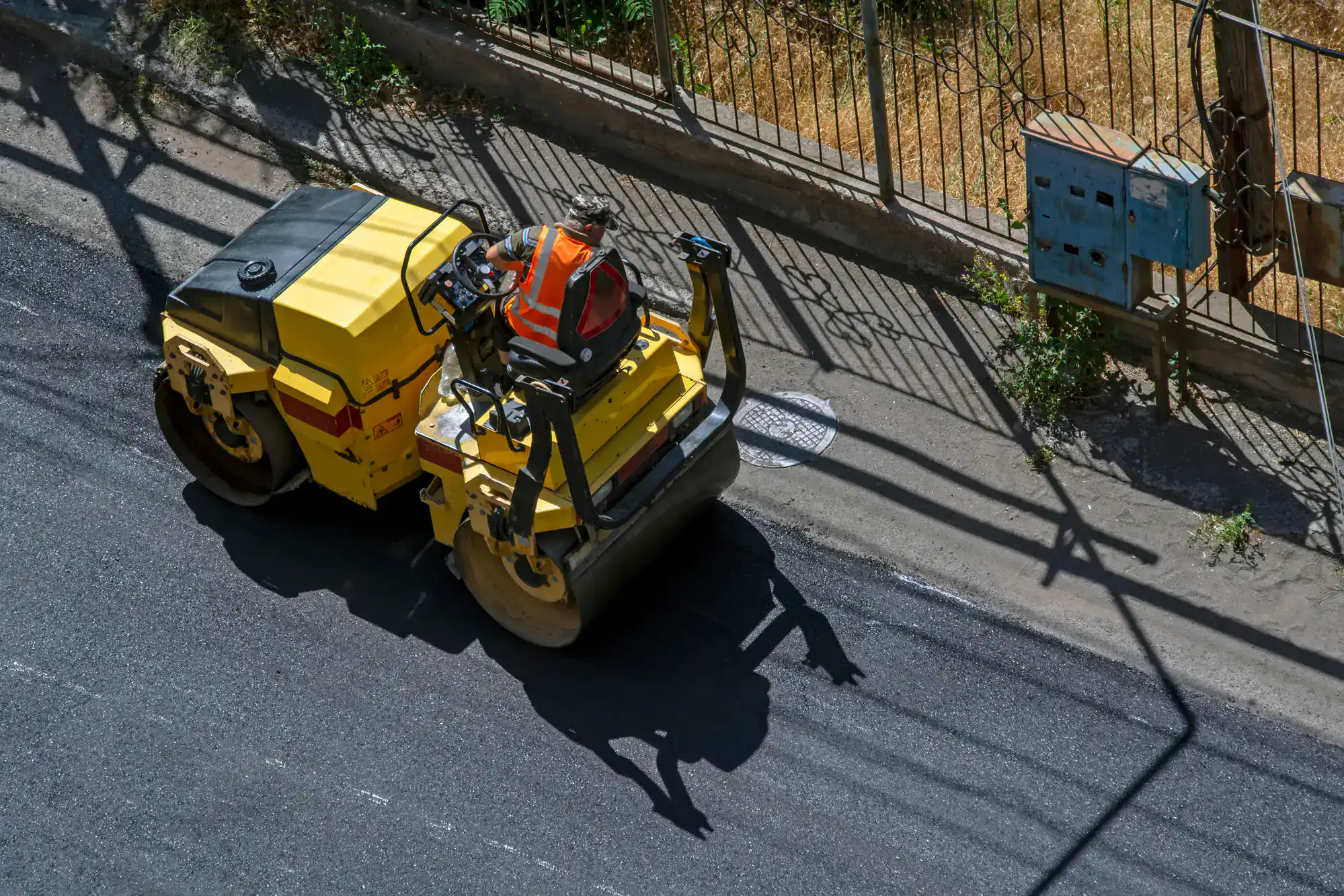
Once the base is compacted and graded for drainage, hot asphalt gets laid and rolled to the correct thickness. We work in sections to minimize disruption to your operations. After the asphalt cures, line striping and marking go down to designate parking spaces, traffic flow, and ADA-compliant areas. You’re typically looking at 1-2 days for most commercial parking lot paving projects, depending on size.
Ready to get started?
Commercial paving in Auburndale needs to account for Florida-specific challenges. The intense UV exposure here breaks down asphalt faster than in northern climates, and the combination of heat and sudden heavy rains creates expansion and contraction that leads to cracking. Proper installation includes using asphalt mixes designed for high-temperature performance and building in drainage that handles Central Florida’s afternoon downpours.
Your project includes proper base preparation, which is non-negotiable for longevity. Cutting corners on the base saves money upfront but costs you thousands in premature failure. The asphalt thickness gets calculated based on your expected traffic—a small office parking lot needs different specs than a distribution center with semi-trucks making daily deliveries.
ADA compliance is built into the design, not added as an afterthought. That means proper slope ratios, accessible parking spaces positioned correctly, and compliant curb ramps. Auburndale businesses need to meet these standards, and getting them right during installation prevents costly retrofits later. Line striping follows local codes and industry standards for visibility and safety, using durable paint that holds up to Florida sun.
With proper installation and regular maintenance, you’re looking at 20 to 30 years from a commercial parking lot in Auburndale. That lifespan depends heavily on three factors: base quality, asphalt thickness appropriate for your traffic, and maintenance like sealcoating every 3-5 years.
Florida’s climate is tough on asphalt. The UV rays oxidize the binder that holds everything together, making it brittle over time. Heavy rains and humidity accelerate this process. A parking lot that would last 30+ years in a cooler, drier climate might only give you 20 here without protection. That’s why sealcoating matters—it blocks UV penetration and water intrusion, extending your pavement’s life significantly.
Traffic volume also plays a role. A parking lot serving 50 cars daily will outlast one handling 500. Heavy vehicles cause more wear, especially if the base wasn’t built to handle the weight. If you’re seeing significant deterioration in under 15 years, either the installation was subpar or maintenance was neglected.
Patching runs $3-$7 per square foot depending on the extent of damage, while full repaving typically costs $2-$4 per square foot for the entire surface. That seems backward until you realize patching is localized repair that requires cutting, removing, and matching existing asphalt—it’s labor-intensive for small areas.
Here’s the real consideration: if more than 30-40% of your parking lot needs repair, repaving usually makes more financial sense. You get a uniform surface with a fresh warranty instead of a patchwork that continues deteriorating around the repairs. Patched areas also tend to fail faster than the original surface because the seams create weak points where water infiltrates.
The hidden cost of ongoing patches is business disruption. You’re dealing with contractors multiple times instead of once, and customers see a parking lot that looks perpetually under repair. Sometimes the smarter move is addressing the whole surface and not thinking about it again for 20 years. Get a proper assessment that shows you both options with realistic numbers before deciding.
Most commercial parking lot paving gets done in sections, so you never lose all your parking at once. We block off one area, complete it, then move to the next section while the first cures. For businesses that can’t afford any disruption, night and weekend work is an option, though it typically costs 15-20% more.
The key is planning traffic flow before work starts. Temporary signage directs customers to open parking areas, and access routes stay clear for deliveries and daily operations. For retail locations, timing matters—avoid your busiest seasons if possible. A restaurant might schedule paving during their slower months, while a tax preparation office would avoid January through April.
Asphalt needs 24-48 hours before heavy traffic, but you can walk on it much sooner. We give you a clear timeline showing when each section closes, when it reopens, and what access you’ll have throughout. If someone’s promising zero disruption, they’re either working at night or not being straight with you. There’s always some impact, but good planning keeps it manageable.
Absolutely. Commercial parking lots handle significantly more weight and traffic volume, which means thicker asphalt and a more robust base. A residential driveway might use 2-3 inches of asphalt over 4-6 inches of base. Commercial applications typically need 3-4 inches of asphalt over 6-8 inches of compacted base, sometimes more for heavy truck traffic.
The asphalt mix itself is often different too. Commercial paving uses mixes designed for higher traffic loads and better resistance to rutting—those depressions that form in wheel paths over time. The binder content and aggregate size get adjusted based on expected use. An office park parking lot needs different specs than a loading dock where trucks sit idling.
Drainage requirements are also more complex for commercial properties. You’re managing runoff from a larger surface area, and local codes are stricter about where that water goes. Poor drainage doesn’t just create puddles—it undermines your base and leads to premature failure. We calculate drainage as part of the design, not just slap down asphalt and hope for the best.
Sealcoating every 3-5 years is the big one. It costs a fraction of repaving and extends your parking lot’s life by 10-15 years. Sealcoating blocks UV rays and water penetration, which are the two main causes of asphalt deterioration in Florida. Skip it, and you’re looking at cracking and surface breakdown much sooner.
Crack sealing should happen as soon as you notice cracks forming, ideally while they’re still small. Water gets into cracks, softens the base, and turns a minor surface issue into a structural problem. In Florida’s wet climate, this happens fast. Addressing cracks early costs hundreds instead of thousands later. You should also keep the surface clean—debris and standing water accelerate wear.
Line striping needs refreshing every 2-3 years as paint fades from sun exposure and traffic. This isn’t just cosmetic; faded lines create confusion and potential liability if someone can’t tell where they’re supposed to park. Beyond that, watch for drainage issues after heavy rains. If you’re seeing standing water that doesn’t drain within a few hours, you’ve got a problem that needs attention before it damages your pavement.
Florida requires paving contractors to hold proper licensing through the Department of Business and Professional Regulation. You can verify any contractor’s license status on the DBPR website using their license number or business name. Don’t just take their word for it—actually check.
Beyond the license, ask about insurance coverage. You need to see proof of general liability insurance and workers’ compensation coverage. If someone gets hurt on your property during the project and the contractor doesn’t have proper insurance, you could be liable. Legitimate commercial paving contractors carry substantial coverage and provide certificates without hesitation.
Experience in commercial work specifically matters too. Someone who primarily does residential driveways doesn’t necessarily understand commercial specs, ADA requirements, or the engineering needed for heavy traffic loads. Ask for references from similar commercial projects in the area and actually call them. Find out if the work was completed on schedule, if there were surprise costs, and how the pavement has held up over time.
Other Services we provide in Auburndale